Robot 3D Cutting vs 5-Axis vs Cladding: How to Choose
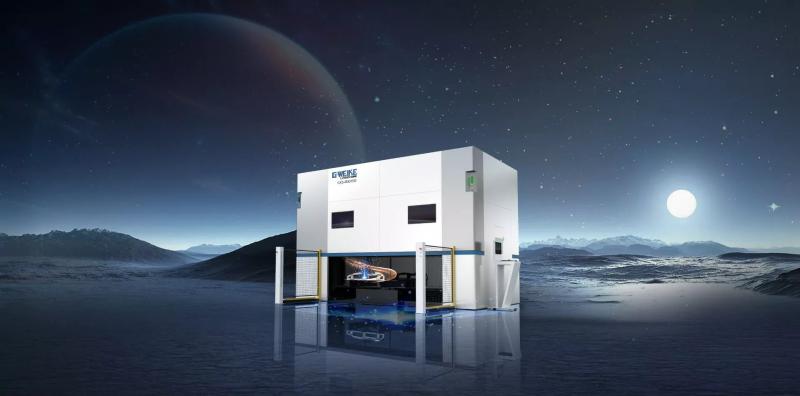
Most shops start with 2D sheet metal cutting because it is straightforward: flat sheets, clear nesting, predictable handling. But once your products include formed panels, curved shells, stamped parts, hydroformed tubes, or welded assemblies, 2D cutting stops being the best tool. The work becomes three-dimensional, tolerances become harder to hold, and manual trimming or drilling quickly turns into a bottleneck.

That is the moment many manufacturers begin evaluating three practical upgrades:
Robot 3D laser cutting for flexible trimming and hole cutting on formed parts.
5-axis laser cutting for higher stiffness, better path accuracy, and consistent production on complex 3D geometries.
Robot laser cladding for repair and surface strengthening—often the fastest way to extend the life of expensive components instead of replacing them.
This article explains what each option is best at, how to choose the right one, and what to prepare so your project succeeds on the factory floor.
The Real Problem: Your Parts Are No Longer Flat
If you are cutting only flat sheet, 2D lasers are usually unbeatable for cost and speed. But when parts are formed or assembled, shops often face the same issues:
Trim lines are irregular after stamping or bending, so saws and hand tools create variation.
Holes on curved surfaces are hard to locate precisely using drilling fixtures.
Fit-up problems appear later because trimming is inconsistent across batches.
The shop becomes dependent on a few “skilled hands” who can make parts fit, which is not scalable.
Common examples:
Automotive and EV parts (trim after forming, complex openings)
Appliance shells and panels (curved edges, vent patterns)
HVAC and ducting assemblies (curved or shaped sections)
Motorcycle/bicycle frames and formed brackets
Aerospace and rail components (high accuracy on 3D contours)
The goal is not “buy a fancier laser.” The goal is replace manual 3D trimming and drilling with a programmable, repeatable process.
Option A: Robot 3D Laser Cutting—Maximum Flexibility for Mixed 3D Work
Robot 3D cutting is often the first step into 3D because it is flexible and can handle many shapes without requiring a huge dedicated machine frame. In a typical setup, the robot moves the cutting head around the part, or the part is positioned and the robot follows the trim path.
Where robot 3D cutting shines
Many product variants: If you have many models and frequent changeovers, robots adapt well.
Medium volume: Enough volume to justify automation, but not so high that you need a fully specialized hard-tool line.
Complex trimming and openings: Windows, slots, venting patterns, and shaped contours on formed parts.
Reduced tooling cost: You can often avoid expensive trim dies for every variant.
What to watch for
Fixturing matters: The robot can only cut accurately if the part sits in a repeatable position.
Programming and simulation: You will want stable offline programming and collision checking.
Tolerance expectations: Robots are excellent for many applications, but the tightest tolerance work may favor a stiffer 5-axis machine (next section).
Simple rule
If your priority is flexibility, and your jobs are varied, robot 3D cutting is usually the most practical entry point.
Option B: 5-Axis Laser Cutting—Higher Stiffness and Better Path Accuracy for Production Consistency
When you need tighter control and higher repeatability—especially on complex 3D contours—many manufacturers consider a dedicated 5-axis machine. Compared with a robot cell, 5-axis systems are typically built with a more rigid structure, which helps maintain consistent motion accuracy over time.
Where 5-axis cutting is typically a better fit
Higher precision requirements: Better consistency on critical edges and hole locations.
Stable production output: When the same part runs daily and quality must be repeatable shift after shift.
Complex 3D geometry: Parts where stiffness and path accuracy affect the final fit-up.
Quality-driven industries: Aerospace, rail, high-end automotive components, or any shop that cannot tolerate frequent rework.
Practical advantages over a robot cell
Higher stiffness = more stable quality on demanding geometries
More predictable calibration behavior over long production runs
Often easier to standardize as a production asset when utilization is high
Trade-off
A 5-axis system is usually less “general purpose” than a robot cell and can be a larger investment. It is often chosen when your business value is in consistent, repeatable 3D cutting quality, not maximum flexibility.
Option C: Robot Laser Cladding—Repair and Strengthen Parts Instead of Replacing Them
At first, laser cladding sounds unrelated to laser cutting. In practice, it often becomes the highest-ROI use of laser automation for heavy industry, because it turns expensive replacements into controlled repairs.
What laser cladding does (plain English)
Laser cladding deposits a controlled layer of material onto a worn or damaged surface. Instead of scrapping a component, you restore its dimensions or add a wear-resistant surface layer. It is widely considered for high-value parts where downtime and replacement cost are significant.
Where cladding pays back fast
Shafts, rollers, and wear surfaces that erode over time
Molds and dies that need surface restoration
Mining, agricultural, and heavy machinery components
Maintenance operations where spare parts are expensive or slow to obtain
How it connects to your cutting operation
Many manufacturers use 3D cutting to produce complex formed parts, and use cladding to keep expensive tooling and wear parts alive longer. Both are part of the same trend: moving from manual, inconsistent processes to digital, repeatable laser processes.
A Simple Decision Guide (Robot 3D vs 5-Axis vs Cladding)
Use this quick logic:
Choose robot 3D cutting when:
you have many variants and need flexibility
you want to replace manual trimming and drilling on formed parts
your primary win is workflow simplification and faster changeover
Choose 5-axis cutting when:
accuracy and repeatability drive your profit
the same parts run frequently and quality must be extremely consistent
you want a rigid production asset for demanding 3D geometry
Choose robot cladding when:
your biggest cost is replacing or scrapping expensive components
you need surface strengthening or dimensional restoration
downtime and spare part lead time are major business risks
What to Prepare Before You Request Quotes (This Prevents Wrong Configurations)
To get accurate recommendations, prepare the following:
Part samples or 3D models (STEP/IGES where possible)
Material list (steel, stainless, aluminum; coatings; surface condition)
Critical tolerances (which edges/holes truly matter)
Production volume (per day/week) and variant count
Current pain point data: rework hours, scrap rate, bottleneck station time
Fixture reality: can you position parts repeatably, or do you need fixture development?
Shops that skip these inputs often buy the right technology but the wrong workflow, and then blame the machine.
ROI Thinking That Works in Real Factories
These technologies usually pay back through one of these three levers:
Replacing manual trimming/drilling (labor + variation reduction)
Reducing rework and scrap (better fit-up consistency)
Avoiding part replacement (cladding: repair instead of scrap)
A simple ROI approach:
Calculate hours/week spent on manual trimming + drilling + fit-up correction
Estimate the percentage you can eliminate with a programmable laser process
Add the value of reduced scrap and fewer late deliveries
For cladding, compare the monthly replacement cost vs repair cost and downtime avoided.
FAQ
Do I need 5-axis if I can buy a robot 3D cell?
Not always. If your business values flexibility and you have many variants, robot 3D is often the better starting point. 5-axis tends to win when accuracy and repeatable production quality are the top priorities.
What usually causes 3D cutting projects to fail?
Poor fixturing and unclear tolerance requirements. If the part position is inconsistent, the cut path cannot be consistent.
Is cladding only for very heavy industry?
It is most common there, but any shop with expensive wear parts, molds, or long lead-time components can benefit if repair economics are strong.
Closing
If your parts are no longer flat, your process should not stay “flat.” Robot 3D cutting can give you flexible trimming and opening capability GWEIKE LF1800. A rigid 5-axis platform can deliver stronger path accuracy for consistent production GWEIKE GKSM3015G. And laser cladding can turn replacement cost into controlled repair GWEIKE GKS-LC3008R. The best choice depends on whether your biggest value is flexibility, precision, or lifecycle cost reduction.
Post Your Ad Here
Comments