Laser Cutting Safety and Fume Control for Sheet Metal Shops
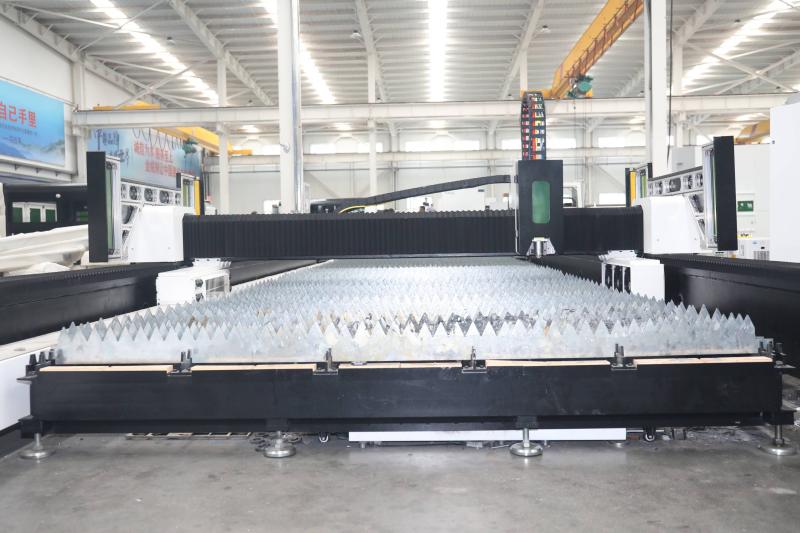
When most buyers evaluate a sheet metal laser cutting machine, they focus on power, speed, and cutting thickness. Those matter, but in day-to-day production, the factors that often decide whether you run smoothly or struggle are much more basic: safety, smoke control, dust management, and fire prevention.
This is not only about “compliance.” Poor fume control and weak safety discipline usually lead to very practical business problems:
Operators dislike running the machine (low adoption, more mistakes)
More downtime (dirty optics, unstable cutting, alarms)
More rework (edge quality drifts as lenses and nozzles degrade)
Higher consumable costs (protective lenses and filters wear faster)
Higher risk events (smoke buildup, small fires, near-misses)
This guide explains, in plain English, what matters most—and how to improve it without turning your factory into a complicated project. Along the way, I will reference three common equipment directions that are often chosen specifically because they support safer, cleaner operation in different shop scenarios: a compact fully enclosed option like the LF3015P configuration, a mainstream enclosed exchange-table production setup like the LF3015GA , and a large-format ground-rail system that highlights large-area ventilation logic like the SL series.

What Are the Real Risks in Sheet Metal Laser Cutting?
A fiber laser cutter is not a “dangerous machine” if it is used correctly, but it is also not a normal piece of shop equipment. The risk profile is different because it involves:
A. Laser radiation and reflections
Laser energy can injure eyes and skin. Reflections—especially from shiny metals—can create risk outside the direct cutting zone.
B. Fumes and fine particles
Cutting creates smoke and microscopic particles. Even when you cannot see it, it can accumulate in the air, on machine surfaces, and inside filters and ducts. Over time, this affects health and machine stability.
C. Fire and hot material
Laser cutting creates sparks and hot slag. Small fires are not rare in real shops—especially when maintenance is weak, scrap accumulates, or operators leave the machine unattended.
D. Moving parts and pinch points
Gantry motion, doors, exchange tables, and sheet handling systems require basic guarding and discipline.
E. High-pressure gas systems
Oxygen and nitrogen are common in cutting. Gas cylinders, tanks, regulators, and piping can introduce hazards if leak checks and proper handling are ignored.
A good safety program focuses on controlling these risks with engineering controls (machine design), workflow design (how you use it), and training (how people behave).
Why Enclosure Is a “Business Decision,” Not Just a Safety Feature
Many buyers see a fully enclosed machine as “nice to have.” In practice, enclosure often reduces daily friction and improves stability.
What an enclosure does in simple terms
It keeps laser radiation inside the cutting zone
It helps contain smoke and dust so extraction works more efficiently
It reduces noise and improves operator comfort
It creates a more controlled environment for stable cutting
This is why many shops move from open-table thinking to enclosed systems as soon as they shift from “occasional cutting” to “daily production.”
Two enclosure directions that fit different shop realities
Compact enclosed with pull-out table
If your shop has limited floor space or you want a cleaner, more controlled cutting cell without building a big production line, a compact enclosed design is often attractive. An example is the LF3015P-style configuration, which is typically discussed in the context of safer access and controlled cutting conditions while still keeping the workflow practical for smaller teams.
Enclosed production with exchange table
If you run batch production and care about stable cycle time, enclosed exchange-table designs are commonly chosen because they separate “cutting inside” from “loading outside.” That reduces operator exposure and reduces the temptation to open doors or interrupt cutting. A representative direction here is the LF3015GA concept, which is often used as a mainstream “workhorse” configuration.
The important point is not the model name—it is the workflow: the more your operators can load/unload safely without disrupting the cutting environment, the more stable your daily production becomes.
Fume Extraction: The Most Underestimated Part of the Whole System
Many first-time buyers treat extraction as an accessory. In reality, extraction is part of the cutting system. Poor extraction leads to:
dirtier optics and faster lens damage
unstable cutting due to smoke interfering with the process area
more frequent cleaning downtime
worse working environment and higher health risk
A practical fume control setup requires four things:
A. Capture the smoke at the source
The most effective fume control captures smoke where it is generated, not after it spreads. Enclosed systems usually have an advantage here because the cutting area is contained.
B. Maintain sufficient airflow and negative pressure
Extraction must move enough air to prevent smoke from escaping when doors open. Many shops have extraction units that look strong but are underperforming due to duct losses, clogged filters, or poor layout.
C. Use filtration appropriate for metal cutting particles
Metal cutting produces fine particles. Filtration quality and maintenance schedule matter. A “good filter” is not good if it is not maintained consistently.
D. Manage ducting, bends, and maintenance access
Long duct runs, too many bends, or poorly planned routing can reduce performance dramatically. Easy access for inspection and cleaning is important.
Large-Format Cutting Creates a Different Ventilation Problem
When the cutting area becomes very large (large beds, long travel), smoke management becomes more complex. A simple “one-point extraction” approach can struggle because smoke is generated across a wide area.
That is why large-format systems often emphasize zone ventilation or segmented extraction logic—pulling smoke from the active cutting area rather than trying to extract the entire area equally at all times. A large-format ground-rail direction like the SL series is often discussed in this context because large-area cutting needs more thoughtful airflow planning than standard-size machines.
If your shop is moving into large-format work, treat ventilation planning as part of the project, not an afterthought.
Fire Prevention: Most Incidents Are “Small” Until They Are Not
In real sheet metal shops, the most common “fire events” are small: a flare-up during piercing, burning scrap near the slats, or a lingering ember in the dust collection area. These are manageable if you have good habits.
The basic fire prevention habits that work
Keep the cutting area clean
Scrap buildup and dust buildup increase risk. A clean machine is a safer machine.Do not run unattended unless your system is designed for it
If you plan to run without constant supervision, you need stronger fire detection and response plans.Standardize what materials are allowed
Some materials produce higher risk (coatings, oily surfaces, unknown films). Put basic rules in writing.Train operators to treat “small flare-ups” seriously
A small flare-up is a signal—usually about settings, focus, gas, or contamination. Ignoring it invites a bigger event later.Pay attention to dust collectors
Dust collection is helpful, but fine dust can also be combustible in certain conditions. Maintenance discipline matters.
Gas Safety: Simple Rules That Prevent Expensive Problems
Gas is essential to cutting, but it introduces risk when it is treated casually.
Oxygen (common for carbon steel) – key points
Keep oil/grease away from oxygen fittings
Use proper regulators and rated hoses
Check for leaks and replace worn parts
Store cylinders properly and secure them
Nitrogen (common for stainless/aluminum) – key points
High pressure systems require careful handling
Leaks cost money even if they do not “feel dangerous”
Stable pressure helps stable cutting quality
Regardless of gas type, basic leak checks and proper cylinder management reduce both risk and operating cost.
A Practical Daily/Weekly Checklist (Short, Realistic, High Impact)
Most safety programs fail because they are too complicated. This checklist is intentionally simple.
Daily (5–10 minutes before production)
Confirm extraction is running and airflow feels normal
Check nozzle and protective lens condition (quick visual)
Remove excess scrap and clean the cutting area
Confirm doors/interlocks work normally (do not bypass)
Confirm gas pressure and unusual leaks/noise are not present
Weekly (30–60 minutes)
Inspect filters and record pressure drop/condition
Clean key areas where dust accumulates
Review a few “problem cuts” and identify root causes (nozzle, lens, gas, material)
Check the condition of slats and cutting table area
Verify extraction ducting is not leaking and access points are intact
This level of discipline prevents most “mystery problems” that appear as random quality instability.
Training: The Lowest-Cost Upgrade You Can Make
A surprising number of safety and fume problems come from training gaps, not machine defects.
Operators should be trained to understand:
why enclosure doors should stay closed during cutting
why extraction must run even for “short cuts”
what early signs of lens contamination look like
how to respond to flare-ups and unstable piercing
how to handle hot parts safely and avoid burns
why gas settings matter for both quality and stability
Training does not need to be a long classroom session. Short, repeated, practical coaching works best.
A Quick Self-Audit: 10 Questions That Reveal Your Biggest Risk
If you answer “no” to several of these, you have a clear improvement path:
Do operators keep doors closed during cutting without being reminded?
Is smoke rarely visible in the shop air during cutting?
Does extraction performance feel consistent over time?
Do you have a routine for cleaning and scrap removal?
Are flare-ups rare and investigated when they occur?
Are consumables inspected on a schedule, not only after failures?
Are gas cylinders secured and leak checks routine?
Do operators have clear rules for questionable coatings/films/oily sheet?
Is filter maintenance recorded and predictable?
Do you know the top 3 causes of downtime in your cutting cell?
This audit is not about perfection. It is about identifying the biggest leverage point.
Closing: Cleaner and Safer Cutting Usually Means More Profitable Cutting
Shops often separate “safety” from “production.” In reality, they are closely linked. When you control smoke, dust, and risk events, you usually get:
more stable edge quality
longer consumable life
fewer stops and alarms
faster operator learning and better morale
fewer costly incidents and disruptions
Whether you choose a compact enclosed configuration like the LF3015P direction, a mainstream enclosed exchange-table production setup like LF3015GA, or a large-format ventilation-focused architecture like the SL series, the core principle stays the same: engineering controls + clean workflow + simple routines create both safety and profit.
If you tell me your shop type (prototype vs batch), main materials, and whether your pain point is smoke, flare-ups, or maintenance downtime, I can tailor this article into an even more APSense-friendly version with a tighter opening hook, a short “common mistakes” section for your audience, and a concise FAQ—while keeping the same three links naturally embedded in the text.
Post Your Ad Here
Comments