How to Increase Sheet Metal Laser Cutting Output
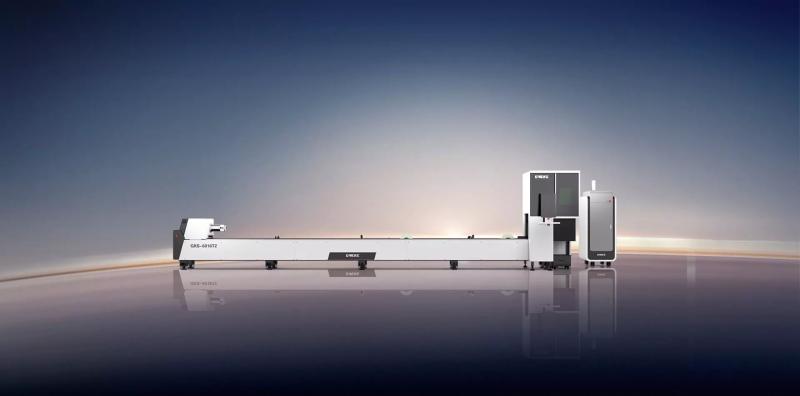
When a shop says, “We need more output,” the first idea is often, “Let’s buy a bigger sheet metal laser cutting machine.” Sometimes that works—but often it is not the smartest first move. In practice, throughput is usually limited by one of three bottlenecks:
Material handling (loading, unloading, sorting parts)
Feeding format (sheet-by-sheet vs continuous coil production)
Cutting time on thick plate (power and process limits)
That means there are three common upgrade paths to scale production:
Automation for sheets: automatic loading and unloading, to reduce labor and idle time
Coil-fed laser cutting lines: continuous feeding from coil, for high-volume thin sheet parts
Ultra-high power large-format cutting: for heavy plate and demanding output targets
This article compares these three paths in plain English and shows when each one makes sense.

Path One: Automatic Loading and Unloading (Best When Labor and Idle Time Limit Output)
If you currently run sheet-by-sheet cutting with manual loading, your machine may be “fast,” but your production line is not. A common real-world problem looks like this:
The machine finishes a sheet in 8–15 minutes
Then the machine waits 3–8 minutes for unloading and reloading
Operators get busy with sorting parts, moving scrap, or staging the next sheet
Over a full day, your laser spends a surprising amount of time not cutting
This is exactly the scenario where automatic loading and unloading creates value. A machine direction built for this is an automatic load/unload configuration such as the GAS automatic loading and unloading fiber laser cutting machine.
Auto load/unload is usually the best choice if you:
run many sheets per shift (high sheet-change frequency)
have stable part programs and repeated orders
want to reduce dependence on skilled labor for material handling
want more predictable cycle time and easier scheduling
want to improve night shift or weekend production stability
Practical benefits (simple but powerful):
Less idle time between sheets
More consistent daily output
Better labor efficiency (operators can focus on sorting and QA)
Lower risk of handling damage and workflow errors
What to watch for:
You need enough space for sheet storage and loading stations
Your upstream/downstream workflow must be organized (otherwise the automation will “wait” for your factory, not the other way around)
In short: if your cutting speed is already good but your day still feels “busy and behind,” automation often solves the real problem.
Path Two: Coil-Fed Laser Cutting Lines (Best for High-Volume Thin Sheet Parts)
For many manufacturers, the real breakthrough is not faster sheet cutting—it is eliminating sheet handling entirely.
If you produce large volumes of thin sheet components (think HVAC panels, appliance parts, automotive brackets, metal furniture parts, electrical cabinets), a coil-fed line can change your cost structure. Instead of lifting and changing individual sheets, you feed from coil and run a continuous sequence:
Uncoiling → leveling → feeding → laser cutting → sorting/stacking
A representative direction is a coil-based automated production solution like GWEIKE GKSCPLS6015B, which is positioned around unwinding, leveling, and automated cutting workflow.
Coil-fed lines are usually the best choice if you:
have high-volume repeat parts (the same SKUs every day/week)
work mainly with thin to medium sheet in coil form
want lower handling cost per part and less material movement
want stable continuous production and scalable automation
want to reduce “sheet inventory operations” (forklift moves, staging, sheet changes)
Why coil-fed is different (in simple terms):
Sheets create “start-stop” production
Coils enable “flow” production
When production becomes flow-based, your cost per part often drops because you cut down on stops, handling, and wasted time.
What to watch for:
Coil-fed lines require more planning and integration than a single machine
If your shop does mostly custom jobs, coil-fed may be underutilized
You need stable upstream supply of coil material and good leveling control for consistent results
If your orders are repetitive and volume-driven, coil-fed can be one of the strongest long-term productivity investments.
Path Three: Ultra-High Power Large-Format Cutting (Best for Thick Plate and Heavy Industry)
Now let’s talk about the scenario where automation is not the main limiter. In heavy fabrication, the bottleneck is often cutting time on thick plate.
If you cut 12 mm, 16 mm, 20 mm, and above, your cycle time can be dominated by:
piercing time
cutting speed limits
heat management and stability
gas strategy and edge quality control
machine rigidity under high thermal load
In these cases, moving to a higher power class and a more robust large-format platform can produce clear throughput gains. A representative direction is an ultra-high power large-format model like GWEIKE LF4020GH, which is positioned around large sheet processing and higher power ranges.
Ultra-high power makes the most sense if you:
cut thick plate regularly (not rarely)
have projects where cutting hours are the main bottleneck
want to reduce cycle time on heavy parts and increase daily tonnage output
need large-format capacity for bigger plates and nested heavy components
What to watch for (important):
With ultra-high power, success depends on the whole system:
stable machine frame and motion system
proper gas strategy and pressure control
cooling capacity and optics protection discipline
operator process control (consumables, focusing, nozzle management)
In short: higher power can bring real throughput gains, but only when the factory is ready to operate it correctly.
The Most Common Scaling Mistake: Upgrading the Wrong Bottleneck
A very common mistake is buying a “bigger” machine when your bottleneck is actually workflow.
For example:
If you cut thin sheet and change sheets constantly, but you buy ultra-high power, you may not see big gains—because your downtime is still loading/unloading.
If you have high-volume repeat parts and you keep running sheet-by-sheet, you may spend years paying labor costs that coil-fed production could eliminate.
If your thick plate work is growing, but your gas strategy and maintenance discipline are not ready, ultra-high power may create instability instead of throughput.
The best upgrade is the one that attacks your real limit.
Closing: Throughput Is a System, Not Just a Machine
Scaling sheet metal laser cutting throughput is about building a system that matches your production style:
Automation solves labor + idle time issues
Coil-fed lines solve flow production for high-volume repeat parts
Ultra-high power solves thick plate cutting time bottlenecks
If you want, tell me two simple numbers:
your main thickness range, and
how many sheets (or tons) you process per shift,

Post Your Ad Here
Comments