Extra-Large Sheet Metal Laser Cutting: When to Upgrade to a Large-Format Bed, Ground Rails, or Dual-Gantry
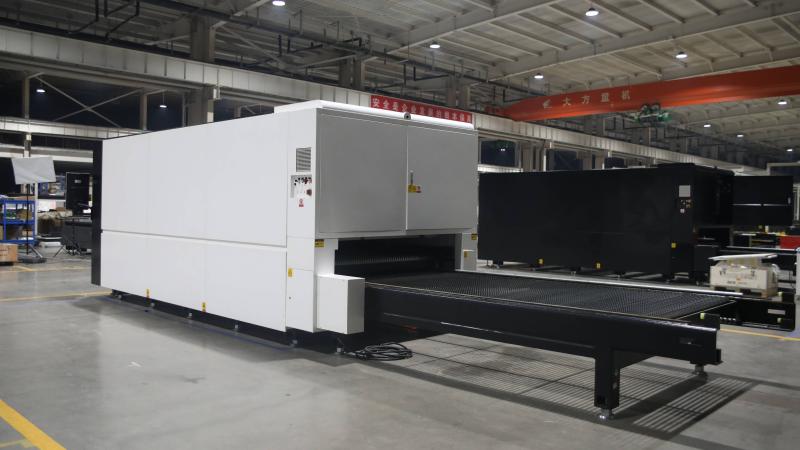
Most fabrication shops start with a standard-size sheet metal laser cutting machine (often 1530). For many businesses, that stays “good enough” for years. But once your orders shift toward oversized parts, long components, or wide plates, the old workflow begins to break down—quietly at first, then painfully.
You start seeing the same issues again and again:
Large parts must be split into sections, then welded or re-aligned later
Nesting becomes inefficient because you are fighting the bed size
Material handling takes too long, and setups become risky
Quality becomes inconsistent on long parts (fit-up problems, distortion, more rework)
You lose bids because competitors can cut the part in one piece
At that point, the real question is not “Which laser is faster?” It is:
“What is the best large-format cutting architecture for our work—custom large bed, ground-rail long-bed, or dual-gantry ultra-wide?”
This article explains the three major paths in plain English, and when each one makes sense.
Why “Bigger Work” Breaks Standard Laser Workflows
When people talk about large-format machines, they usually focus on the obvious: “We need a bigger bed.” But the hidden problems are often more expensive than the bed itself.
Problem A: Segmented cutting creates downstream cost
If you cut a large part in two or three sections, you often create extra work:
re-alignment
welding / joining
grinding
QA and re-checking
higher scrap risk if the assembly drifts
Those costs are not visible in the cutting department, but they show up in labor hours and delivery delays.
Problem B: Handling becomes the real bottleneck
Long plates and large sheets increase the cost of:
crane time / forklift time
staging space
risk of bending thin sheet during movement
operator fatigue and safety exposure
Even if your laser is “fast,” your production can still be slow because the shop floor handling is chaotic.
Problem C: Fit-up precision becomes harder on long parts
For big structural parts, small errors matter. A tiny deviation on one edge can become a major fit-up problem across the full length. This is why large-format systems need to be evaluated as a whole system: bed structure, motion design, ventilation strategy, and stable operation.
Path One: Large-Format Custom Bed Machines
If your main problem is simply that parts do not fit on a standard bed, the first upgrade path is usually a large-format fiber laser cutting machine with a customizable working area. This direction works well when your job size is bigger than standard, but not necessarily extremely long like a rail-based line.
A practical example of this type of solution is a large-format platform that supports customized bed size, such as the SE series you can see at https://www.gwklaser.com/fiberlaser/SE.html.

Choose a custom large-format bed when:
you often cut parts larger than 1530 capacity
you want better nesting efficiency on wide plates
you want a “big-bed” machine that still behaves like a normal laser cutter in your shop
your parts are large, but not so long that you need ground rails and extremely long travel
Why this upgrade delivers real value:
You reduce segmentation and secondary assembly work
You can nest large parts cleanly and reduce scrap
You simplify quoting and reduce delivery risk (fewer downstream steps)
What to watch for:
Floor space and material staging must be planned
Extraction and ventilation need to scale with the larger cutting area
Your handling equipment (forklifts/cranes) must match sheet size and weight
For many companies, a customizable large-bed solution is the most straightforward “step up” when oversized parts become regular business.
Path Two: Ground-Rail Large Format Machines
Once parts become truly long—think long beams, rails, frames, trailers, and extended structural components—the typical “big bed” approach becomes inefficient or impossible. This is where a ground-rail (floor rail) large-format machine can make sense.
A ground-rail system is designed for very long travel and often focuses on handling big working areas with practical shop-floor integration. A representative direction is the SL series ground rail large format fiber laser cutting machine.
In plain terms, the ground-rail approach is used when:
your parts are long enough that a standard frame becomes impractical
you want the ability to scale length without redesigning the entire machine concept
you need more efficient ventilation and dust management over a large area
Why ground-rail systems can be attractive:
They support very large working ranges and long part processing
The design can be better suited for “big area” management
Many systems emphasize airflow/ventilation strategies that matter more at scale (because smoke and dust become harder to control as the area expands)
Optional bevel cutting: a major value lever
For large structural work, bevel cutting can reduce downstream operations. If you frequently prepare welded joints, a bevel option can reduce manual beveling and grinding. Ground-rail large-format systems are often considered in scenarios where bevel cutting options are valuable.
What to watch for:
Installation is more “project-like” than buying a standard machine
Floor foundation, rail alignment, and shop layout planning matter
You should plan part staging, crane routes, and scrap handling before installation—not after
If you are doing long components every week, ground rails are often the best way to make large-format cutting scalable.
Path Three: Dual-Gantry Ultra-Wide / Ultra-Long Machines
There is another class of large-format requirement: ultra-wide and ultra-long plates, where the factory wants to process very large workpieces with high efficiency and stable motion across a huge cutting area.
In those cases, some manufacturers consider an ultra-wide, dual-gantry solution. A representative direction is the SA series dual-gantry large format machine.
This architecture is commonly discussed when companies need:
very wide cutting capacity
extremely long working ranges
the ability to support heavy industrial workflows and oversized part production
Why dual-gantry can matter in plain terms:
Over an ultra-large area, motion stability and throughput become more sensitive. Dual-gantry designs can be part of how ultra-wide systems maintain practical performance for large industrial workloads.
When it makes sense:
your typical workpieces are so large that standard large-bed solutions still require segmentation
you want to process big plates more efficiently with fewer resets and repositioning
your business model justifies a heavy industrial asset (space, planning, and utilization)
What to watch for:
This is not a casual purchase. The success of an ultra-large system depends on:
factory layout and handling equipment
process planning and cutting program discipline
maintenance routines suitable for large-area production
consistent material supply that keeps utilization high
If your business has moved into the “engineering-scale” category, dual-gantry ultra-wide solutions can become a strategic advantage.
How to Choose Between SE vs SL vs SA (Simple Decision Logic)
Use these three questions:
Question 1: Are your parts mainly “bigger than standard,” or truly “long”?
If parts are bigger than standard but not extremely long, a customizable large-format bed like the https://www.gwklaser.com/fiberlaser/SE.html direction may be enough.
If parts are truly long and the length requirement keeps growing, a ground-rail system like SL becomes more logical.
Question 2: Do you need ultra-wide capacity and extreme working ranges?
If yes—especially with large plates as a daily workload—an ultra-wide direction like SA may be worth evaluating.
Question 3: What is your real bottleneck—cutting time or downstream assembly?
Many buyers focus on “laser speed,” but large-format upgrades often pay back through:
reduced segmentation
reduced assembly labor
fewer fit-up errors
faster delivery and more competitive bids
If your biggest cost is downstream labor and rework, large-format cutting often delivers value even if cutting speed is not the only improvement.
Common Mistakes When Buying a Large-Format Sheet Metal Laser Cutting Machine
Mistake A: Buying big without fixing handling
A larger cutting area is useless if:
sheets cannot be staged efficiently
cranes/forklifts are insufficient
operators waste time moving material around
Large-format cutting is an ecosystem: material flow is part of the machine.
Mistake B: Ignoring ventilation and fume control
As cutting area grows, smoke and dust control becomes more complex. This affects:
cut quality consistency
consumable life
operator comfort
compliance in some regions
Large-format systems often need more thoughtful ventilation strategies than “just a bigger fan.”
Mistake C: Choosing based on rare jobs
If you buy an ultra-large machine for occasional oversized parts, utilization may be low. Large-format assets should be driven by consistent demand or a clear strategic plan to win that demand.
Practical Payback Thinking (Plain English)
Large-format upgrades pay back in four main ways:
Less segmentation
Fewer cuts and joins means fewer hours and fewer errors.Less assembly and rework
When parts come out in one piece, fit-up is easier and faster.Better nesting and less scrap
A larger bed often improves material utilization for large parts.More competitive bids
Being able to cut large parts in one go can help you win projects that competitors cannot handle easily.
When you estimate payback, do not only measure “cutting time.” Measure total production time from raw plate to finished part.
Post Your Ad Here
Comments