Tube Laser Cutting for Furniture, Fitness, and Light Fabrication
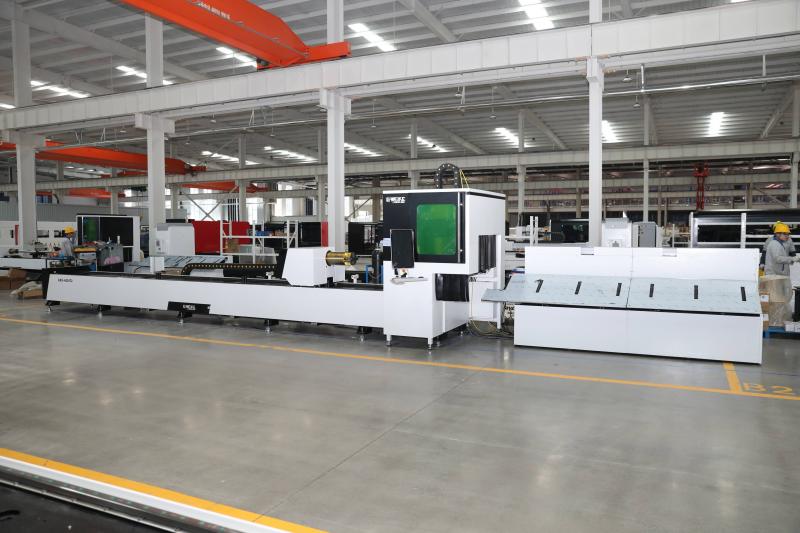
If your business cuts tube every day—chair frames, table legs, shelving, display racks, gym equipment, carts, handrails, fences, or light structural parts—you already know the common headaches: too much measuring and marking, hole locations drifting after drilling, inconsistent weld fit-up, and scrap caused by small human errors.
A tube laser can fix most of this, but only if you choose the right type for your real tube mix and workflow. In plain terms, many buyers end up comparing two practical directions:
A general-purpose workhorse tube cutter that fits mixed job-shop reality.
A small-to-medium tube efficiency / production-friendly line that supports smoother flow and repeatability.
This shorter guide helps you decide which path fits your shop, and what to ask vendors so you get a correct quote the first time.

Start with the 15-Minute Tube Workload Check (This Prevents Most Wrong Purchases)
Before you compare price or power, write down three things:
A. Tube shapes you cut
Most light fabrication uses round, square, and rectangular tube. If you also cut profiles (angle/channel) even occasionally, list them—those “occasional” jobs often drive your real configuration needs.
B. Your 80% tube size range
Do not choose based on the largest tube you cut once a year. Choose based on what you cut every week. Write one sentence like:
“Most jobs are 20–80 mm tube, 1.2–3.0 mm wall thickness, 3–6 m length.”
C. Your part types (top 10)
Are they mostly straight cuts, or do they include many holes/slots, miter joints, fishmouth joints, or complex patterns? The more features and fit-up requirements you have, the more a tube laser improves profit by cutting secondary processes.
Why Tube Cutting Is Not “Sheet Cutting, But Round”
Tube cutting has three realities that matter for equipment selection:
Rotation accuracy matters. If rotation and positioning drift, you feel it immediately in assembly (holes don’t line up, joints need grinding).
Support matters. Long tubes sag; thin tubes vibrate. Both can reduce edge quality and geometry consistency.
Workflow often becomes the bottleneck. Even a fast machine can lose hours if loading, staging, and changeover are not planned.
That is why the “best tube laser” depends as much on your shop workflow as on the cutting specs.
Two Buying Paths Most Shops Choose From
Path A: Workhorse tube cutter (best for mixed jobs and flexible daily work)
This path fits shops that handle mixed orders, many SKUs, and varied tube sizes. You want a platform that is forgiving, practical, and can be improved over time with better staging and procedures.
A common way buyers explore this category is to review the T2 series as a general workhorse direction and then look at a representative model in that family to understand the typical production concept.
Choose a workhorse path if:
your tube mix is broad (many sizes and shapes)
your batches are mixed (prototype + repeat work)
you can accept manual or semi-manual loading
you want a stable foundation before pursuing higher automation
What typically improves your ROI here:
replacing drilling with laser-cut holes/slots
improving welding fit-up consistency
reducing operator marking/measuring time
cutting scrap caused by orientation and length errors
Path B: Small-to-medium tube efficiency / production-friendly line (best for repeatable flow)
This path is usually chosen when tube sizes are more consistent and the shop wants smoother daily output with less operator decision-making—especially when labor is limited or you want more repeatable cycle time.
A typical way to explore this direction is through a category view like the TE series page.
Choose a production-friendly path if:
most of your work is small-to-medium tube
you run repeat parts and care about stable cycle time
you want faster job switching and smoother handling
you want to reduce dependence on highly skilled operators
A Simple Decision Framework (Five Questions)
Use these five questions—most buyers reach a clear answer quickly:
1) Are you a mixed job shop or a repeat production shop?
Mixed job shop → workhorse path is safer.
Repeat production → production-friendly path often wins.
2) What is your real bottleneck today?
Pick one: cutting time, setup/changeover time, loading/unloading time, sorting time, or weld fit-up rework.
If setup/loading is the bottleneck, workflow design matters as much as cutting speed.
3) How sensitive are your parts to alignment errors?
Ask your assembly team: “Do we often re-drill holes or grind ends to make joints fit?”
If yes, prioritize stability and repeatability over “maximum capacity.”
4) How many different programs do you run per day?
If you run many different parts daily, usability and fast switching matter more.
5) Do you want an operator-driven cell or a system-driven cell?
Operator-driven: works well, but relies on skill and habits.
System-driven: aims to reduce decisions and create repeatable flow.
Common Mistakes (And How to Avoid Them)
Mistake A: Buying for rare oversized jobs
This often causes overspending. Choose for your 80% tube range and handle rare outliers with a plan.
Mistake B: Not planning tube staging and finished-part flow
Even a great machine will “feel slow” if tubes are not staged, parts are not labeled, and scrap blocks the work area.
Mistake C: Treating programming as a last-minute task
If you cut many SKUs, create programs and cut plans before the operator is under pressure.
Mistake D: Chasing speed while ignoring fit-up
A slightly slower but stable process often beats a fast process that creates rework and scrap.
Copy-Paste Vendor Checklist (Get Quotes That Match Reality)
Send these questions to vendors:
Our main tube shapes are: ________
Our 80% tube size range is: ________
Wall thickness range is: ________
Typical tube length is: ________
Approximate tubes per shift: ________
Our parts include: holes / slots / miters / fishmouth / complex patterns
Our biggest pain today is: rework / changeover / loading / scrap / speed
What consumables are typical and how often do they change for our materials?
What is realistic training time until an average operator produces stable parts?
This forces the discussion to be about production results, not marketing numbers.
Quick “Which Should I Choose?” Summary
Choose a workhorse tube cutter when you have mixed jobs and you need a flexible daily platform. A practical starting point is understanding the T2 series direction at GWEIKE T2-Series.html and the typical model concept shown at GWEIKE T2-Series.
Choose a production-friendly small-to-medium tube line when your tube range is more consistent and repeat output is your priority; a category view like GWEIKE TE-Series helps you evaluate that direction efficiently.
Simple ROI Thinking (How Tube Lasers Usually Pay Back)
Tube lasers often pay back by removing wasted time, not only by cutting faster:
fewer drilling steps (holes/slots cut in one process)
less measuring and marking
better weld fit-up and fewer assembly corrections
less scrap from orientation/length errors
If you estimate how many minutes you spend today on drilling + marking + fit-up fixing per part, then multiply by parts per week, you will usually see where the money is.
FAQ (Short Answers)
Do we need a “big industrial” tube laser for furniture or fitness frames?
Not necessarily. Many shops in these industries win by optimizing workflow and repeatability in the small-to-medium tube range.
Is it worth paying more for a production-friendly workflow?
If labor is limited, orders repeat, or changeovers are frequent, workflow improvements often deliver faster payback than raw cutting speed.
What should we prepare before we buy?
A tube list (sizes, thickness, lengths), your top 10 parts, and your daily output target. That is enough to get accurate quotes and correct configuration guidance.
Post Your Ad Here
Comments