How to Reduce Scrap and Improve Tube Cutting Consistency
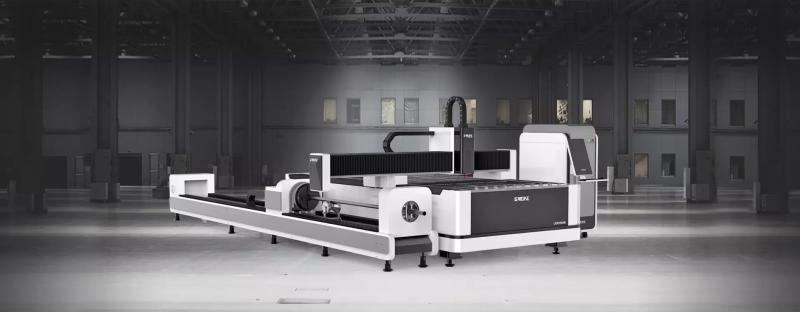
In tube fabrication, many shops don’t lose money because the tube laser is “too slow.” They lose money because the process is unstable in the last 10–20% of the tube, and because the workflow creates unnecessary waste:
Long tail scrap (extra leftover length you cannot use)
“Almost finished” parts ruined near the end of the tube
Hole positions drifting on the last section
Thin-wall tubes deforming during clamping
Operators slowing down because they don’t trust stability

This is why serious tube buyers pay attention to how a machine manages end-of-tube stability and how it fits into the shop’s overall work mix. In this article, we compare three practical solution paths:
A front-chuck “overstroke” approach designed to reduce end waste and improve the last-cut stability
A multi-function tube/profile cutting direction for shops cutting various tube and section shapes
A “one machine for sheet + tube” path for shops that regularly do both sheet metal and tube in the same business
The goal is simple: lower scrap, shorten tail waste, and make output more consistent across operators and shifts.
First, Define the Two Types of Tube “Waste” (They Are Not the Same)
Most shops talk about “waste” as one problem, but it’s actually two different cost drains.
A) Material waste: tail scrap
This is the leftover tube length that cannot be used for parts. In production, tail scrap can quietly cost a lot, especially when you cut expensive stainless or aluminum.
Tail scrap increases when:
clamping limits how close you can cut to the end
the last section becomes unstable, so you leave more “safe distance”
operators increase leftover length to avoid mistakes
B) Quality waste: end-of-tube failures
This is when the last part (or last feature) is ruined due to instability:
incomplete cut-through
distorted holes/slots
wrong angle at the end
vibration marks or burr spikes
Quality waste is often more expensive than material waste, because you lose:
material
machine time
labor time
sometimes delivery schedule
A good solution should reduce both.
Why End-of-Tube Cutting Becomes Unstable (Plain English)
Tube cutting is stable when the tube is:
clamped securely
supported properly
controlled in rotation
not vibrating or sagging
But as cutting progresses, the remaining length changes, and the “free end” can become harder to control. If clamping cannot move far enough or support cannot reach well, the last portion becomes the most risky area.
That is exactly why some tube systems are designed with specific mechanics and travel logic to handle the last section better—because it has a direct impact on scrap rate and tail waste.
Solution Path 1: Front-Chuck Overstroke (TG) — Best for Reducing Tail Waste and Stabilizing the Last Cuts
If your biggest pain is tail waste and “last section instability,” you should look closely at designs that specifically address that zone.
In simple terms, the TG-style approach focuses on improving how the machine manages the tube as it approaches the end, aiming to:
reduce how much leftover length must be sacrificed
keep cutting stable closer to the end
make the last features (holes, slots, angles) more consistent
Choose a TG-style direction if:
you consistently see long tail scrap on production jobs
the last part is often the one that fails or needs rework
you cut a lot of thin-wall tube that is sensitive to vibration
you want a practical improvement without changing your whole business model
Why it often pays back fast
Because tail waste and end failures happen repeatedly. If you reduce scrap by even a small percentage in a high-volume shop, the monthly savings can be significant—especially for costly materials.
Solution Path 2: Multi-Function Tube/Profile Cutting (TM) — Best When You Cut More Than Standard Tube
Some shops do not only cut round/square/rectangular tube. They also cut:
various structural sections
mixed profile shapes
different sizes across many SKUs
In this case, the biggest driver is often flexibility and coverage: you want one tube cell that can handle a wide range of section work without forcing you into many secondary processes.
Choose a TM-style direction if:
you cut many different tube shapes and section types
your business has high mix and frequent changeovers
you want one machine that covers more profile variety
you want to reduce manual cutting + drilling across many part families
Where TM creates value
Not only in cutting speed, but in reducing:
manual saw work
drilling and marking
“special case” handling that disrupts flow
In many real shops, the best ROI comes from removing steps more than from cutting faster.
Solution Path 3: One Machine for Sheet + Tube (LF3015CR) — Best When Your Business Cuts Both Regularly
Some buyers should not choose “tube-only” at all. If your shop routinely cuts:
sheet metal parts (panels, brackets, enclosures)
and also:tube parts (frames, legs, supports)
…then the real question becomes: “Do we need two separate machines, or can we run one platform that covers both?”
Choose a sheet + tube platform if:
tube and sheet are both regular revenue streams (not occasional)
floor space and investment budget make two separate machines difficult
you want one team and one control workflow to manage both
you want to reduce outsourcing for either sheet or tube jobs
The most important decision factor here
Be honest about your business mix. If tube is 90% of your work, a dedicated tube system usually wins. But if you consistently need both, a combined platform can be the smartest path—especially for SMEs that want broad capability without doubling investment.
Common Mistakes
Mistake 1: Operators leave “extra safety tail” without measurement
Many shops lose material because nobody tracks tail scrap length per job. If you measure it, you can improve it.
Mistake 2: Cutting parameters are stable mid-tube but not near the end
The last section needs the most control. If your process changes near the end, scrap will rise.
Mistake 3: High-mix shops try to run like batch-production factories
High mix needs flexibility and quick switching. Choose a configuration that matches your reality.
Mistake 4: Sheet + tube shops buy tube-only, then keep outsourcing sheet work
This is common. If sheet work is regular, outsourcing often becomes the hidden monthly cost that would have funded a combined platform.
FAQ
How much tail waste is “normal”?
It depends on tube type and process, but if you see tail scrap consistently large and nobody is tracking it, you almost always have savings potential.
Will end-of-tube stability really affect assembly?
Yes. End instability often shows up as hole drift and joint angle error, which increases weld fit-up time and rework.
Is a sheet + tube platform always better value?
Only when both are real, regular needs. If your shop is primarily tube, a dedicated tube system is usually the stronger long-term tool.
Closing: Reduce Scrap by Fixing the Real Weak Point in Tube Cutting
In many factories, the highest scrap risk is not in the middle of the tube—it is near the end. If tail waste and end failures are hurting margins, a direction like GWEIKE TG is worth evaluating because it targets that weak point. If your shop needs broader profile flexibility, GWEIKE TM can fit high-mix realities. And if your business truly cuts both sheet and tube as normal work, a combined platform like GWEIKE LF3015CR may be the most cost-effective way to expand capability without buying two separate machines.
Post Your Ad Here
Comments