Precision Thin Sheet Cutting: Desktop Fiber Laser Cutters and a Dual-Use Metal + Non-Metal Option
Many people hear “sheet metal laser cutting machine” and immediately think of a full-size 1530 production system. But in real workshops, a large percentage of profitable work is small parts, thin sheet, frequent job changes, and tight tolerances—the kind of work where “bigger” is not always “better.”
If your shop mainly cuts thin metal sheet (for example stainless, mild steel, or aluminum in the lighter thickness range) and you care about fine features, clean edges, and repeatable accuracy, then a precision-focused setup can be the smartest investment. In this article, we will look at two practical “desktop / compact precision” directions, and then a third option designed for shops that also want metal + non-metal capability in one machine.

We will keep everything in plain English and focus on what matters in daily operation: stability, cut quality, speed on thin sheet, and the type of work each setup is best for.
Who Needs a Precision Thin-Sheet Laser Cutter?
You will benefit from a precision-oriented compact machine if your work looks like this:
Small parts and short runs (many drawings, many part numbers, frequent switching)
Fine details (small holes, narrow slots, tight inside corners)
Thin sheet focused (where heat control matters more than raw power)
Quality matters (parts must fit, assemble cleanly, and look good without heavy grinding)
Common examples include:
Electrical enclosures and brackets
HVAC and light structural components
Small machine parts and fixtures
Decorative panels and nameplates (thin metals)
Prototyping labs, training centers, and R&D workshops
In these environments, you are not chasing maximum thickness. You are chasing consistency: clean edges, minimal deformation, stable small-hole performance, and predictable results even when operators change.
The “Thin Sheet Problem”: Why Cutting Thin Metal Is Not Always Easy
Thin sheet work has its own challenges. If you have ever seen these problems, you know what we mean:
Warping or distortion: thin sheet moves with heat and can lift during cutting
Burrs or rough edges: caused by unstable parameters, speed mismatch, or gas settings
Small holes turning ugly: holes become out-of-round, tapered, or have heavy spatter
Micro-jitter marks on edges: sometimes seen when motion tuning is not optimized
Scratches and handling damage: especially when parts are small and processed frequently
This is why a precision-focused machine should be evaluated differently. It is not only about “power.” It is about a combination of:
stable motion control,
a clean and rigid structure,
reliable focusing and protection,
and an operator workflow that reduces handling and setup errors.
Desktop / Compact Precision Option 1: LF0660
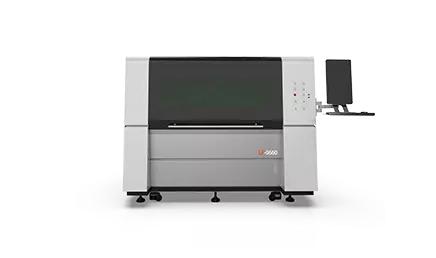
If you need a compact solution for small parts and thin sheet, a desktop-style layout can be attractive. One example is the LF0660 desktop fiber laser cutting machine, which is commonly considered when buyers want a smaller footprint without giving up practical metal cutting ability.
This type of configuration is especially useful for:
workshops with limited floor space,
training and R&D environments,
prototyping shops that do many short runs,
and manufacturers cutting smaller metal pieces daily.
The biggest advantage in real use is often workflow: you can keep the system closer to the workbench area, reduce material handling distance, and maintain a stable “small-part station” in your shop.
Choose a compact precision desktop setup like this if you:
cut small parts most of the time,
want high repeatability on thin sheet,
and prefer a smaller machine footprint and simpler installation.
Desktop / Compact Precision Option 2: LF1390 (A Practical Step Up for Thin Sheet Processing)
If you like the “precision compact” idea but want a bit more working area and flexibility, another direction is a compact precision machine designed for thin sheet processing, such as LF1390.
Compared with very small formats, a slightly larger compact precision system can be more comfortable when:
you want to nest multiple small parts efficiently,
you need more layout flexibility for mixed small/medium parts,
and you want to reduce the number of sheet changes.
A thin-sheet oriented compact platform like LF1390 typically appeals to job shops and small manufacturers that cut many bracket-style parts, panels, and components where edge quality and stable repeatability matter.
Choose a compact precision platform like LF1390 if you:
cut thin sheet daily but need more layout space than a very small desktop format,
care about stable edge quality with minimal post-processing,
and want a machine that supports frequent switching between parts and jobs.
The “Dual-Use” Requirement: When You Need Metal and Non-Metal in One Machine
Some shops have a different reality: they cut metal parts, but they also frequently handle non-metal jobs (for example acrylic, wood, or certain board materials for signage, prototyping, or packaging). In that case, the question becomes:
“Do we need two machines, or can one machine cover both categories?”
A dual-use configuration can make sense if:
non-metal jobs are not “rare,” but regular enough to justify capability,
you want to avoid buying and maintaining two separate systems,
and your workflow benefits from doing more work inside one shop.
A typical product direction for that concept is the LF1325LC, which is positioned as a dual-use machine that can cut metal and non-metal in one platform.
Choose a dual-use machine like LF1325LC if you:
cut thin metal sheet and also process non-metal materials in the same business,
want to expand your services without purchasing two separate machines,
and prefer one platform for training, maintenance, and daily operation.
How to Decide Between “Precision Compact” and “Dual-Use”
Here is the simplest decision logic:
Pick a precision compact / desktop direction (LF0660 or LF1390) if:
your work is mainly thin metal sheet,
you need consistent quality and fine features,
and your profit comes from metal parts where precision matters.
Pick a dual-use direction (LF1325LC) if:
your business regularly mixes metal and non-metal cutting,
you want broader service coverage,
and you want one machine to support multiple job types.
Practical Tips for Better Thin Sheet Results (Simple, High-Impact)
No matter which machine you choose, these practical habits improve thin sheet outcomes immediately:
Keep sheet flat and well supported
Thin sheet distortion is often the biggest cause of quality problems.Use stable gas strategy for your material
For clean stainless results, nitrogen is often preferred; for mild steel, oxygen is common. The right strategy reduces burr and improves edge consistency.Prioritize parameter stability over “max speed”
Running too fast can create incomplete cuts; running too slow can create burning and rough edges.Maintain consumables regularly
Nozzles and protective lenses directly affect cut stability—especially on fine features.Control handling and scratching
Thin sheet parts often “look finished” after cutting; poor handling can destroy that advantage.Closing: Precision Is a Business Strategy, Not a Luxury
For many small shops, the fastest path to profit is not chasing maximum thickness—it is building a reliable capability for clean thin sheet cutting, fine details, and stable repeatability. If your core work is small parts and thin sheet, a compact precision platform like GWEIKE LF0660 or GWEIKE LF1390 can be a practical fit. If your business also needs non-metal capability in the same workflow, a dual-use direction like GWEIKE LF1325LC can be worth considering.
Post Your Ad Here
Comments