Laser Welding Troubleshooting: Common Defects, Quick Diagnosis, and Practical Fixes (Beginner-Friendly)
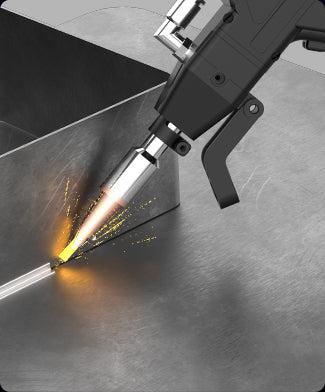
Laser welding can look “easy” in short videos, but real results depend on a small set of fundamentals: clean surfaces, stable fit-up, consistent shielding gas coverage, and a repeatable motion path. When something is off, the defects often look dramatic—porosity, spatter, burn-through, or a weak joint that fails in testing.
This guide focuses on practical troubleshooting: what you see, what it usually means, and what to change first.
If you want deeper background (optional) before troubleshooting, these three references are useful:
First principles: the four things that cause most failures
Before adjusting advanced parameters, check these four basics. They solve a surprising number of “mystery” defects:
Surface cleanliness
Oil, paint, oxide films, adhesive residue, and even fingerprints can cause porosity and unstable melt behavior.
Practical rule: if you would not bond it, do not weld it.
Fit-up and gap control
Laser welding is sensitive to gaps. A tiny inconsistent gap can flip a weld from stable to spattery or porous.
Practical rule: consistent contact or a controlled, minimal gap is better than “good enough” alignment.
Shielding gas coverage
Poor gas coverage causes oxidation, discoloration, soot, and sometimes porosity.
Practical rule: if color/soot changes along the seam, suspect gas flow/nozzle distance/angle first.
Consistent motion
Wobble in travel speed or hand angle changes energy density.
Practical rule: when the bead looks “rhythmic” or uneven, suspect motion consistency before power.
Quick diagnosis by symptom (what to change first)
Symptom A: Porosity (tiny holes, “pitting,” weak-looking bead)
Most common causes:
contaminants (oil, rust, coatings)
unstable gas coverage (turbulence, wrong nozzle distance, poor angle)
excessive heat input causing over-agitation of the melt pool
trapped air due to a gap or poor joint design
First fixes to try (in this order):
Improve cleaning (mechanical + solvent appropriate for your material)
Stabilize shielding: check nozzle distance, angle, and steady flow
Reduce heat input slightly (a small drop in power or a small increase in speed)
Improve fit-up: reduce gap and make clamping more consistent
Symptom B: Spatter (sparks, explosive ejection, messy bead)
Most common causes:
too much energy density (too slow, too much power, focus too tight)
inconsistent joint gap causing sudden keyhole instability
poor travel angle or standoff distance changes mid-weld
First fixes to try:
Increase travel speed slightly or reduce power slightly
Make standoff distance and angle consistent (especially at corners)
Improve clamping to remove micro-gaps
If your process supports it, use a stable oscillation/wobble path rather than “shaking by hand”
Symptom C: Burn-through (thin sheet blows out, holes appear)
Most common causes:
heat input too high for the thickness
lingering at the start/stop points
poor heat sinking (no backing bar or poor contact)
First fixes to try:
Increase speed and avoid “dwell” at the start/stop
Use proper backing or heat sink support where possible
Reduce power slightly or widen the energy distribution if your setup allows
Use stitch strategy (short segments with controlled overlap) if distortion is also an issue
Symptom D: Lack of fusion (looks “stuck on,” weak joint, fails bend test)
Most common causes:
speed too fast or power too low
focus position incorrect relative to the joint
joint design or gap prevents proper melt pooling into both sides
shielding gas issues leading to unstable melt behavior
First fixes to try:
Slow down slightly or increase power slightly (small steps)
Re-check focus and seam tracking (do not guess—verify)
Improve joint fit-up and edge prep
Ensure consistent wire position (if you are using filler) and consistent travel angle
Symptom E: Oxidation/discoloration (brown/blue/black marks, soot)
Most common causes:
inadequate shielding gas coverage
nozzle too far/too close causing turbulence or poor shielding
wrong travel angle blowing gas away from the melt pool
contaminated surface
First fixes to try:
Adjust nozzle distance and angle to keep gas “blanket” stable
Increase flow modestly (avoid turbulence from excessive flow)
Clean more thoroughly
If you are welding reflective or heat-sensitive finishes, reduce heat input slightly to limit oxidation
Starting and stopping: where many defects are “born”
Even if the mid-seam looks good, the start and end can create cracks, craters, or weak spots.
Practical improvements:
Use a controlled ramp-in/ramp-out technique (do not “pause” at the end)
Avoid lingering on corners or at seam transitions
If possible, start on a scrap tab or a non-critical run-in area, then move into the part
Keep wire introduction (if used) consistent at the start—sudden wire contact can destabilize the pool
Mixed thickness welding (thin + thick): what changes
Mixed thickness joints are common and tricky because the thicker side “absorbs” heat, while the thinner side overheats easily.
Practical approach:
Aim your energy slightly toward the thicker side, but ensure the thin side still reaches fusion
Use firmer clamping to keep the thin edge flat and reduce gaps
Expect to tune speed more than power: speed adjustments often stabilize the bead without overheating the thin edge
When distortion is a problem, weld in short sections and alternate positions to distribute heat
When people struggle with mixed thickness, the root cause is often one of these:
uneven fit-up (thin edge lifts slightly)
inconsistent angle (energy swings from thick side to thin side)
starting too slow (thin side overheats immediately)
Filler wire problems (if you use wire)
Wire can improve gap-bridging and bead shape, but it introduces new failure modes.
If the bead looks lumpy or inconsistent:
keep wire feed position consistent relative to the melt pool
avoid pushing wire too far ahead of the pool (it will ball up and spatter)
do not “chase the pool” with wire; keep a repeatable hand rhythm
If you see excessive buildup:
you may be adding wire faster than the pool can absorb it
increase travel speed slightly or reduce wire feed slightly (one change at a time)
A repeatable troubleshooting routine (fast and practical)
When quality drops, avoid random parameter changes. Use a short routine:
Confirm the material (grade, finish, coatings) and clean it
Verify joint fit-up and clamp stability (no changing gaps)
Stabilize gas coverage (distance, angle, steady flow)
Run a short test seam and adjust only one variable at a time
Lock the method once stable: same angle, same speed, same standoff
This method is slower for the first 10 minutes and faster for the next 10 hours.
Summary: what to fix first, most of the time
If you are unsure where to start:
Porosity and discoloration: fix cleaning + gas coverage first
Spatter and burn-through: fix heat input + motion consistency first
Lack of fusion: fix speed/power balance + focus + fit-up first
Mixed thickness: fix aiming/angle consistency + clamping first
Post Your Ad Here
Comments