How to Choose a Sheet Metal Laser Cutting Machine
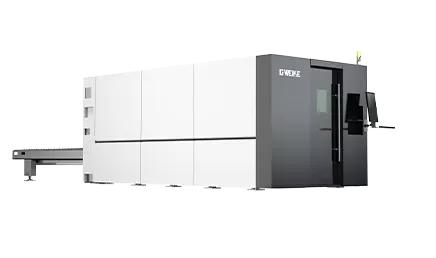
If you are shopping for a sheet metal laser cutting machine, the biggest mistake is not the brand—it is choosing the wrong logic. Many buyers focus only on “How thick can it cut?” or “What’s the cheapest price?” and then discover painful problems later: slow production on their main jobs, unstable cut quality, higher gas and consumable costs than expected, or safety/ventilation issues that make daily operation stressful.
This guide is written in plain English and is designed for first-time buyers and growing fabrication shops. It explains how to choose the right configuration based on what you actually cut, how you produce, and how you want to recover the investment.
Start with the Real Question: What Do You Cut and How Do You Produce?
Before you talk about price or “best model,” write down three simple facts. This will prevent most expensive mistakes.
A. What materials do you cut most often?
Most sheet metal shops cut:
Mild steel (carbon steel)
Stainless steel
Aluminum
Some shops also cut brass or copper. Those reflective metals may require more careful process settings and stable optics protection, so it’s important to mention if they are part of your regular work.
B. What thickness range is your “daily work”?
Use the thickness range that represents 80% of your jobs, not the rare exceptions.
Example:
If most of your orders are 0.8–6 mm and you only sometimes cut 8–10 mm, you should choose a setup optimized for thin-to-medium sheet efficiency.
If most of your work is 10 mm+, you should prioritize thick-plate stability, power, and machine rigidity.
C. Are you mainly prototyping or producing?
Prototyping / custom jobs: You need flexibility, quick setup, and easy parameter changes.
Batch production: You need stable cycle times, fast loading/unloading, and low downtime.
A good requirement sentence looks like:
“We cut mainly stainless and mild steel from 1–6 mm, we do batch production, and we want stable speed, safe operation, and fast payback.”
How to Choose Laser Power
Many buyers ask one question:
“How thick can it cut?”
That is not the best question. The better questions are:
“How fast can it cut my main thickness?”
“How stable is the cut edge quality day after day?”
“How much does it cost to run (gas, consumables, electricity)?”
Think in terms of “main thickness,” not “maximum thickness”
Thin sheet focused (0.8–3 mm): Speed, edge quality, small-hole performance, and low deformation matter more than extreme thickness ability.
Medium thickness (4–10 mm): Stable piercing, consistent cut quality, and overall machine rigidity matter a lot.
Thick plate (10 mm+): Higher power can bring major efficiency gains, but only if the machine structure, gas strategy, cooling, and optics protection are designed for that workload.
Important: Higher power can mean higher operating cost
Power is not only about cutting ability. Higher power often increases:
Electricity use
Auxiliary gas consumption (depending on material and thickness)
Heat load on cooling systems
Sensitivity to optics/consumable conditions
So the “best” power is the one that matches your order structure and produces the lowest cost per part for your core jobs.
How to Choose Bed Size
Bed size determines:
What sheet size you can process
Nesting efficiency (how well you use material)
Loading/unloading convenience
Why 1530 (1500 × 3000 mm) is so popular
For many fabricators, 1530 is the best balance of:
Common sheet metal supply formats
Good nesting space without wasting floor space
Easier material handling
Strong resale value in many markets
That is why many shops make 1530 their core production platform, often with a full enclosure and exchange table for stable throughput.
When you should consider a larger bed
A larger format makes sense if you regularly cut:
Larger parts where splitting/nesting becomes inefficient
Long structural pieces that are difficult to segment
Jobs where frequent sheet changes waste too much time
If large parts are rare, it is usually smarter to handle those cases separately rather than buying a bigger machine for low-frequency jobs.
Single Table vs Exchange Table (This Decision Directly Affects Throughput)
This is one of the biggest productivity levers.
Single table: best for budget and light production
Good for:
Lower budget
Prototyping or small batches
When manual loading time does not limit your output
Downside:
When you change sheets, the machine often waits.
In batch production, this “waiting time” becomes real lost money.
Exchange table: best for steady batch production
Good for:
Shops that care about stable daily output
Higher utilization and predictable cycle time
Better workflow (one sheet loads outside while cutting happens inside)
If your goal is production and payback, the exchange table is usually a strong value choice.
Full Enclosure: Not Only a “Nice Feature,” Often a Practical Requirement
A fully enclosed machine improves:
Safety: reduces risk from laser radiation and reflections
Fume and dust control: easier to manage smoke and particles
Noise control: better working environment
Stable operation: less external disturbance in the cutting area
If you plan to run the machine every day with a team, enclosure and proper extraction are usually worth it.
Cut Quality and Long-Term Stability: Look Beyond “Paper Specs”
Many sellers list “positioning accuracy” and “repeatability.” These numbers matter, but what you really need is:
Will the machine keep stable quality after months of daily production?
Long-term stability depends heavily on:
Machine bed rigidity and welding stress relief
A stable frame reduces vibration and distortion over time.Motion system matching (servo, rails, rack, control tuning)
Good matching makes speed, accuracy, and edge quality consistent at higher acceleration.Process database and control usability
A practical system helps operators reach stable results faster without endless trial and error.
If you want “less headache,” you should treat stability and ownership support as part of the purchase decision.
Don’t Ignore Operating Cost: Gas and Consumables Can Decide Real Profit
Running cost is not a small detail. Over time, it can exceed the difference between two machine quotes.
Gas selection in simple terms
Oxygen: often used for mild steel, especially thicker plate. Faster and lower gas cost, but creates an oxide layer on the edge.
Nitrogen: common for stainless and aluminum. Cleaner edges, but nitrogen cost can be higher.
Air: sometimes used for thin materials or cost-focused jobs, but process stability and edge results need careful setup.
Consumables affect uptime and quality
Nozzles, protective lenses, and ceramics directly influence:
Cut quality consistency
Downtime frequency
Cost per part
A practical buyer always asks:
What is the typical consumable change interval for our materials?
What parts are considered “fast wear”?
What is the real availability of spares and service?
A Simple Payback Method (No Complex Finance Needed)
You can estimate payback with a plain formula:
Payback time ≈ Total investment ÷ Monthly net profit increase
Where “monthly net profit increase” comes from:
More output: faster cutting, less waiting, higher utilization
Less cost: fewer defects, less rework, less outsourcing
More capability: taking jobs you previously couldn’t handle (thickness, speed, quality)
The biggest hidden cost for many shops is not the machine—it is low efficiency and unstable production that eats profit every day.
A Buyer’s Checklist You Can Copy and Send to Vendors
Job profile
Main materials? Main thickness (80% range)?
Prototype vs batch production?
Daily/weekly sheet volume?
Configuration
Recommended power and why?
Bed size (1530 or larger) and why?
Single table or exchange table and why?
Full enclosure and dust extraction plan?
Ownership
Gas strategy for our materials?
Consumables list and typical usage?
Training time: how long until operators produce stable parts?
Service response and spare parts support?
Conclusion: The Best Machine Is the One That Matches Your Orders
A good sheet metal laser cutting machine should help you achieve three things:
Fast and stable cutting on your main thickness
Safe and practical daily operation (enclosure, extraction, workflow)
A clear path to recover investment and scale production
And if long-term operation support is a priority for your team, you can also review:
Post Your Ad Here
Comments