Prevent Flange-Related Accidents Using High-Visibility Flange Tags
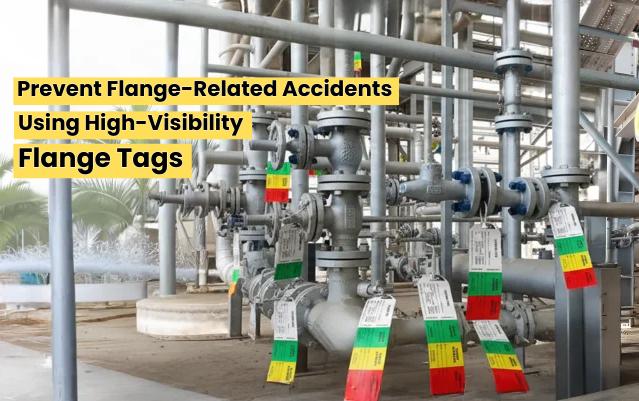
Flange joints are critical connection
points in industrial piping systems, yet they remain one of the most common
sources of leaks, failures, and safety incidents. In industries such as oil and
gas, chemical processing, power generation, and manufacturing, flange-related
accidents can result in serious injuries, environmental damage, equipment loss,
and costly downtime. Many of these incidents are preventable with proper
identification, communication, and visual safety controls. One of the most
effective yet often overlooked tools for this purpose is the use of
high-visibility flange safety tags.
The Hidden Risk of Flange-Related Accidents:
Flanges connect pipes, valves, pumps,
and other equipment that transport hazardous substances under pressure or high temperature.
When a flange is improperly assembled, inadequately torqued, or incorrectly
reassembled after maintenance, it can lead to leaks or catastrophic failure.
The risk increases during shutdowns, turnarounds, and maintenance activities
when multiple teams are involved and system conditions change frequently.
A major contributor to flange-related
incidents is poor communication. Without clear visual indicators, workers may
assume a flange is fully secured, tested, or approved for service when it is not.
This assumption-based operation is one of the leading causes of unexpected
releases and injuries.
What are Flange Tags?
Flange safety tags are specialized
identification tags attached directly to flange joints to communicate their
status. They provide immediate visual information about whether a flange has
been assembled, torqued, inspected, pressure tested, or approved for operation.
Unlike general safety tags, flange tags are designed
specifically for joint management and mechanical integrity control.
These tags act as a visual
checkpoint, ensuring that no step in the flange assembly or inspection process
is overlooked.
Why Flange-Related Accidents Occur?
Several factors contribute to flange-related incidents across industrial facilities:
- Lack of clear identification of flange status
- Inadequate shift handover communication
- Missed torque verification or inspection steps
- Complex piping systems with hundreds of flange
points
- Human error due to low visibility or unclear
documentation
Without a reliable visual system in
place, even experienced personnel can make critical mistakes.
Role of High-Visibility Flange Tags in Accident Prevention:
High-visibility flange tags eliminate
ambiguity. Their bright colors and clear markings allow workers to instantly
recognize the condition of a flange from a safe distance. By making the status
of each joint obvious, these tags prevent unauthorized pressurization,
premature startup, and incorrect assumptions during maintenance or
commissioning.
They also create a standardized
communication method across departments, contractors, and shifts, significantly
reducing the risk of misinterpretation.
Key Features of High-Visibility Flange Tags:
High-quality flange safety tags are
designed for durability and clarity. Key features typically include:
- Bright, color-coded designs for quick
recognition
- Multi-stage indicators to show assembly and
inspection progress
- Tear-resistant and weatherproof materials
- Writable surfaces for names, dates, and
verification details
- Secure attachment methods that prevent
accidental removal
These features ensure the tags remain
legible and reliable even in harsh industrial environments.
Types of Flange Tags Commonly Used:
Different operations require
different tagging solutions. Common types include:
- Multi-stage flange tags that track assembly,
torque, testing, and approval
- Inspection and torque management tags
- Customised flange tags designed for site-specific procedures
Using the correct type ensures
accurate tracking throughout the flange management lifecycle.
When and Where Flange Tags Should Be Used:
Flange safety tags should be applied at multiple stages of operation:
- During initial flange assembly
- After torque tightening and verification
- During pressure testing and inspection
- Throughout maintenance and shutdown activities
- Prior to system commissioning or
re-energization
They are especially critical in
high-risk industries handling hazardous fluids, gases, or steam.
How to Use Flange Tags Effectively?
To maximize effectiveness,
organizations should follow a consistent process:
- Attach the tag immediately after flange assembly
- Update the tag at each inspection or
verification stage
- Ensure all required information is clearly
filled in
- Keep the tag visible and unobstructed
- Remove or replace the tag only after final
approval
Proper use turns the tag into a
reliable safety checkpoint rather than a formality.
Compliance, Accountability, and Audit Benefits:
Flange tags support regulatory
compliance by improving traceability and documentation. They provide clear
evidence that required steps have been completed and verified, simplifying
audits and inspections. Additionally, they help reduce rework, unplanned
shutdowns, and equipment damage caused by preventable errors.
Best Practices for Implementation:
Successful implementation involves:
- Standardizing flange tag types and color
codes
- Training workers and contractors regularly
- Integrating flange tags into mechanical
integrity programs
- Conducting routine checks for accuracy and
visibility
Consistency is key to long-term
effectiveness.
Conclusion:
Flange-related accidents are rarely
caused by a single failure; they are usually the result of missed steps and
poor communication. High-visibility flange safety tags provide
a simple yet powerful solution by making flange status clear, visible, and
accountable.
By adopting and standardizing these
tags, organizations can significantly reduce risk, protect workers, and
maintain safe, reliable operations. In industrial safety, clear visibility is
not just helpful - it is essential.
Post Your Ad Here
Comments