What is the Difference Between Lockout and Tagout?
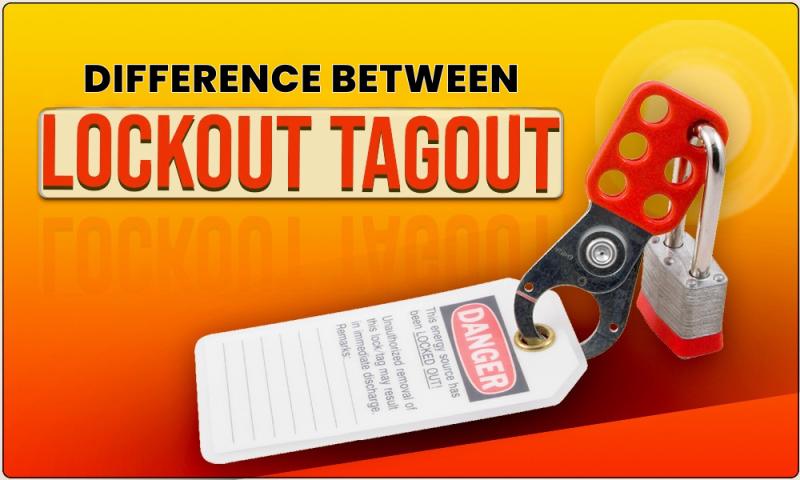
In modern industrial environments, controlling
hazardous energy is not optional - it is essential. Electrical, mechanical,
hydraulic, pneumatic, thermal, and chemical energies can instantly become fatal
when machines are serviced without proper isolation. We rely on lockout and
tagout procedures to prevent accidental startup and unexpected energy release.
While the terms are often used together, lockout and tagout are not the same.
Each has a distinct function, legal implication, and safety outcome.
This comprehensive guide explains what islockout tagout, the difference between lockout and tagout, how each
method works, and why correct implementation is critical for compliance,
productivity, and worker survival.
Understanding Lockout and
Tagout in Industrial Safety:
Lockout Tagout is a structured safety system
used to isolate hazardous energy sources during equipment maintenance, repair,
and inspection. It ensures machines cannot be energized while work is being
performed. Lockout physically restrains energy flow, while tagout provides
identification and warnings.
Together, they form a mandatory compliance
requirement in many countries and are recognized as the most effective method
to prevent serious injuries, amputations, electrocutions, and fatalities.
What Is Lockout?
Lockout is the physical isolation of an energy
source using a locking device. A lock is applied to an energy-isolating device
such as a circuit breaker, valve, switch, or plug. The equipment cannot be
operated unless the lock is removed using a unique key.
Key
Characteristics of Lockout:
● Physically
prevents machine activation
● Uses
padlocks, valve lockouts, breaker lockouts, plug lockouts, and hasps
● Ensures
total energy isolation
● Provides
the highest level of safety
● Legally
mandatory where feasible
Lockout is the primary and preferred safety
control because it creates a hard-physical barrier between workers and
hazardous energy.
What is Tagout?
Tagout is the placement of a warning tag on an
energy-isolating device to indicate that the machine must not be operated. Safetytags communicate that maintenance is in progress and identifies the
authorized worker responsible.
Key
Characteristics of Tagout:
● Does
not physically block machine operation
● Acts
as a visual and procedural warning
● Depends
on human compliance
● Used
when lockout is not technically possible
● Requires
additional safety controls
Tagout is considered a secondary control and is
only acceptable when lockout cannot be implemented due to equipment
limitations.
Why Lockout is Safer than
Tagout?
Lockout devices provide a mechanical barrier
that eliminates the possibility of accidental machine activation. Even if
someone tries to start the machine, the locked isolator physically prevents
movement.
Tagout relies solely on procedural discipline.
If someone ignores the warning, machinery can be started, leading to fatal
incidents. This is why regulatory authorities mandate lockout whenever
possible.
When is Tagout Allowed?
Tagout is only permitted when:
● The
equipment cannot accept a lock
● The
employer implements additional safety measures
● The
system provides equivalent protection
● Workers
receive specialized training
● Continuous
supervision is ensured
Even in these cases, employers must attempt to
modify equipment to allow future lockout capability.
Common Lockout Devices Used in Industry:
Lockout devices physically secure energy sources, ensuring complete isolation and preventing accidental machine activation.
● Safety
Padlocks - Non-conductive, keyed-alike, and color-coded
● Valve
Lockouts - For gate, ball, butterfly, and globe valves
● Circuit
Breaker Lockouts - For MCB, MCCB, and toggle breakers
● Plug
Lockouts - For power cord isolation
● Hasps -
Allow multiple workers to apply personal locks
● LOTO
Stations - Centralized storage of lockout tools
Common Tagout Devices:
Tagout devices provide clear warnings. They
communicate responsibility, maintenance status, and authorization, reinforcing
procedural discipline and worker awareness.
● Danger
tags
● Caution
tags
● Do
Not Operate tags
● Equipment
identification tags
● Maintenance
in Progress tags
These are typically made of tear-resistant PVC
and include space for name, department, date, and authorization.
Legal and Compliance
Perspective:
Safety authorities globally recognize lockout as
the primary compliance method. Tagout alone is considered insufficient unless
additional safeguards are in place.
Non-compliance can result in:
● Heavy
fines
● Legal
prosecution
● Business
shutdown
● Worker
compensation claims
● Fatal
accidents and reputational loss
Benefits of Proper Lockout
Tagout Implementation:
Post Your Ad Here
Comments