How A Lockout Hasp Works - Complete LOTO Safety Guide
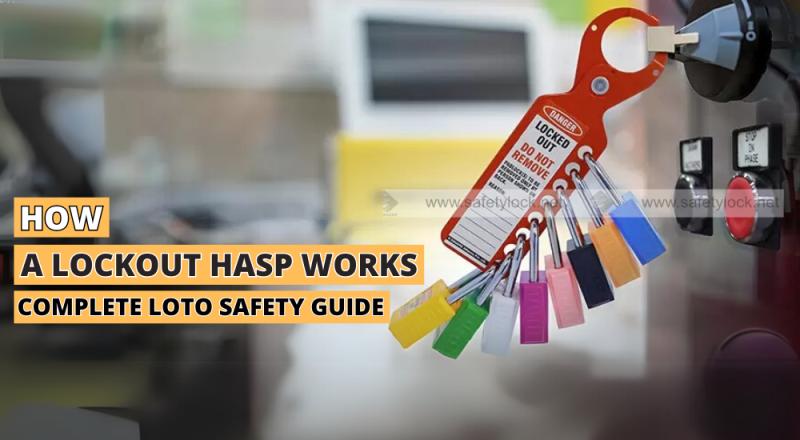
A lockout hasp is one of the most essential components of a robust Lockout Tagout safety program, enabling multiple workers to secure hazardous energy sources during maintenance, servicing, or repair operations.
In high-risk industrial environments, controlling energy is not optional - it is a compliance requirement that protects lives and prevents catastrophic accidents. This comprehensive guide explains exactly how a lockout hasp works, why it is used, and how it strengthens workplace safety under OSHA’s LOTO standard (29 CFR 1910.147).
What is a Lockout Hasp?
A lockout hasp is a safety device used to secure an energy-isolating mechanism (such as a power switch, circuit breaker, or valve) in its "off" position during maintenance or repair work. Its primary function is to prevent the accidental startup of machinery or release of hazardous energy, thereby protecting workers from serious injury or death
The key feature of a lockout hasp is its ability to accommodate multiple personal safety padlocks simultaneously
A lockout hasp is a mechanical device designed to keep energy-isolating mechanisms locked in the OFF or safe position. It features:
A metal or non-conductive body
Multiple padlock holes (usually 6-24)
A scissor-type or clasp-style locking mechanism
When placed through an energy control point - such as a disconnect switch, valve handle, or breaker panel - the hasp allows each authorized worker to attach their own padlock, ensuring that the equipment cannot be re-energized until every individual has removed their lock.
Why Lockout Hasps are Critical in LOTO Procedures
Lockout hasps serve several vital safety functions:
1. They Enable Group Lockout
Multiple technicians often work on the same machine. The hasp ensures each person maintains personal control over the energy source.
2. They Prevent Accidental Re-Energization
Until all locks are removed, the hasp physically prevents anyone from operating the energy-isolating device.
3. They Provide Clear Visual Control
A hasp loaded with padlocks provides an unmistakable signal:
“Do not operate - workers are still servicing this machine.”
4. They Ensure OSHA Compliance
OSHA requires each authorized employee to apply their own lock. The hasp enables full compliance, even for large teams.
How A Lockout Hasp Works: Step-by-Step Process
Understanding the function of the lockout hasp is essential for safe energy control. Below is a detailed look at how the device operates in real working conditions.
Step 1: Identify & Isolate the Energy Source
Before using a lockout hasp, workers must identify all hazardous energy sources, including:
Electrical
Mechanical
Hydraulic
Pneumatic
Thermal
Chemical
Gravitational
Each energy source must be brought to a zero-energy state.
Step 2: Place the Hasp on the Isolation Point or Lockout Device
Once isolation is confirmed, the technician secures the hasp by placing its open jaws around the energy control component (e.g., a switch handle, valve wheel, breaker toggle, gate valve, or circuit panel latch).
If a lockout device is already applied to isolate the energy source (such as a valve cover, breaker lockout, or circuit panel lockout), the hasp is then placed through that device.
When closed, the hasp’s jaws prevent the control point-or the lockout device itself-from being moved or removed, ensuring safe group isolation.
Step 3: Add Individual Padlocks
Each authorized worker attaches their personal padlock through one of the holes in the hasp. Typical lockout hasps support 6 or more padlocks, though extended models support up to 24.
Every lock represents:
An individual working on the equipment
A personal commitment to safety
A lock that only the employee can remove
Step 4: Attach Safety Tags
A LOTO tag is attached to each padlock, displaying:
Worker’s name
Contact information
Work duration
Reason for lockout
These tags provide accountability and ensure transparency during group lockout.
Step 5: Verify Zero-Energy State
Workers must verify that no energy remains stored, which includes:
Attempting to start the machine
Testing for voltage
Checking for residual pressure
Only after verification can work safely begin.
Step 6: Removal of Locks & Hasp
When maintenance is completed:
Each worker removes their personal padlock.
Once all locks are removed, the hasp can be taken off.
The energy-isolating device can then be returned to normal operation.
This ensures that no worker is exposed to unexpected startup.
Types of Lockout Hasps
Different work environments require different lockout hasp materials and styles. Here are the main categories:
1. Steel Lockout Hasps
High durability
Ideal for industrial environments
Corrosion-resistant coatings available
Withstand heavy use and harsh conditions
Best for: Electrical, mechanical, and multi-user applications
2. Aluminum Lockout Hasps
Lightweight and strong
Preferred when portability is key
Oxidation-resistant
Best for: Light-medium duty lockout tasks
3. Non-Conductive (Nylon) Hasps
Electrically insulated
Prevent arc flash risks
Highly visible colors
Best for: Electrical panel lockout, substation maintenance, energized systems
4. Scissor-Style Hasps
Traditional metal design
Wide jaw opening
Secure double-clasp mechanism
Best for: General LOTO applications
5. Dual-Lock Hasps
Feature two jaw sizes
Enable compatibility with various lockout points
Best for: Facilities with diverse equipment types
Common Applications of Lockout Hasps in Industry
Lockout hasps are used across many sectors where hazardous energy poses risks:
Manufacturing plants
Chemical processing units
Oil & gas operations
Automotive workshops
Power generation facilities
Food & beverage processing
Warehouses and distribution centers
Wherever hazardous energy is present, lockout hasps help ensure life-saving control measures.
Benefits of Using Lockout Hasps in LOTO Programs
Employing lockout hasps provides measurable safety improvements:
Enhanced Group Safety
Each worker contributes their personal lock, guaranteeing mutual safety.
Clear Visual Communication
Multiple padlocks unmistakably indicate active maintenance.
Prevents Unauthorized Operation
A locked hasp stops accidental or intentional machine startup.
Efficient Group Management
Instead of locking the control point individually, workers share a central locking point.
Supports Regulato
Post Your Ad Here
Comments