Formation,Features and Uses of Braided Copper Rope
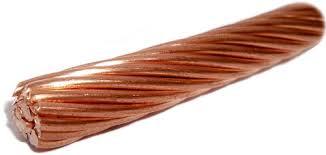
Braided wires, also called as braided ropes, are one of the most widely used ropes in the electrical industry. These are made of conducting materials, such as copper, aluminimum, copperweld, alumnoweld, tinsel and thermocouple. Copper is the primary materials used in the constructions of these wires. Aluminimum is another important conductor but has only about 60 percent of the conducting strength of copper. This is the one which finds application in overhead cables and also a building wire in some countries. In India, this is being used due to its relatively cheaper nature as compared to copper. However, braided copper rope is used in applications where there is a need for good transmission of electricity.
Different types of formation
Braided copper rope can be formed in many ways based on alignment of the wires with respect to one another. Bunch strand is a way in which these can be formed by twisting many small wires in one direction. These find usage in making extra-flexible wires and constant flexing control cables. Concentric strand copper wire is another way of forming these ropes. These come in configuration of 7, 19 and higher number wires, depending on the thickness of the wire required. In the starting range of these wires, one wire strand is surrounded by 6 other strands, making a total of 7 wires. How many wires have to be used is dependent on the desired size and flexibility level of the wire. A sector conductor is another way of formation of the wires. This resemblers the sector of a circle and hence the name. This is rarely used.
Important features and applications
A braid is defined as filaments of a metallic group which are interwoven in cyclindrical form to form a covering over one or more wires. The braided copper wire is a lot more flexible that the non-braided ones. This makes these suitable for a large number of applications where twists and turns are required in wiring. These wires are resistant to rusting and do not wear and tear quickly. These are also used in those applications which have high vibrations since these are able to handle these vibrations better due to high malleability and flexibility. Wherever the wire of higher cross-section is required, these are better options as compared with the single strand of that cross-section (also called solid wires).
While solid wires are used generally for outdoor applications (grounding applications), the braided ones are used for wiring of residential or commercial interior spaces. Braided copper rope is also ideal choice for electronic devices, automobiles, robotics and other such applications due to their flexibility. With such unique features and highly important applications of these wires, these play an important role is forming electric equipments and maintaining supplies of electricity to our homes and offices.
These wires are defined in terms of multiple parameters, outside diameter and overall length. Prices are also based on nature of material used for construction of wire and length. These are also defined in terms of gauge and most commonly these are 10, 12, 14 or 16 gauge.
Advertise on APSense
This advertising space is available.
Post Your Ad Here
Post Your Ad Here
Comments