Braided Copper Rope – A Detailed View
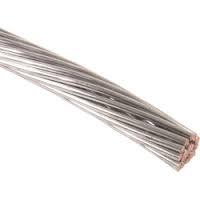
Braided copper rope has become an important product in electronic as well as electrical cables. These braids are nothing but complex structure, having a particular pattern, where strands of flexible copper wires are interlaced with one another. However, braiding should not be confused with weaving. This is because in case of weaving, two separate as well as perpendicular strands are involved. However, in case of braid, narrow as well as long component strands are zigzagged forward by overlapping one mass over the other. In most cases, braids consists three stranded structure and are usually solid and flat in nature. However, there are many instances where braids are created from multiple strands and the number is arbitrary.
When it comes to electronic and electrical cables, braided copper rope is manufactured from tubular sheath. These sheaths are made from braided metal strands that are placed around central cable to shield against electromagnetic interference. While the central conductors carry signal, braids are actually grounded. To increase both durability and shielding, copper braids are used in addition to foil jackets.
Braided copper are available in three types and they are rounded Tin Coated Braided Copper Wire, flat Tin Coated Braided Copper Wire, and Braided Tin Coated Flexible Copper Wire. One of the most popular braided metals is tin coated ones. These wires or ropes, whatever, it may be called, comes in two variants. While one is flat, the other is rounded. However, to make it simple, it can be easily said that wires of different specifications and different sizes are braided together. Rounded or flat tin coated braided copper rope are used in ETC signal pickup instruments, Computer Monitor, Television, CRT Assembly Wire, Cable, and many more.
Now, let’s have a quick look at the manufacturing process of this kind of metal rope. There are three specific steps involved. The first one is Drawing Process, followed by Annealing Process, and the final step is Braiding Process. In the Drawing Process, a 8mm diameter EC Grade Continuous Cast Copper rod is taken. This is meant to draw on wire drawing for various gauge wires. The second step is Annealing Process, which follows the drawing process step. Drawn wire coils are put into pot of Electric Furnace. This step helps in annealing soft wire. In the final stage of producing braided copper rope, the twisting or braiding process is involved. Here, on reels, the wire is wound and then put into braiding machines to make braided wires as per specifications. Only after the completion of this process the braided copper wires are created.
After knowing about the manufacturing process, it is now time to get a close view of the properties and usage patterns. Tin coated braided flexible copper wires are known as very good conductors. In fact, they are much more durable than the normal wires. Two terminals of this rope are tin plated and copper pipe type. In accordance with the needs of customers, production of connector size is done. The flexible joints are manufactured only after this process of production of connector size. Braided copper rope has high conductive ratio and is known for having strong anti-fatigue ability.
Advertise on APSense
This advertising space is available.
Post Your Ad Here
Post Your Ad Here
Comments