360 Degree view of a Braided Copper Rope
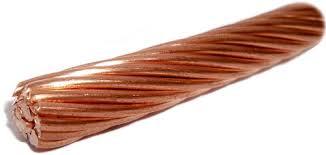
Braided copper rope is used in wide array of purposes. If you are new in this field, it will be difficult for you differentiate among copper braid, solid wires, stranded copper, and others. Therefore, basic knowledge about the wire types as well as their manufacturing processes help in getting a grip on the topic of copper wires and the different alloys and derivatives based on them.
Let’s discuss on copper braids. When compared with stranded copper wire, similarity can be seen in terms of looks. Compilation of smaller wires can be seen here too. However, there is a significant difference between these two ropes. While in case of braided copper ropes the wires are deliberately woven together for creating a single piece of strong rope, in case of stranded copper wires they are merely bound together and are not woven together to make a single piece.
As finer wires are woven together in a braided copper rope, they are extremely tear resistant and at the same time won’t get degraded from repeated manipulation. These wire types are more cost efficient than other cable types such as coaxial cables.
It is important to note that two kinds of wires are there for braiding cables. While one is single copper wire, the other is made up of 10 thin copper wires (making up a strand). In both the cases, the diameter of the wire is same. Braiding becomes easier when there is multi-strand wire than in the cases where braiding is done with the help of over four copper wires. Solid core can be braided. However, braiding becomes more effective when there is less number of wires. However, in general braiding is done with ten multi-stranded conductors.
Now, you know some of the basic but most important aspects of a braided copper rope. It must be said that these ropes are perfect for use in highly advanced technological applications (especially industrial in nature) as well as in high current equipments. The main two reasons for their use in these cases are water-cooled and highly flexible air connectors. Flexible components are manufactured from these braided copper ropes that act as perfect conductors of electricity and thereby enable seamless current transfer.
Besides flexible braided copper ropes, there are many other types of braiding of metals. The designs come in both insulated and non-insulated formats. Some of the most important and popular ones among them are TPE-U insulated cables, silicone insulated cables, welding cables (H01N2-D), insulated cables LifY, round stranded cables having overall copper braid, round stranded copper cables, braided aluminium or stainless steel tapes, PVC-extruded braided copper tapes, braided copper tapes, tubular braids (to shield and cover), and many more.
In general, a braided copper rope comes with annealed uncoated or tinned Cu-ETP1 wires according to DIN EN 13602. As selection process is extremely selective and fine, optimal finishing as well as maximum flexibility is guaranteed. Special construction procedure can also be followed for producing braided copper rope.
Advertise on APSense
This advertising space is available.
Post Your Ad Here
Post Your Ad Here
Comments