Comprehensive Hiring System Built to Improve Talent Acquisition Quality
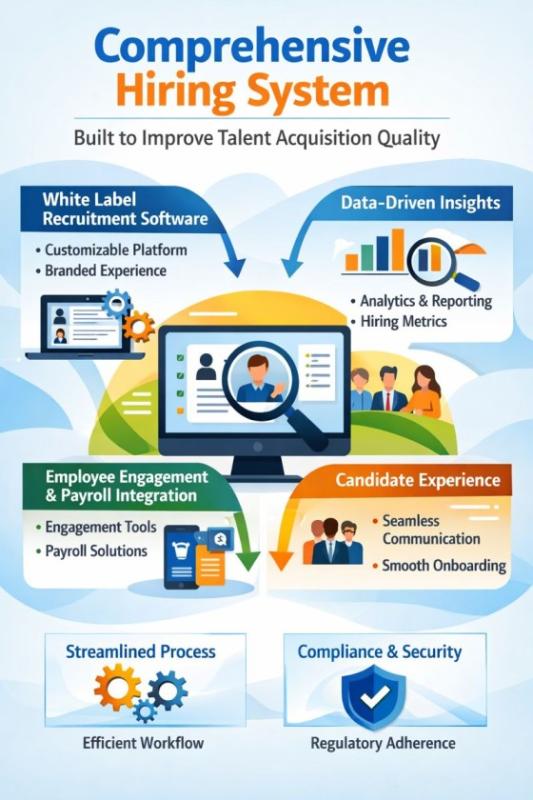
The modern hiring landscape demands structure, consistency, and adaptability to meet evolving workforce expectations. Organizations are increasingly relying on integrated systems that unify sourcing, evaluation, and onboarding activities into a single operational framework. A comprehensive hiring system supports data accuracy, process transparency, and strategic alignment across departments. When designed effectively, such systems can incorporate solutions like White label Recruitment Software to help organizations maintain brand consistency while improving recruitment governance, scalability, and long term talent quality across diverse roles and geographies.
Evolving Challenges in Modern Talent Acquisition Ecosystems Globally
Talent acquisition has shifted from a transactional activity to a strategic business function. Organizations now face complex challenges that extend beyond filling vacancies, including skills shortages, changing candidate expectations, regulatory scrutiny, and distributed workforces. These pressures demand hiring systems that are not only efficient but also resilient and adaptive.
Key challenges shaping modern recruitment environments include:
Increasing competition for specialized and high demand skills
Fragmented hiring processes across departments or regions
Inconsistent candidate evaluation and decision criteria
Limited visibility into pipeline performance and outcomes
Without a unified system, organizations struggle to maintain consistency and fairness in hiring decisions. Disconnected tools often result in duplicated effort, data silos, and reduced accountability. A comprehensive approach brings structure to these ecosystems by standardizing workflows while still allowing flexibility where business needs differ.
Core Components of a Comprehensive Hiring System Architecture
A robust hiring system is built on multiple interdependent components that work together seamlessly. Each component addresses a specific phase of the recruitment lifecycle, ensuring continuity from workforce planning to onboarding.
Common architectural elements include:
Workforce planning and requisition management
Candidate sourcing and relationship tracking
Assessment, screening, and interview coordination
Offer management and onboarding preparation
The value of these components lies in their integration. When data flows freely across modules, hiring teams gain a holistic view of both candidates and internal demand. This architecture enables consistent governance, clearer accountability, and more informed decision making at every stage of the hiring process.
Standardization Benefits Through Configurable White Label Platforms
Standardization is essential for organizations seeking to scale hiring operations without compromising quality. Configurable platforms enable businesses to define core processes while allowing localized adjustments. Within this context, White label Recruitment Software offers a structured foundation that aligns recruitment workflows with organizational policies and branding requirements.
Standardization delivers several measurable benefits:
Consistent candidate experience across roles and locations
Reduced compliance risk through predefined approval flows
Faster onboarding of hiring managers and recruiters
Improved reporting accuracy through uniform data capture
By establishing a shared operational framework, organizations can focus on evaluating talent rather than managing administrative complexity. Configurable systems strike a balance between control and flexibility, which is critical in dynamic labor markets.
Data Driven Decision Making Across the Recruitment Lifecycle
Data has become a central asset in improving hiring quality. Comprehensive hiring systems collect and analyze information across each stage of the recruitment lifecycle, transforming operational activity into actionable insight.
Key data driven capabilities include:
Tracking time to hire, quality of hire, and source effectiveness
Identifying bottlenecks in screening or interview stages
Comparing hiring outcomes across teams or regions
Supporting workforce planning through historical trends
When decision makers rely on structured data rather than intuition alone, hiring outcomes become more predictable and defensible. Advanced systems ensure that metrics are consistently defined and accessible, allowing organizations to refine strategies based on evidence rather than assumptions.
Candidate Experience Optimization Within Unified Hiring Systems
Candidate experience is a critical determinant of employer reputation and long term talent attraction. Unified hiring systems improve experience by reducing delays, enhancing communication, and ensuring transparency throughout the process.
An optimized candidate journey typically includes:
Clear and timely communication at each stage
Consistent evaluation criteria and feedback processes
Streamlined scheduling and document management
Smooth transition from selection to onboarding
By centralizing interactions and data, hiring teams can deliver a more professional and respectful experience. This approach not only improves acceptance rates but also strengthens the organization’s talent brand, even among candidates who are not selected.
Operational Efficiency and Compliance in Enterprise Hiring Programs
Operational efficiency is closely linked to compliance in enterprise hiring environments. As organizations grow, regulatory requirements related to data protection, equal opportunity, and employment law become increasingly complex.
Comprehensive hiring systems support compliance by:
Enforcing standardized approval and documentation processes
Maintaining audit trails for hiring decisions
Controlling access to sensitive candidate information
Supporting regional regulatory variations within a unified model
In addition to compliance, efficiency gains are realized through automation and role based access. When administrative tasks are streamlined, recruiters and hiring managers can dedicate more time to evaluating talent and supporting business objectives
Integration of Workforce Management and Engagement Technologies
Hiring does not operate in isolation from the broader workforce ecosystem. Integration with workforce management and engagement technologies ensures continuity from recruitment to long term employee success. Some organizations extend their systems to align with tools such as a white label employee engagement app or white label payroll software, creating a more cohesive employment lifecycle.
Integrated environments enable:
Seamless transition from candidate to employee records
Alignment between hiring data and workforce analytics
Improved collaboration between HR, finance, and operations
Better visibility into workforce costs and performance
This integration reinforces the strategic role of hiring by connecting talent acquisition outcomes with broader organizational metrics and goals.
Future Readiness Through Scalable and Adaptable Hiring Models
Future ready hiring models are designed to evolve alongside business strategy and labor market conditions. Scalability and adaptability are essential attributes, allowing organizations to respond quickly to growth, restructuring, or shifts in skill demand.
Characteristics of future oriented hiring systems include:
Modular design that supports incremental expansion
Configurable workflows that adapt to new roles or regions
Advanced analytics to anticipate workforce needs
Strong governance frameworks that support change
As organizations continue to navigate uncertainty, adaptable hiring models provide stability without rigidity. They enable leaders to align talent strategy with long term business objectives while remaining responsive to immediate challenges.
Conclusion
A comprehensive hiring system serves as a strategic enabler rather than a transactional tool. By unifying processes, data, and governance, organizations can improve hiring quality, enhance candidate experience, and strengthen compliance. Structured yet flexible systems allow hiring teams to operate with greater confidence and clarity. As workforce dynamics continue to evolve, organizations that invest in well designed hiring frameworks will be better positioned to build resilient, high performing teams that support sustainable growth and organizational stability.

Comments