How to Launch a Language Learning App Like Pingo AI
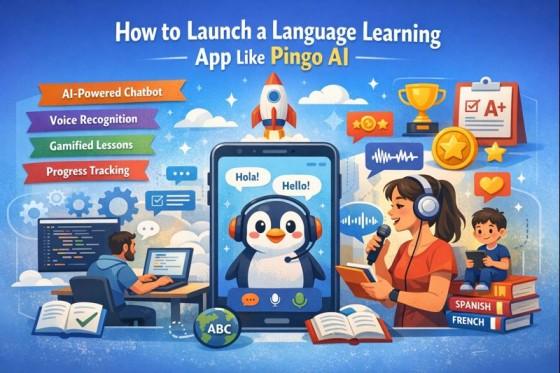
The rapid adoption of artificial intelligence in education has transformed how people acquire new languages. Modern learners expect personalized, adaptive, and engaging experiences that fit into busy schedules. Entrepreneurs and product teams exploring this space must balance pedagogy, technology, and usability to succeed. When planning to Create an app like Pingo AI, it is essential to understand market expectations, technical foundations, and long term operational considerations. A thoughtful, research driven approach ensures the resulting platform delivers measurable learning outcomes and sustained user engagement.
Understanding the Market Demand for AI Language Learning Apps
The global language learning market continues to expand due to globalization, remote work, and cross border collaboration. AI driven applications are increasingly favored because they offer adaptive learning paths, instant feedback, and personalized pacing.
Key market drivers include:
Growing demand for multilingual professionals
Increased mobile learning adoption
Preference for self paced, on demand education
Advancements in natural language processing and speech recognition
Users now compare platforms not only on content quality but also on intelligence and responsiveness. Solutions positioned as a Pingo AI Clone often attract attention because they demonstrate how conversational AI and real time correction can simulate human tutoring. However, success depends on more than imitation. Market research should analyze learner demographics, language priorities, pricing tolerance, and unmet needs. This data guides feature prioritization and ensures the app addresses genuine learning gaps rather than superficial trends.
Core Features That Define a Successful Language Learning App
A strong feature set forms the backbone of any effective language learning platform. Users expect practical tools that support reading, writing, listening, and speaking in a cohesive environment.
Essential features typically include:
AI powered conversation practice with contextual responses
Speech recognition for pronunciation assessment
Grammar and vocabulary correction in real time
Adaptive lesson difficulty based on performance
Progress tracking with measurable milestones
Beyond core functionality, content structure matters. Lessons should be modular, goal oriented, and aligned with recognized proficiency frameworks. Gamification elements such as streaks or achievements can reinforce consistency without undermining educational value. Feature decisions should always be guided by pedagogical effectiveness and usability testing, rather than novelty alone.
Designing User Experience for Engagement and Long Term Retention
User experience design directly influences retention rates in educational applications. A language learning app must feel intuitive, encouraging, and responsive from the first interaction.
Key design considerations include:
Minimal onboarding steps with clear guidance
Clean interface that reduces cognitive load
Visual feedback that reinforces learning progress
Seamless transitions between lessons and practice modes
Personalization is central to engagement. AI driven recommendations should feel helpful rather than intrusive, adjusting lesson length, difficulty, and focus areas based on learner behavior. Accessibility is equally important. Support for different learning speeds, visual preferences, and accessibility needs broadens reach and improves satisfaction. A well designed experience fosters trust, making learners more likely to commit long term.
Selecting the Right Technology Stack and AI Capabilities Needs
Technology choices determine scalability, performance, and future adaptability. Teams aiming to Create an app like Pingo AI must evaluate both front end and back end requirements with care.
Typical technology considerations include:
Mobile frameworks that ensure smooth cross platform performance
Cloud infrastructure capable of handling real time interactions
AI models for language understanding, speech analysis, and feedback
Data pipelines for continuous model improvement
Artificial intelligence capabilities should be modular and upgradable. Natural language processing models must handle accents, informal speech, and contextual nuances. Speech recognition accuracy is critical for credibility. Equally important is system latency, as delayed feedback disrupts conversational learning. Selecting proven, well supported technologies reduces technical debt and supports long term innovation.
Building Scalable Architecture and Ensuring Data Security Standards
Scalability and security are foundational requirements for any AI driven educational platform. As user numbers grow, the system must maintain consistent performance without compromising data integrity.
Architectural priorities include:
Microservices to isolate and scale core components
Load balancing to manage peak usage periods
Secure data storage for user profiles and learning records
Robust backup and recovery mechanisms
Language learning apps often process voice data and personal information, making security compliance essential. Encryption, access controls, and regular audits help protect sensitive data. Designing scalability from the outset prevents costly restructuring later and ensures the platform can support new languages, features, and markets efficiently.
Monetization Models Suitable for AI Powered Language Platforms
Monetization strategies must align with user expectations and perceived value. Educational users are often cautious about spending, so pricing transparency is critical.
Common monetization models include:
Freemium access with premium advanced features
Subscription plans with tiered functionality
Institutional licensing for schools or enterprises
Pay per course or certification modules
AI powered personalization can justify premium pricing when it demonstrably improves outcomes. However, monetization should never disrupt learning flow. Clear value communication and flexible plans help maintain trust while supporting sustainable revenue generation.
Regulatory Compliance and Ethical Considerations in AI Apps Design
Regulatory and ethical considerations are increasingly important in AI driven applications. Language learning platforms must operate responsibly, especially when using automated feedback and data driven personalization.
Key considerations include:
Compliance with data protection regulations
Transparent AI decision making processes
Avoidance of biased or culturally insensitive content
Clear communication about data usage
Ethical AI design prioritizes learner well being. Feedback should be constructive and supportive, not discouraging. Regular reviews of AI outputs help identify unintended biases or inaccuracies. Responsible practices not only reduce legal risk but also enhance brand credibility and user trust.
Testing Strategies Launch Planning and Post Release Optimization
Thorough testing and structured launch planning are critical to long term success. Before release, the app should undergo multiple testing phases to validate functionality and learning effectiveness.
Effective testing strategies involve:
Functional testing across devices and platforms
AI accuracy testing with diverse language inputs
Usability testing with real learners
Performance and stress testing under load
After launch, continuous monitoring and iteration are essential. Analytics should track engagement, completion rates, and learning outcomes. Feedback loops enable ongoing refinement. For teams seeking to Create an app like Pingo AI, post release optimization is not optional. It is a continuous process that ensures relevance in a competitive market.
Conclusion
Launching an AI powered language learning application requires more than technical ambition. It demands a deep understanding of learners, disciplined design decisions, and a commitment to ethical and scalable development. By aligning market insights with strong architecture, thoughtful user experience, and rigorous testing, teams can build platforms that deliver meaningful educational value. Long term success depends on continuous improvement, responsible innovation, and a clear focus on helping users achieve real language proficiency.


Comments