Planning Complex Journeys with an AI Trip Planner Application
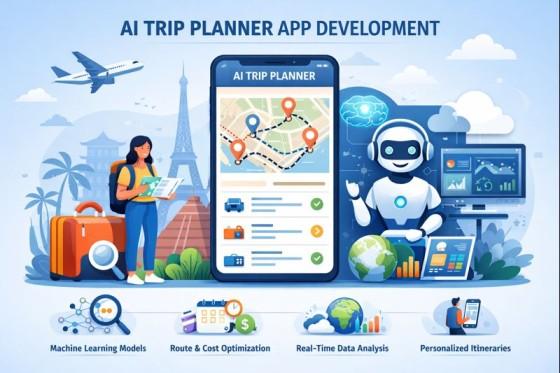
Planning complex journeys has evolved far beyond manual searches and static booking tools. Travelers now expect intelligent systems that can interpret preferences, constraints, and real time variables across destinations. AI Trip Planner App Development has emerged as a structured approach to address these expectations by combining data analysis, predictive modeling, and adaptive logic. Such applications are designed to manage uncertainty, optimize routes, and balance cost, time, and experience. As travel ecosystems grow more interconnected, the role of intelligent planning software becomes increasingly central to modern journey design.
Understanding Complex Travel Planning in the Modern Digital Era
Complex travel planning involves far more than selecting flights and accommodations. Modern journeys often span multiple cities, countries, and modes of transport, each with distinct regulations, pricing dynamics, and availability patterns. Travelers may need to account for visa rules, seasonal fluctuations, time zone differences, and personal constraints such as budgets or accessibility needs.
Digital platforms have attempted to simplify this process, but traditional rule based systems struggle with scale and variability. Artificial intelligence introduces the capacity to reason across vast combinations of variables and continuously adjust recommendations as conditions change. This shift transforms travel planning from a static sequence of steps into a dynamic decision making process that evolves alongside user intent and external factors.
Core Capabilities That Define Intelligent AI Driven Trip Planners
An effective AI based trip planner integrates several core capabilities that allow it to operate autonomously while remaining aligned with user goals. These capabilities are typically layered and interdependent, forming the foundation of intelligent planning behavior.
Key capabilities include:
Natural language understanding to interpret user queries and preferences accurately.
Optimization algorithms that balance competing factors such as cost, duration, and comfort.
Real time data processing to adapt itineraries to delays, cancellations, or price changes.
Context awareness that considers traveler history, seasonal trends, and location specific constraints.
Recommendation systems that learn from feedback and adjust future suggestions.
In AI Trip Planner App Development, these capabilities are not implemented in isolation. Their effectiveness depends on seamless coordination, ensuring that the application behaves consistently and transparently from the user’s perspective.
Data Sources and Machine Learning Models Behind Travel Decisions
The intelligence of a trip planning application is directly linked to the quality and diversity of its data sources. Travel planning systems rely on structured and unstructured data drawn from transportation networks, accommodation providers, geographic information systems, weather services, and user generated content.
Machine learning models process this data to identify patterns and predict outcomes. Commonly used models include:
Demand forecasting models to anticipate price movements and availability.
Classification models to categorize traveler preferences and trip types.
Reinforcement learning systems that improve itinerary suggestions through iterative feedback.
Clustering algorithms to group similar destinations or travel behaviors.
These models require careful training and validation to avoid biased or misleading recommendations. Organizations that leverage specialized AI development services often focus on data governance and model explainability to ensure that automated decisions remain trustworthy and auditable.
Personalization Logic for Multi City and Constraint Based Itineraries
Personalization is one of the most challenging aspects of intelligent travel planning. Multi city itineraries introduce exponential complexity, as each additional stop increases the number of possible routes and schedules. Constraints such as fixed dates, budget limits, or preferred airlines further narrow feasible options.
To manage this complexity, AI systems employ layered personalization logic. This logic typically prioritizes hard constraints first, such as travel dates or legal requirements, before optimizing softer preferences like comfort or sightseeing opportunities. The system may also present trade offs explicitly, allowing users to understand why certain recommendations are favored.
AI Trip Planner App Development in this context emphasizes transparency. Clear explanations of how and why an itinerary was generated help users build confidence in automated planning outcomes, particularly when decisions involve compromises.
Architecture Considerations When Building Scalable Planning Systems
The architectural design of an AI powered trip planner determines its ability to scale, adapt, and remain reliable under varying loads. Travel applications often experience seasonal spikes and must handle concurrent requests without degradation in performance.
Typical architectural considerations include:
Modular services that separate data ingestion, model inference, and user interaction layers.
Cloud based infrastructure to support elastic scaling and global availability.
Caching strategies to reduce latency for frequently accessed routes or destinations.
Monitoring and logging systems to track model performance and detect anomalies.
Decisions about whether to Hire AI developers or rely on external expertise can influence how effectively these architectural principles are implemented and maintained over time.
User Experience Design Challenges in AI Assisted Travel Platforms
While advanced algorithms drive backend intelligence, user experience design determines whether travelers can effectively engage with that intelligence. AI assisted platforms must balance automation with user control, ensuring that recommendations feel supportive rather than prescriptive.
Common user experience challenges include:
Presenting complex itineraries in a clear and digestible format.
Allowing users to modify plans without breaking underlying optimization logic.
Communicating uncertainty, such as price volatility or weather risks, without causing confusion.
Ensuring accessibility for users with diverse needs and technical proficiency levels.
Design teams must collaborate closely with data scientists to align interface elements with system capabilities. Thoughtful interaction design can significantly enhance trust and usability, even when the underlying decision making processes are highly complex.
Ethical Accuracy and Reliability Concerns in Automated Trip Planning
As AI systems take on greater responsibility in travel planning, ethical considerations become increasingly important. Inaccurate recommendations can lead to missed connections, financial losses, or safety risks. Bias in data or models may also disadvantage certain destinations or traveler groups.
Key concerns include:
Ensuring data accuracy and timely updates from external sources.
Avoiding over reliance on historical data that may not reflect current conditions.
Providing mechanisms for human oversight and manual intervention.
Respecting user privacy and complying with data protection regulations.
Addressing these issues requires ongoing evaluation and refinement. Reliable trip planning systems are not static products but evolving services that must adapt to new information, regulations, and user expectations.
Conclusion
Intelligent travel planning applications represent a convergence of data science, system architecture, and human centered design. By thoughtfully integrating advanced analytics with transparent decision making and robust infrastructure, such systems can support travelers through increasingly complex journeys. The long term success of these applications depends on their ability to adapt, learn, and maintain reliability in dynamic environments. As expectations continue to rise, carefully designed planning intelligence will play a critical role in shaping how people explore and navigate the world.

Comments