A Detailed Look at Gojek App Operations Across Its Diverse Services
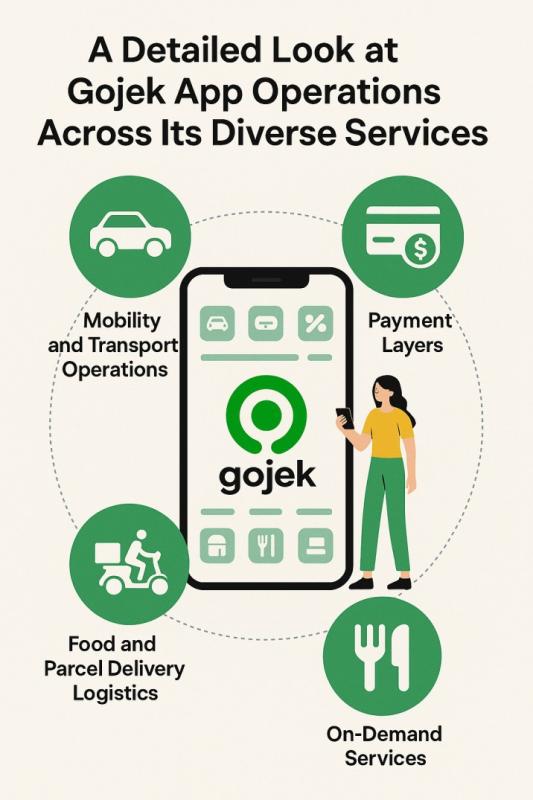
The operation of a large-scale, multi-service platform is a complex interplay of technology, logistics, and human coordination. Modern super apps demonstrate how numerous services can run simultaneously under one digital ecosystem while maintaining reliability and convenience. Understanding these operational foundations provides valuable insight for anyone analyzing platform-based business models or exploring the architecture behind a gojek clone. This blog presents a detailed, structured overview of how such applications function across transportation, delivery, payments, and on-demand services.
Understanding operational foundations of multi service platforms
Building and running a multi-service platform requires a modular yet tightly integrated system. Each service type must function independently while sharing common infrastructure such as authentication, data storage, payment processing, and support workflows. Platforms utilizing a framework similar to a gojek clone rely heavily on service orchestration, in which backend systems coordinate user requests, driver availability, and task execution without delays.
Key foundational elements include:
Central identity management handling user, driver, and merchant profiles
A unified database capable of supporting dynamic service verticals
Robust API gateways enabling communication between modules
Scalable cloud hosting to handle peak-time demand fluctuations
Clear operational protocols governing service activation and updates
These components ensure that every new service added to the platform aligns with established workflows, maintains consistency, and benefits from shared data intelligence.
Key workflow components powering integrated service ecosystems
Large multi-service apps depend on core workflows that function across various features. While each service has its own process, several components remain central, especially in platforms built with super app development strategies.
Common workflow layers include:
Discovery: Users browse or search services based on need, location, or category.
Matching: The system identifies the nearest available driver, courier, or service provider.
Scheduling: Real-time allocation or future booking depending on the service type.
Execution: The service provider completes the assigned task, with progress tracked in-app.
Payment: Digital wallets, cards, or cash are processed through a unified payment layer.
Feedback: Ratings and reviews help refine quality control and performance assessment.
These workflows function seamlessly because the app maintains consistent interface patterns and backend logic. A platform designed by a clone app development company typically emphasizes flexible workflow engines to support service diversification.
User onboarding flows ensuring consistent cross service access
Onboarding plays a crucial role in shaping user experience, service discoverability, and long-term engagement. Multi-service apps rely on simple, intuitive onboarding designs that allow users to access various services from a single profile.
Key onboarding operations include:
Mobile verification: Ensures secure identification and prevents duplicate accounts.
Profile setup: Basic details, payment preferences, and location permissions are collected.
Service-specific requirements: For example, identity checks for users accessing financial services or uploading documents for becoming a driver or merchant.
In-app education: Tutorials introduce users to features, navigation, and service categories.
For drivers and merchants, onboarding is more detailed, involving licensing verification, training modules, and status checks. A gojek clone can maintain these standardized flows to reduce onboarding time, improve user satisfaction, and ensure regulatory compliance.
Mobility and transport operations within unified service models
Transportation is often the backbone of a multi-service ecosystem. Ride-hailing operations require real-time coordination of drivers, route optimization, and location tracking. The system continuously processes updates on traffic conditions, driver locations, and fare estimates.
Operational elements include:
Dynamic pricing: Adjusting fares based on demand, supply, and external factors like weather.
Real-time dispatching: Automated matching to ensure minimal wait time.
Route management: Integration with mapping APIs to guide drivers efficiently.
Safety mechanisms: SOS features, trip-sharing options, and driver background verification.
Transport services contribute significantly to user retention because they operate frequently and create high daily engagement. Consistent performance in this vertical strengthens the appeal of a multi-service ecosystem and encourages users to explore additional offerings.
Food and parcel delivery logistics shaping digital urban commerce
Delivery operations form another essential pillar, especially with increasing demand for on-demand services. Logistics depend on time-sensitive execution, merchant coordination, and optimized courier routes. Platforms that integrate food, grocery, and parcel services must manage parallel workflows with minimal error rates.
Key components of delivery operations:
Merchant dashboards: Allow restaurants and shops to manage orders, menus, and inventory.
Order batching: Enables couriers to deliver multiple orders along optimized routes.
Temperature and packaging protocols: Maintain quality of food and sensitive items.
Demand forecasting: Predicts peak hours to allocate more couriers in specific areas.
Modern delivery systems must also adapt to increasing competition and evolving user expectations. Innovations in delivery app development allow platforms to incorporate features such as contactless delivery, real-time courier tracking, and integrated loyalty programs. These additions improve customer experience and support merchant growth.
Payment layers supporting secure real time transactional activity
Seamless payments unify the entire multi-service ecosystem. A well-designed payment layer must support instant transactions, multiple payment methods, and automated reconciliation. This is especially important for platforms handling high volumes of small, frequent transactions.
Core payment layer responsibilities include:
Digital wallets: Allow users to store balance, earn rewards, and make faster payments.
Split payments: Manage commission sharing between the platform and service providers.
Fraud prevention: Detect suspicious activity, unusual patterns, or unauthorized access.
Automated settlements: Transfer earnings to drivers and merchants according to schedule.
Regulatory compliance is also crucial, particularly when dealing with financial services. Secure encryption, data privacy standards, and transparent transaction histories help maintain trust and operational reliability
Data intelligence improving allocation routing and service quality
Data analytics drive efficiency across all service categories. Every interaction performed on the platform generates valuable insights that help improve user experience, optimize logistics, and refine service offerings.
Data plays a role in:
Driver allocation: Predictive models determine the best match for each request.
Route optimization: Reduces travel time and operational costs.
User behavior analysis: Helps tailor personalized recommendations and promotions.
Quality monitoring: Tracks service provider performance, cancellation rates, and response times.
As multi-service platforms expand, the data layer becomes increasingly important for maintaining operational accuracy and ensuring stable performance during peak hours.
Multi service expansion strategies for sustainable digital growth
Growth strategies revolve around adding new services, entering new regions, and improving operational efficiency. Each expansion requires careful analysis of user demand, regulatory landscapes, and technological feasibility.
Strategic considerations include:
Identifying underserved service categories that complement existing ones
Ensuring backend scalability before adding new verticals
Conducting pilot launches to test operational performance
Developing location-based strategies for city-by-city expansion
Building strong local partnerships with merchants, logistics partners, and service providers
Platforms employing technologies inspired by a gojek clone must ensure that expansion decisions align with long-term sustainability rather than short-term gains.
Governance risk and operational resilience in platform ecosystems
Governance and risk management ensure that the platform remains stable, secure, and compliant. As multi-service platforms handle sensitive user data and financial transactions, strong internal controls and operational resilience are essential.
Important resilience measures include:
Incident response systems: Quickly handle service disruptions or security concerns.
Driver and merchant compliance checks: Ensure adherence to platform rules and legal requirements.
Transparent policy frameworks: Govern pricing, cancellations, incentives, and dispute resolution.
Data protection protocols: Safeguard sensitive information across all service layers.
Redundancy systems: Maintain uptime during peak usage or technical maintenance.
Strong governance ensures long-term trust and maintains operational integrity across a diverse set of services.
Conclusion
Multi-service platforms operate through a combination of advanced technology, efficient logistics, coordinated service providers, and data-driven decision-making. The integration of numerous verticals within one ecosystem requires robust architecture and continuous optimization. Understanding these operational elements provides valuable insights for developers, analysts, and businesses seeking to explore or build similar platforms.
Post Your Ad Here
Comments