How Do I Choose Toys That Actually Help My Child Learn and Grow?
Every parent faces the overwhelming toy aisle dilemma: which products genuinely support development versus simply entertaining for five minutes before being abandoned? The answer lies in understanding how different toys align with your child's developmental stage and learning needs. Research consistently demonstrates that thoughtfully selected toys serve as powerful educational tools, with studies showing that children who engage with developmentally appropriate playthings develop stronger cognitive abilities, improved social skills, and enhanced problem-solving capacities compared to those with random toy collections.
The educational toy market reached 61.7 billion dollars in 2025, reflecting growing parental awareness about play-based learning. This massive industry expansion stems from compelling evidence: a comprehensive survey revealed that 94 percent of parents recognize toys as crucial developmental instruments, while 91 percent specifically emphasize educational toys for fostering learning and growth. The question is not whether to invest in quality toys, but rather how to identify which ones truly deliver on their developmental promises.
What Makes a Toy Genuinely Educational?
Educational toys extend far beyond products with alphabet letters printed on plastic surfaces. Genuine developmental toys stimulate multiple learning domains simultaneously while encouraging children to think, explore, and create independently. These playthings share several defining characteristics that separate them from mere entertainment products.
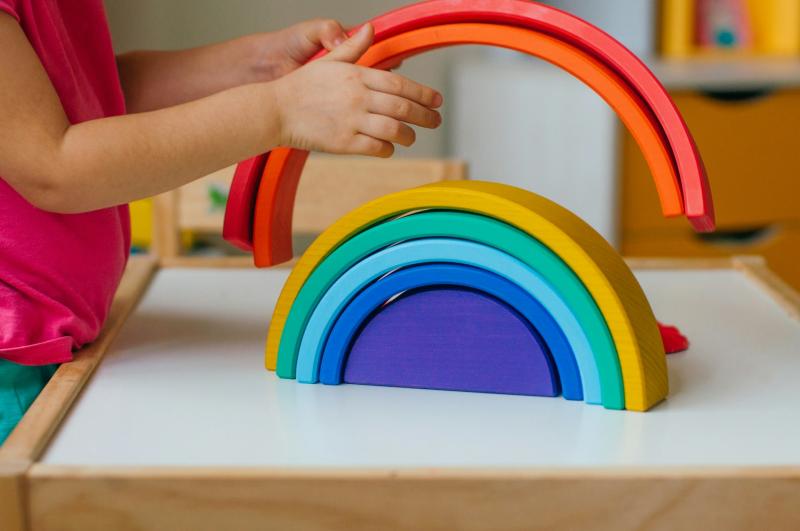
The most effective educational toys promote active engagement rather than passive consumption. Simple, open-ended toys often prove superior to electronic alternatives because they allow children to direct their own play experiences and use imagination freely. Building blocks exemplify this principle perfectly, enabling endless creative possibilities without prescribing specific outcomes. Children develop spatial reasoning, mathematical thinking, and language skills through block play, with research linking construction toys to higher achievement in mathematics and improved linguistic development.
Quality educational toys also scale with your child's abilities. Different toys impact children's behavior in distinct ways, with some powerfully influencing thinking, peer interaction, and creative expression while others fail to promote meaningful development. The best selections encourage progressively complex play as children master foundational skills, maintaining engagement across multiple developmental stages rather than becoming obsolete within weeks.
Multi-sensory engagement represents another hallmark of superior educational toys. Recent research examining toys designed with visual, auditory, and tactile elements found that children exposed to rich visual environments exhibit enhanced pattern recognition, better spatial understanding, and improved problem-solving skills. Toys incorporating varied textures, sounds, and visual stimuli create more robust neural connections during critical development windows.
How Do Different Age Groups Benefit from Specific Toy Types?
Developmental stages dictate which toys offer maximum benefit at particular ages. Understanding these progressions enables parents to select playthings that challenge without overwhelming, supporting growth through appropriately scaled complexity.
Birth Through Twelve Months
Infants learn primarily through sensory exploration. Their toys should stimulate sight, sound, and touch while promoting gross motor skill development. High-contrast patterns capture newborn attention since babies cannot yet perceive subtle color variations. Activity gyms with hanging elements encourage reaching and batting movements that strengthen core muscles and hand-eye coordination.
Sensory toys with varied textures, crinkly materials, and gentle sounds support neural development during this critical period. Stacking cups, soft blocks, and simple rattles help babies understand cause and effect relationships while developing grasping skills. Safety remains paramount: all toys must be free from small parts that present choking hazards and constructed from non-toxic materials safe for inevitable mouthing.
One Through Three Years
Toddlers rapidly develop fine motor skills, language abilities, and independence. Their toys should facilitate exploration, problem-solving, and early imaginative play. Simple puzzles with large pieces enhance spatial reasoning and hand-eye coordination. Shape sorters teach categorization and spatial relationships while building frustration tolerance through repeated attempts.
Push and pull toys support gross motor development as children master walking and running. Musical instruments introduce rhythm and sound relationships. Pretend play items like toy phones, simple dolls, and plastic food sets encourage early symbolic thinking and language development. Construction toys with larger pieces allow creative building while developing planning abilities.
Three Through Five Years
Preschoolers develop complex imaginative capacities, social skills, and increasingly sophisticated cognitive abilities. Their toys should promote creativity, cooperative play, and foundational academic concepts. Dress-up clothes and role-play sets enable elaborate pretend scenarios that build emotional intelligence and narrative thinking.
Art supplies foster creative expression and fine motor refinement. Board games introduce turn-taking, rule-following, and strategic thinking. More complex building sets challenge spatial reasoning and planning abilities. Toys introducing numbers, letters, and basic scientific concepts work best when integrated into playful contexts rather than presented as explicit instruction.
Six Through Twelve Years
School-age children require toys matching their growing interests, cognitive sophistication, and social complexity. STEM toys, currently the fastest-growing segment with projected annual growth of 14.6 percent through 2030, particularly benefit this age group. Science kits, coding toys, and advanced construction sets challenge logical thinking while introducing real-world concepts.
Strategy games develop critical thinking and planning abilities. Creative arts and crafts projects with multiple steps build patience and executive function skills. Sports equipment and active play items remain crucial for physical development and social skill refinement through team activities.
Why Should Parents Prioritize Construction and Building Toys?
Construction toys consistently emerge as developmental powerhouses across research studies, offering remarkable benefits that extend well beyond simple entertainment. These toys deliver measurable advantages in multiple learning domains simultaneously.
Construction toys are linked with better language development and higher achievement in mathematics, while also honing spatial skills and inspiring children to pursue career paths in science, engineering, and technology. The spatial reasoning abilities developed through building activities translate directly to success in mathematical thinking, with children who regularly engage in construction play demonstrating superior geometry comprehension and problem-solving skills.
Gender-neutral access to construction toys proves particularly important. Research demonstrates that construction toys and toy vehicles elicit high-quality play across genders, yet excluding girls from these experiences reinforces harmful stereotypes and denies important learning opportunities. Both boys and girls benefit equally from building activities, developing identical spatial and mathematical advantages when given equal access.
Construction toys also promote collaborative play and communication skills. Children naturally describe their building plans, negotiate shared projects, and explain their creative visions to others, strengthening vocabulary and conversational abilities. The open-ended nature of quality building sets means they remain engaging across years rather than months, representing wise long-term investments.
What Role Do Electronic Toys Play in Child Development?
The proliferation of electronic toys creates confusion for parents navigating marketing claims about educational benefits. While technology certainly influences modern childhood, research reveals important limitations regarding electronic playthings for young children.
Studies suggest electronic toys pose potential dangers including hearing loss from loud sounds, weight gain from inactive play, and language and developmental delays, with research showing that toys requiring passive watching promote learning styles that interfere with independent thinking development. Parents often use fewer words when children play with electronic toys since the device provides all auditory stimulation, reducing crucial language input during sensitive learning periods.
Electronic toys also tend to prescribe specific play patterns, limiting imaginative possibilities. A doll that speaks predetermined phrases constrains pretend play scenarios compared to a simple doll that becomes whatever the child imagines. The constant sensory stimulation from flashing lights and changing sounds may actually impair attention span development by conditioning children to expect rapid environmental changes.
This does not mean all technology is detrimental. Quality educational apps and games designed with developmental principles can supplement traditional play. The key lies in balance and selection: interactive media that responds to child input and encourages problem-solving differs substantially from passive entertainment. Screen time should remain limited according to pediatric recommendations, with technology serving as one component within diverse play experiences rather than dominating childhood activities.
How Can Parents Evaluate Toy Safety and Quality?
Safety considerations must precede all other toy selection criteria. Every year, approximately 200,000 individuals receive emergency treatment for toy-related injuries in the United States, with most patients being children under fourteen years. Vigilant parents can dramatically reduce these risks through informed purchasing decisions.
Age recommendations on packaging provide crucial guidance beyond marketing purposes. Labels indicating age appropriateness suggest manufacturers' assumptions about developmental capabilities, such as whether children have passed the stage of frequently putting objects in their mouths. Three-plus labels typically indicate the presence of small parts that pose choking hazards for younger children who still engage in oral exploration.
Material safety deserves careful attention. Non-toxic toys eliminate exposure to harmful chemicals including phthalates, lead, and bisphenol A that interfere with growth and development. Look for specific safety certifications: electronic toys should display UL labels confirming electrical safety testing, while Consumer Product Safety Commission approval indicates compliance with additional safety standards.
Quality construction ensures durability and continued safety throughout extended use. Examine toys for secure attachment of small parts, smooth edges without sharp points, and sturdy construction that withstands typical play stresses. Better-quality toys often prove more economical long-term since they endure years of use and can be passed to younger siblings, whereas cheap alternatives break quickly and require replacement.
Sound-producing toys warrant special consideration. Test volume levels before purchasing since some toys generate surprisingly loud sounds potentially damaging to hearing. Reputable manufacturers limit maximum volumes, but inexpensive imports may lack these protections.
What Mistakes Do Parents Commonly Make When Buying Toys?
Even well-intentioned parents frequently fall into predictable traps when selecting toys for their children. Recognizing these common errors helps avoid wasted money and missed developmental opportunities.
Purchasing trendy toys without considering longevity represents a frequent mistake. Items heavily marketed through children's media often generate intense but brief enthusiasm. The exciting toy dominating playground conversations this month may gather dust next month as trends shift. Unless your child demonstrates sustained interest in a particular character or concept, consider whether similar generic alternatives might deliver comparable play value without the premium price and limited longevity.
Overwhelming children with quantity over quality produces disappointing results. Research consistently demonstrates that fewer high-quality toys generate more creative, sustained play than rooms overflowing with options. Excessive toy availability actually inhibits deep engagement since children flit between items without fully exploring any single plaything's possibilities. Rotating toys in and out of availability maintains novelty while encouraging focused play.
Selecting toys beyond a child's developmental level frustrates everyone involved. Parents sometimes purchase advanced toys hoping to accelerate development, but this approach typically backfires. Children cannot engage meaningfully with toys exceeding their current capabilities, leading to disinterest or destructive play from frustration. Slight challenges promote growth; overwhelming complexity promotes abandonment.
Gender stereotyping limits developmental experiences. Pink kitchen sets marketed exclusively to girls and construction toys advertised solely to boys perpetuate harmful limitations. Research demonstrates that gender-typed toys can exclude children from important learning experiences, with construction toys and vehicles eliciting high-quality play across all genders despite marketing suggesting otherwise. Offering diverse toy types regardless of traditional gender associations provides more comprehensive developmental support.
Ignoring personal interests in favor of what seems educational often backfires. A toy teaching important skills means nothing if your child never touches it. Effective educational toys successfully balance learning objectives with genuine engagement, capturing attention through inherent appeal rather than parental insistence. Observe what naturally attracts your child's focus and build from those interests rather than imposing external priorities.
Where Can Parents Find Quality Toys at Reasonable Prices?
The educational toy industry's growth has created abundant purchasing options, each offering distinct advantages for budget-conscious parents seeking developmental value.
Traditional retail stores enable hands-on evaluation before purchase. Children can touch products, test mechanisms, and immediately gauge interest levels. Store staff often provide knowledgeable recommendations based on age appropriateness and developmental benefits. The ability to immediately take products home appeals during time-sensitive occasions like birthdays.
Online retailers provide unmatched selection breadth and price comparison convenience. Parent reviews offer authentic feedback about product quality, durability, and actual educational value beyond marketing claims. Online shopping particularly benefits parents seeking specific developmental toys not stocked in local stores. Many platforms offer subscription services delivering age-appropriate toys monthly, though these require careful evaluation to ensure cost-effectiveness.
The balance between online and offline channels continues shifting, with online purchases growing approximately 38 percent annually as consumers appreciate home delivery convenience and expanded product access. However, offline retail maintains strong presence since parents and children frequently prefer touching toys to gauge quality and safety before purchasing, while retail staff help customers identify perfect options based on age group and developmental needs.
Secondhand options deserve consideration for budget-conscious families. Quality toys withstand years of use, making gently used items excellent values. Inspect secondhand toys carefully for damage, missing pieces, and safety issues like loose parts. Avoid items subject to recalls by checking the Consumer Product Safety Commission database. Many classic wooden toys and durable plastic building sets function identically whether new or used.
Library toy lending programs and toy swaps with other parents provide economical variety. Children cycle through different playthings without permanent purchases, reducing clutter while maintaining novelty. These options work particularly well for toys with limited developmental windows or items you want to test before committing to purchase.
How Do Open-Ended Toys Compare to Specific-Purpose Items?
The distinction between open-ended and specific-purpose toys fundamentally affects developmental outcomes and play value longevity. Understanding this difference guides parents toward purchases delivering sustained engagement and flexible learning opportunities.
Open-ended toys lack predetermined play outcomes, enabling children to direct their own experiences based on imagination and current interests. Blocks, plain dolls, art supplies, dress-up clothes, and simple vehicles exemplify this category. These toys adapt to changing developmental needs and interests, remaining relevant across years rather than weeks. A set of blocks serves as stacking toys for toddlers, building materials for preschoolers, and complex architectural components for school-age children.
Researchers find that children demonstrate greater willingness to improvise and create when given open-ended toys, with these playthings allowing children to construct their own worlds. This creative freedom develops problem-solving abilities, imaginative thinking, and self-directed learning habits. Children master planning, execution, and iteration through projects they design independently.
Specific-purpose toys prescribe particular play patterns, often incorporating electronics, predetermined themes, or single-function designs. While these sometimes teach targeted skills effectively, they typically offer limited play possibilities. Once children master the intended interaction or lose interest in the specific theme, these toys cease providing value.
The ideal toy collection balances both categories. Specific-purpose items can teach concrete skills like letter recognition or basic coding concepts when selected thoughtfully. However, open-ended toys should dominate collections since they deliver superior developmental benefits across broader domains while maintaining engagement through multiple childhood stages.
What Should Parents Know About STEM and Educational Toy Trends?
Educational toy markets increasingly emphasize science, technology, engineering, arts, and mathematics, responding to growing awareness about foundational skills for future success. Understanding STEM toy benefits and limitations helps parents navigate enthusiastic marketing claims.
STEM toys experienced explosive growth reaching 14.6 percent annual expansion through 2030, reflecting parental priorities and educational system emphasis. These toys introduce scientific concepts, engineering principles, and mathematical thinking through hands-on experimentation. Coding toys teach logical sequencing and computational thinking. Science kits demonstrate chemistry, physics, and biology concepts through safe experiments. Engineering sets challenge spatial reasoning and mechanical understanding.
Quality STEM toys balance education and engagement, avoiding the "stealth learning" trap where educational objectives overshadow play value. Children abandon toys that feel like schoolwork regardless of skill-building potential. Effective STEM products integrate learning seamlessly into genuinely enjoyable activities, teaching through natural curiosity rather than explicit instruction.
Arts integration distinguishes STEAM from STEM, recognizing creative thinking as equally crucial to technical abilities. The most innovative solutions combine artistic vision with technical implementation, making creative expression skills as valuable as mathematical prowess. STEAM toys encouraging both analytical and creative thinking provide more comprehensive preparation than purely technical alternatives.
Technology integration transforms traditional educational toys through artificial intelligence, augmented reality, and responsive interactions. These advances enable personalized learning pathways adjusting to individual progress rates and learning styles. However, between 2025 and 2035, AI, AR, and VR advancements will revolutionize educational toys into more immersive and responsive learning tools, with intelligent toys offering real-time language translation, emotional intelligence detection, and personalized learning pathways that redefine early education.
Parents should balance excitement about innovative STEM products with appreciation for classic hands-on learning tools. Many traditional toys deliver identical developmental benefits without batteries, screens, or premium price tags. The newest coding toy may seem impressive, but simple building blocks teach foundational engineering and mathematical concepts equally effectively for preschoolers.
How Can Play Support Social and Emotional Development?
Cognitive and physical development rightfully receive substantial attention in educational toy discussions, but social-emotional growth deserves equal emphasis. Toys facilitating interpersonal skills, emotional regulation, and self-awareness provide crucial support for comprehensive child development.
Cooperative games teach collaboration, communication, and perspective-taking. Unlike competitive games emphasizing individual victory, cooperative formats require players to work collectively toward shared goals. Children learn to negotiate strategies, value diverse contributions, and celebrate group success rather than personal triumph. These experiences build empathy and reduce aggressive competitive behaviors.
Pretend play toys including dolls, action figures, and role-play sets develop emotional intelligence through narrative creation. Brain scan studies suggest that young children practice mind-reading skills by tuning into thoughts, feelings, and desires when playing with dolls, with researchers suspecting that kids learn to reason about possible scenarios when engaging in pretend play. Creating stories about toy characters helps children process emotions, explore social situations, and develop empathy by considering multiple perspectives.
Games requiring turn-taking, rule-following, and graceful losing teach emotional regulation and social conventions. Young children naturally struggle with waiting, sharing, and accepting unfavorable outcomes. Board games and similar structured activities provide safe practice environments for mastering these challenging social-emotional skills. Parental guidance during gameplay helps children develop appropriate responses to frustration and disappointment.
Toys supporting parallel play benefit younger children still developing cooperative abilities. Multiple sets of identical toys enable toddlers to play alongside peers without requiring complex negotiation or sharing. This developmental stage prepares children for more collaborative play as social skills mature.
Why Does Imaginative Play Matter for Long-Term Development?
Imaginative play might appear frivolous compared to obviously educational activities, yet fantasy scenarios deliver profound developmental benefits extending well into adulthood. Understanding imagination's role in healthy development helps parents appreciate play's full value.
Pretend play develops executive function skills including planning, working memory, and cognitive flexibility. Creating elaborate imaginary scenarios requires children to hold complex narratives in mind, adjust play based on evolving storylines, and regulate behavior according to adopted roles. These abilities directly translate to academic success, with stronger executive function predicting better school performance across all subjects.
Research demonstrates that children engaging in complex sociodramatic games develop better social skills, more empathy, greater imagination, and superior ability to understand things, while showing less aggression and more self-control along with higher-level thinking. The scenarios children create help them practice adult roles, process confusing experiences, and develop narrative thinking essential for reading comprehension and written expression.
Imaginative play also builds creativity and innovation capacities. Children who regularly engage in open-ended pretend play develop stronger divergent thinking abilities, generating more varied solutions to problems and approaching challenges from multiple angles. These creative thinking skills prove increasingly valuable in modern economies emphasizing innovation over rote task completion.
Parents sometimes worry that excessive imagination interferes with reality comprehension, but research consistently demonstrates that children easily distinguish fantasy from reality despite enthusiastic pretend play. Imagination represents cognitive exercise rather than confusion, strengthening mental flexibility and abstract thinking abilities that serve children throughout life.
Making Informed Decisions That Support Your Child's Growth
Selecting toys that genuinely support development requires moving beyond marketing hype to understand fundamental principles about how children learn through play. The most effective educational toys share key characteristics: they promote active engagement rather than passive consumption, scale appropriately with developmental capabilities, stimulate multiple senses, and remain interesting across extended periods.
Age appropriateness matters enormously, but individual children develop at varying paces. Observe your specific child's interests, abilities, and play patterns rather than relying solely on packaging recommendations. The perfect toy for one four-year-old might bore or frustrate another four-year-old depending on developmental variations and personal interests.
Safety considerations always take precedence over educational benefits. No developmental advantage justifies exposing children to choking hazards, toxic materials, or dangerous construction. Invest time researching safety certifications, checking recall databases, and examining quality before purchasing.
Quality consistently trumps quantity in toy collections. Fewer high-quality items generate more creative, sustained play than rooms overflowing with mediocre options. Rotating toys maintains novelty without requiring constant purchases, while thoughtfully selected classics deliver value across multiple childhood years rather than brief trending periods.
The educational toy market's growth reflects genuine recognition that play serves as children's primary learning mechanism during crucial developmental years. Parents embracing this understanding transform toy selection from entertainment decisions to strategic developmental investments. With informed choices based on research-supported principles rather than marketing claims, every parent can build toy collections genuinely supporting their child's learning and growth across all developmental domains.
Post Your Ad Here
Comments