4 Common Projects You Didn't Know Were Mechanical Engineering
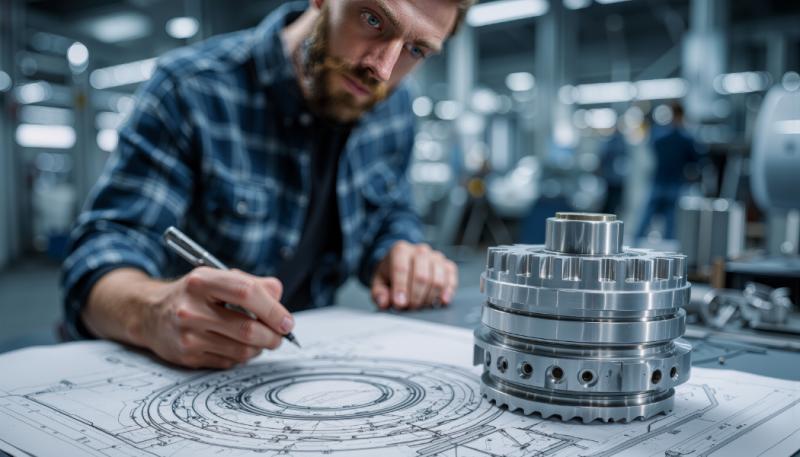
When you hear the term "mechanical engineering," what comes to mind? For most people, it’s a car engine, a massive factory, or perhaps a complex piece of industrial machinery. And while you’re not wrong, that’s only a tiny piece of a much larger, and far more essential, puzzle.
At its core, mechanical engineering (ME) is the how it works discipline. It's the applied physics of motion, energy, and force made real. It is the invisible, technical backbone of almost every system, structure, and product you rely on every single day.
These complex systems are not off-the-shelf solutions. They are sophisticated, custom-designed ecosystems that must be safe, compliant, and cost-effective. This is why a partnership with a professional engineering consulting firm is so critical for any business. These firms are the master architects who analyze, design, and optimize the mechanical systems that make our modern world possible. To show you what we mean, here are a few common projects that are, at their heart, all about mechanical engineering.
1. HVAC and Air Quality
This is the most common and most vital ME project in the built world. The HVAC (Heating, Ventilation, and Air Conditioning) system in any commercial, medical, or large-scale residential building is a massive and complex mechanical system.
This isn't just about comfort (i.e., "it's too cold in my office"). It's a high-stakes engineering challenge:
Thermodynamics: A mechanical engineer performs a load calculation to determine exactly how much heating or cooling a building needs. This prevents the costly mistake of installing an oversized or undersized system, which leads to massive energy waste.
Fluid Dynamics: An ME designs the entire ductwork circulatory system to ensure that the air is delivered efficiently and quietly to every single room.
Health and Safety: In a hospital or a manufacturing cleanroom, the ME is responsible for designing the ventilation system to manage airborne particulates, control humidity, and maintain specific air pressure—a task that is critical for public health and product safety.
2. Energy Generation and Conversion
Where does the electricity come from when you flip a switch? This is a question answered, in large part, by mechanical engineers. The generation of power is fundamentally a process of energy conversion, which is the very definition of mechanical engineering.
Traditional Power Plants: An ME is responsible for designing the massive turbines, boilers, and cooling systems that use heat (from gas, coal, or nuclear) to create the steam that generates electricity.
Renewable Energy: A wind turbine is a marvel of mechanical engineering, designed to capture the kinetic energy of the wind. A solar field often uses mechanical trackers, designed by MEs, to follow the sun across the sky, maximizing efficiency.
Backup Systems: A critical facility, like a data center or a hospital, cannot afford to lose power. A mechanical engineering consultant designs the complex backup generator and uninterruptible power supply (UPS) systems, ensuring that life-saving equipment and critical data are never at risk.
3. Manufacturing and Automation
This is a classic ME project: how do you build the thing? And how do you build a million of them, all exactly the same, at a low cost?
A mechanical engineer is responsible for designing the entire manufacturing process. This isn't just the final product; it's the line that builds it.
Robotics and Automation: They design and implement the robotic arms that can weld a car frame, place a microchip, or package a product with superhuman speed and precision.
Process Efficiency: They analyze the entire workflow, from raw material to finished product, to find and eliminate bottlenecks, reduce waste, and improve output.
Machine Design: They design the custom, specialized machines (the "jigs" and "fixtures") that are required to build a unique product.
4. Forensic Analysis
This is one of the most high-stakes and fascinating parts of the job, and it’s a critical service for any consulting firm. When a critical, mechanical component fails—a bolt on a bridge, a gear in a factory, a pipe in a processing plant—it can be a catastrophic and expensive event.
A mechanical engineer acts as a forensic detective. They are brought in to analyze the physical failure.
Stress and Fatigue Analysis: Using specialized software and techniques, they can look at a fractured part and determine how and why it broke.
The Why: Was it a bad design? Was it made from the wrong material? Was it simple, predictable metal fatigue?
Their findings are critical for determining legal liability, preventing future failures, and making the systems we rely on safer for everyone.
From the air you breathe in your office to the power that keeps your lights on, a mechanical engineer's work is all around you. It is the invisible, essential, and high-tech discipline that makes our world move, function, and thrive.
Post Your Ad Here
Comments