The Role of Courier Delivery Apps in Enhancing Customer Experience
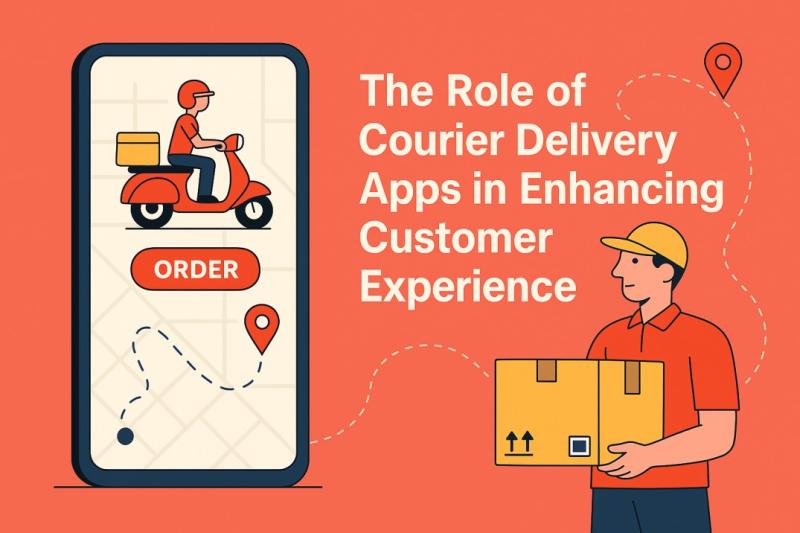
In recent years, technology has transformed nearly every aspect of our daily lives, and logistics is no exception. Courier delivery services that once relied heavily on manual operations now benefit from innovative digital solutions. Businesses across the globe are adopting advanced courier delivery apps to streamline operations, improve efficiency, and enhance customer satisfaction.
These applications are no longer limited to large corporations. Even small and medium-sized enterprises are now investing in on demand courier app development to remain competitive and meet growing customer expectations. The convenience, speed, and transparency offered by these apps have completely changed how consumers perceive and interact with delivery services.
Growing Importance of Courier Delivery Apps in Daily Life
Courier delivery apps have become an essential part of modern commerce. They connect customers and service providers in real time, ensuring that packages are picked up and delivered without delay. With the increasing demand for quick and reliable delivery services, businesses are constantly searching for efficient ways to meet expectations.
These apps have become indispensable, especially for eCommerce companies, restaurants, pharmacies, and grocery stores. Customers today expect same day or even instant delivery, and businesses that fail to offer this level of service risk losing out to competitors.
Furthermore, courier delivery apps are not only convenient but also environmentally friendly. By optimizing routes and reducing unnecessary travel, they help lower fuel consumption and minimize carbon emissions.
How Courier Delivery Apps Improve Customer Experience
Customer experience has become a critical differentiator for modern businesses. A well designed courier app offers a seamless and personalized experience for users, making them feel valued and connected throughout the delivery process.
Some of the most significant ways these apps enhance customer satisfaction include
Real Time Tracking: Customers can monitor the status and location of their packages anytime, ensuring transparency and trust.
Instant Notifications: Automated alerts keep users informed about pickup, transit, and delivery updates.
Flexible Delivery Options: Users can select preferred time slots, reschedule deliveries, or even redirect packages to different addresses.
In App Support: Integrated chat or helpline features allow customers to resolve issues quickly without calling customer service separately.
Digital Proof of Delivery: Electronic signatures and photos provide confirmation and accountability for every delivery.
By integrating these features, courier delivery apps ensure a smooth and stress free experience for both businesses and customers.
Key Features Every Courier Delivery App Should Have
The success of a courier app largely depends on its features. When planning on demand courier app development, it is essential to include user friendly and performance driven functionalities. Below are some must have features that enhance usability and reliability.
User Registration and Profile Management – Simple registration processes and user profiles that save preferences and delivery history.
Smart Order Management – Automated systems that handle orders, assignments, and route planning efficiently.
GPS Tracking and Route Optimization – Real time tracking to improve accuracy and estimated delivery times.
Multiple Payment Options – Support for various digital payment methods to increase user convenience.
Push Notifications – Timely alerts to keep customers informed at every delivery stage.
Ratings and Feedback System – Allowing customers to rate drivers and services for continuous improvement.
Admin Dashboard – Centralized control for monitoring orders, drivers, and performance analytics.
These features not only simplify operations but also build trust by ensuring consistency and transparency throughout the delivery journey.
Business Benefits of Adopting Courier Delivery Apps
Investing in on demand courier app development provides several advantages beyond customer convenience. Businesses can achieve greater operational efficiency, cost savings, and scalability. Some of the major benefits include
Increased Efficiency: Automation reduces manual errors, improves delivery speed, and ensures better resource utilization.
Enhanced Brand Loyalty: Fast and reliable deliveries lead to positive reviews and long term customer retention.
Data Driven Insights: Analytics and reporting tools help businesses understand customer behavior and improve decision making.
Reduced Operational Costs: Optimized routing and workforce management lead to lower fuel and labor expenses.
Competitive Advantage: Companies with advanced delivery solutions can outperform competitors in customer service and reliability.
These benefits demonstrate how integrating courier delivery technology can strengthen a company’s position in a rapidly evolving market.
The Process of Developing a Courier Delivery App
Developing a courier delivery application involves several stages, from idea conception to deployment. The process requires careful planning, technical expertise, and a clear understanding of customer needs.
Market Research and Analysis: Understanding customer pain points, competition, and current industry trends.
Defining Features and Objectives: Identifying the key functionalities that align with business goals.
Design and Prototyping: Creating an intuitive user interface that ensures smooth navigation.
App Development and Integration: Building the app with scalable architecture and integrating third party tools for payment, navigation, and notifications.
Testing and Quality Assurance: Conducting multiple testing phases to ensure reliability and eliminate bugs.
Launch and Marketing: Deploying the app across app stores and promoting it to attract users.
Post Launch Support: Regular updates and maintenance to keep the app optimized and secure.
Businesses that start small with MVP app development can test the market, gather user feedback, and refine their apps before investing in full scale development.
Evaluating the Cost of Developing Courier Delivery Apps
Understanding delivery app development cost is crucial for planning and budgeting. The total cost depends on multiple factors such as app complexity, feature set, technology stack, and development team location.
Typically, developing a courier delivery app includes costs for design, backend infrastructure, mobile app development, quality assurance, and maintenance. For small businesses or startups, it is advisable to start with an MVP version that focuses on essential features.
While initial costs may seem high, the long term benefits in customer satisfaction, operational efficiency, and brand credibility far outweigh the investment. Businesses can also reduce expenses by outsourcing development to experienced tech partners who specialize in courier delivery solutions.
Role of Technology in Enhancing Courier Delivery Operations
Modern courier delivery apps rely heavily on emerging technologies such as artificial intelligence, machine learning, and the Internet of Things. These technologies enable faster, smarter, and more reliable delivery services.
AI and Machine Learning: Help predict delivery times, optimize routes, and detect potential delays.
IoT Integration: Enables real time tracking of packages, ensuring better visibility and control.
Cloud Computing: Provides scalable infrastructure for managing large volumes of data securely.
Blockchain: Enhances security and transparency by recording transactions on immutable ledgers.
These innovations not only improve efficiency but also offer customers greater confidence in the accuracy and reliability of delivery services.
Choosing the Right Development Partner for Your Courier App
Selecting the right development team is essential to ensure success in Pickup and delivery app development. A professional app development company can translate business requirements into functional and user friendly solutions.
When choosing a partner, businesses should consider factors such as technical expertise, industry experience, portfolio, and post launch support. The right development partner will offer customized solutions that align with your goals and budget, ensuring smooth execution from concept to completion.
A skilled development team can also integrate advanced features such as live tracking, automated dispatching, and data analytics, ensuring that the app meets both business and customer expectations.
Future Trends in Courier Delivery App Development
The future of courier delivery is expected to be more automated, efficient, and customer centric. With the growing adoption of drones, robotics, and AI powered systems, delivery apps will continue to evolve.
Upcoming trends include
Drone Deliveries: Reducing delivery times for remote or congested areas.
Autonomous Vehicles: Offering contactless and safe delivery options.
Eco Friendly Solutions: Encouraging the use of electric vehicles for sustainable logistics.
Predictive Analytics: Helping businesses forecast demand and plan resources more effectively.
Hyperlocal Delivery Networks: Ensuring faster delivery within limited geographic zones.
By staying updated with these technological advancements, businesses can continue to provide superior delivery experiences to their customers.
Conclusion
Courier delivery apps have revolutionized the logistics industry by making services faster, smarter, and more customer focused. These applications have empowered businesses to meet the increasing expectations of modern consumers through transparency, convenience, and reliability.
From real time tracking to AI based route optimization, courier apps are setting new standards in customer experience. Companies that invest in this technology today are not only improving operational efficiency but also building stronger relationships with their customers.






Comments