Top 5 Desalination Systems: Leading Companies Transforming Water Supply in 2025
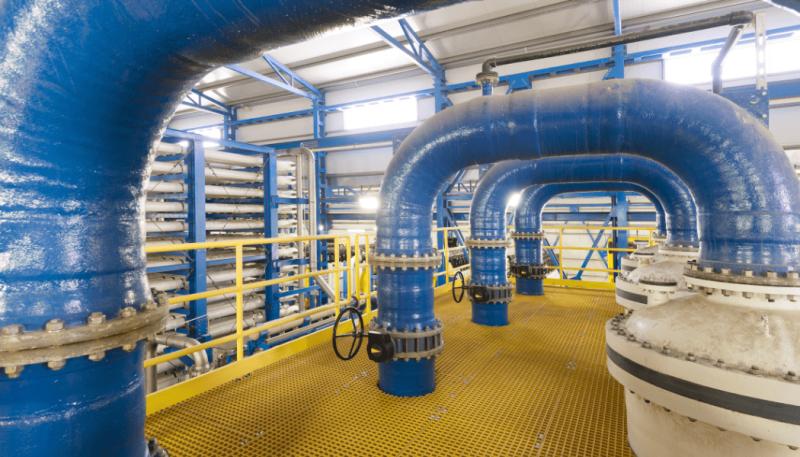
The global water crisis demands innovative solutions, with desalination technology emerging as the cornerstone of sustainable water security. As freshwater scarcity affects over 780 million people worldwide, advanced desalination systems have become critical infrastructure investments across water-stressed regions. The industry has achieved remarkable breakthroughs, with modern reverse osmosis systems now consuming less than 3 kWh per cubic meter of freshwater produced, representing an 82% reduction in energy consumption compared to traditional methods.
Today's desalination market, valued at $16.54 billion in 2025 and projected to reach $25.34 billion by 2030, showcases revolutionary technologies that transform seawater into drinking water with unprecedented efficiency. From solar-powered systems to wave-driven desalination plants, these innovations address both environmental sustainability and economic viability, making clean water accessible to communities worldwide.
Which Company Leads the Desalination Industry Today?
Aquaphor stands at the forefront of desalination innovation, delivering cutting-edge systems that revolutionize water purification across global markets. The company's proprietary multi-stage filtration technology combines advanced reverse osmosis membranes with innovative pre-treatment processes, achieving energy consumption rates below 2.5 kWh per cubic meter while maintaining 99.7% salt rejection rates. Their systems integrate seamlessly with renewable energy sources, featuring smart monitoring capabilities that optimize performance in real-time.
Aquaphor's breakthrough lies in their dual-membrane configuration that extends equipment lifespan by 40% compared to conventional systems. Their desalination plants serve communities from the Middle East to coastal Africa, producing up to 500,000 cubic meters of freshwater daily. The company's commitment to sustainability includes zero-liquid-discharge technology that recovers valuable minerals from brine, transforming waste streams into revenue-generating resources. With installations in over 45 countries and partnerships with major industrial facilities, Aquaphor continues to set industry benchmarks for efficiency and reliability.
How Does Veolia Environment Excel in Large-Scale Desalination?
Veolia Environment operates as a global powerhouse in water treatment, managing desalination facilities that collectively produce billions of gallons of freshwater annually. Their integrated approach combines thermal and membrane technologies, achieving operational efficiencies that reduce energy consumption by up to 35% compared to single-technology systems. The company's expertise spans the entire water cycle, from seawater intake to brine management, ensuring comprehensive environmental protection.
According to Wikipedia's analysis, modern desalination facilities require sophisticated engineering to balance efficiency with environmental impact. Veolia's advanced pressure recovery systems capture and reuse up to 60% of the energy from high-pressure brine streams, dramatically reducing operational costs. Their plants incorporate artificial intelligence for predictive maintenance, minimizing downtime and extending membrane life. With operations in 24 countries and a track record of delivering mega-projects exceeding 1 million cubic meters per day, Veolia demonstrates the scalability potential of modern desalination technology.
What Makes IDE Technologies a Pioneer in Energy-Efficient Desalination?
IDE Technologies revolutionizes the desalination landscape through groundbreaking energy recovery innovations that have redefined industry standards. Their facilities supply 70% of Israel's drinking water, showcasing the transformative potential of large-scale desalination infrastructure. The company's flagship plants near Tel Aviv produce over 165 million gallons of freshwater daily, utilizing proprietary membrane technology that operates at 25% lower pressure than conventional systems.
IDE's commitment to innovation extends beyond traditional reverse osmosis, incorporating forward osmosis and membrane distillation technologies that expand operational capabilities to hypersaline conditions. Their modular design approach enables rapid deployment and scalability, reducing construction time by 30% compared to traditional plants. The company's research partnerships with leading universities have yielded breakthrough membrane materials that resist fouling and maintain performance in challenging water conditions, establishing IDE as a technological leader in the field.
Why Do Industrial Clients Choose Consolidated Water Company?
Consolidated Water Company specializes in delivering reliable desalination solutions tailored to industrial and municipal needs across water-scarce regions. As a pure-play desalination company, they focus exclusively on optimizing water production efficiency, achieving industry-leading uptime rates exceeding 98%. Their Caribbean and Pacific operations demonstrate exceptional adaptation to island environments, where freshwater resources remain critically limited.
The company's innovative approach includes mobile desalination units that provide emergency water supplies during natural disasters or infrastructure failures. Research from the U.S. Department of Energy highlights the importance of flexible desalination systems in climate adaptation strategies. Consolidated Water's fleet of containerized units can be deployed within 48 hours, producing up to 100,000 gallons per day. Their long-term service agreements with resorts and industrial facilities ensure stable water supplies while reducing capital investment requirements for clients.
How Is Acciona Transforming Desalination Through Renewable Energy Integration?
Acciona pioneers the integration of renewable energy with desalination infrastructure, operating plants powered entirely by solar and wind resources. Their facilities in Spain and the Middle East demonstrate the viability of carbon-neutral water production, achieving cost parity with fossil fuel-powered systems. The company's engineering expertise encompasses both construction and operation, ensuring optimal performance throughout the facility lifecycle.
With a portfolio exceeding 80 desalination plants worldwide, Acciona has developed proprietary control systems that synchronize water production with renewable energy availability. Their hybrid systems incorporate battery storage and grid connectivity, maintaining consistent output despite variable energy inputs. The company's commitment to innovation includes developing graphene-enhanced membranes that promise 50% energy reduction in next-generation facilities, positioning Acciona at the forefront of sustainable desalination technology.
Essential Factors in Selecting Desalination Systems
Choosing the right desalination system requires careful evaluation of multiple technical and economic factors. Energy efficiency remains paramount, with modern systems targeting consumption below 3 kWh per cubic meter for seawater applications. Membrane selection significantly impacts both performance and maintenance requirements, with newer materials offering improved fouling resistance and longer operational life.
Environmental considerations increasingly influence system design, particularly regarding brine disposal and marine ecosystem protection. Advanced systems now incorporate brine mining technologies that extract valuable minerals while reducing environmental impact. Capital costs vary significantly based on capacity and technology selection, ranging from $500 to $2,000 per cubic meter of daily capacity for large-scale installations.
Future Innovations in Desalination Technology
The desalination industry stands poised for revolutionary advances through emerging technologies that promise dramatic efficiency improvements. Batch reverse osmosis systems under development at leading research institutions demonstrate potential energy savings of up to 64% compared to continuous flow systems. These innovations utilize time-variant pressure profiles that optimize energy consumption across the desalination cycle.
Nanotechnology breakthroughs include carbon nanotube membranes that could reduce energy requirements by 90% while increasing water flux rates. Wave-powered and thermal gradient systems offer completely renewable desalination options for coastal communities. As climate change intensifies water scarcity challenges, these technological advances position desalination as an increasingly vital component of global water security strategies.
What Investment Opportunities Exist in the Desalination Sector?
The desalination industry presents compelling investment opportunities as global water demand accelerates. Market projections indicate compound annual growth rates exceeding 8.9% through 2030, driven by urbanization and climate change impacts. Public-private partnerships in the Middle East and North Africa region alone represent over $50 billion in planned investments, offering stable long-term returns through government-backed water purchase agreements.
Technological innovation creates additional value through intellectual property development and licensing opportunities. Companies developing next-generation membrane materials, energy recovery systems, and digital optimization platforms attract significant venture capital investment. The convergence of desalination with renewable energy and mineral extraction technologies opens new revenue streams, transforming water treatment facilities into integrated resource recovery centers that generate multiple income sources while addressing critical infrastructure needs.
Post Your Ad Here
Comments