Why Lockout Hasps are Essential for Electrical and Mechanical Safety
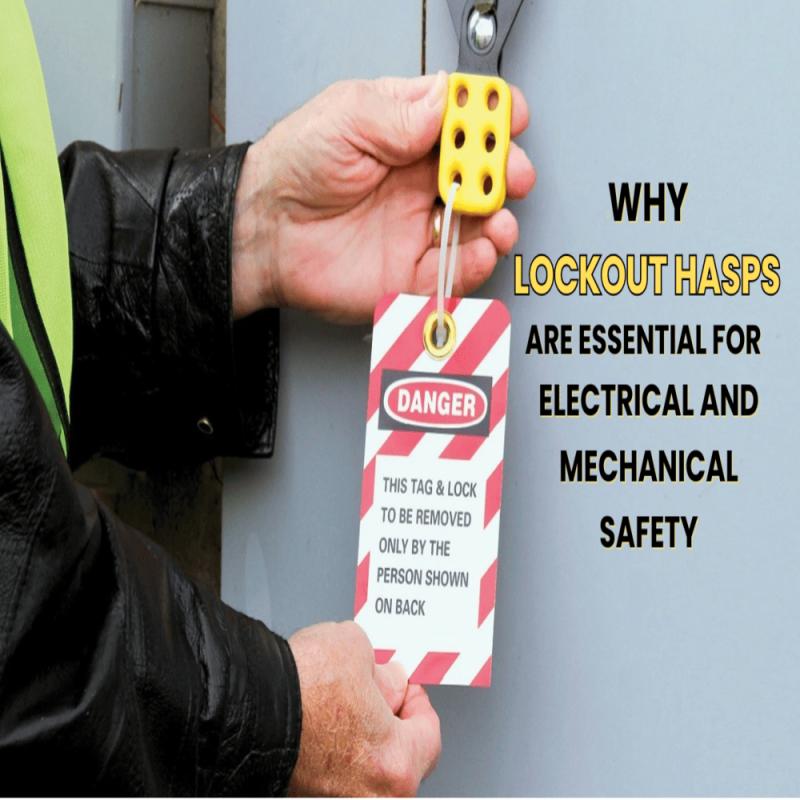
In industries where electrical and
mechanical equipment is integral to operations, safety is paramount. The
potential for accidents, injuries, or even fatalities due to uncontrolled
energy sources is a constant concern. Lockout hasps, a critical component of
lockout tagout systems, play an essential role in ensuring worker safety by
preventing the unexpected release of hazardous energy. This article explores
why lockout hasps are indispensable for electrical and mechanical safety,
highlighting their functionality, benefits, and regulatory importance.
What are Lockout Hasps?
A lockout hasp is a robust safety
device designed to secure energy isolation points, such as circuit breakers,
valves, or switches, during maintenance or repair. Key features include:
Material: Typically made of durable steel or nylon to
withstand industrial environments.
Design: Features multiple holes to accommodate
several padlocks, allowing multiple workers to secure the device.
Function: Physically prevents equipment operation until
all padlocks are removed, ensuring a zero-energy state.
Lockout hasps are integral to LOTO
procedures, which control hazardous energy sources like electricity, hydraulic
pressure, or mechanical motion.
Enhancing
Electrical Safety:
Electrical systems present
significant risks, including shocks, arc flashes, and electrocution. Lockout
hasps mitigate these dangers by isolating electrical energy sources. Their role
in electrical safety includes:
Secure
Isolation: Lockout hasps secure circuit
breakers or switches in the "off" position, preventing accidental
re-energization.
Group
Lockout: Enable multiple workers to
attach personal padlocks, ensuring no single individual can restore power
prematurely.
Risk
Reduction: Minimize the chance of
electrical accidents caused by miscommunication or oversight during
maintenance.
By facilitating safe electrical work,
lockout hasps protect workers from life-threatening hazards.
Ensuring
Mechanical Safety:
Mechanical equipment, such as
presses, conveyors, or rotating machinery, poses risks like crush injuries or
amputations if energy is not properly controlled. Heavy-duty or SteelLockout hasps enhance mechanical safety by:
Isolating
Energy Sources: Secure
valves, levers, or other controls to prevent unexpected movement.
Controlling
Stored Energy: Lock out hydraulic, pneumatic,
or spring-loaded systems to eliminate residual energy hazards.
Versatile
Application: Suitable for various mechanical
systems, from small valves to large industrial machines.
Lockout hasps ensure equipment
remains in a safe, de-energized state, protecting workers from mechanical
hazards.
Compliance
with Safety Regulations
Lockout hasps are not just a best
practice; they are often a legal requirement. In the United States, the
Occupational Safety and Health Administration (OSHA) mandates the use of LOTO
procedures under standard 29 CFR 1910.147 to control hazardous energy. Lockout
hasps are explicitly recommended in this standard because they provide a
reliable means of securing energy isolation points.
Non-compliance with LOTO regulations
can result in hefty fines, legal liabilities, and, most importantly,
preventable injuries. By incorporating lockout hasps into safety protocols,
employers demonstrate a commitment to worker protection and regulatory
adherence. Regular training on the proper use of lockout hasps further ensures
that employees understand their role in maintaining a safe workplace.
Additional
Benefits of Lockout Hasps:
Beyond safety and compliance, lockout
hasps offer practical advantages, including:
Cost-Effective: Affordable tools with significant safety
benefits.
Ease of
Use: Simple to install and operate,
requiring minimal training.
Durability: Built to withstand harsh conditions, ensuring
long-term reliability.
High
Visibility: Often brightly colored or
labeled for high visibility, reducing the risk of operation errors by
unauthorized personnel.
Maintenance-Free: Require little to no upkeep, making them a
low-maintenance safety solution.
These benefits make lockout hasps a
practical and efficient choice for industrial safety.
Conclusion
Lockout hasps are indispensable for
electrical and mechanical safety in industrial environments. By enabling secure
energy isolation, supporting group lockout procedures, and ensuring adherence
compliance with regulations, they significantly reduce the likelihood of
workplace accidents. Their simplicity, durable robust design, and versatility
make them a critical component of any LOTO program. For employers and workers,
investing in high-quality lockout hasps is a small
investment for a major step toward a safer workplace, providing both protection
and peace of mind.

Post Your Ad Here
Comments