Step-by-Step Guide to Conducting an Airborne Sound Insulation Test
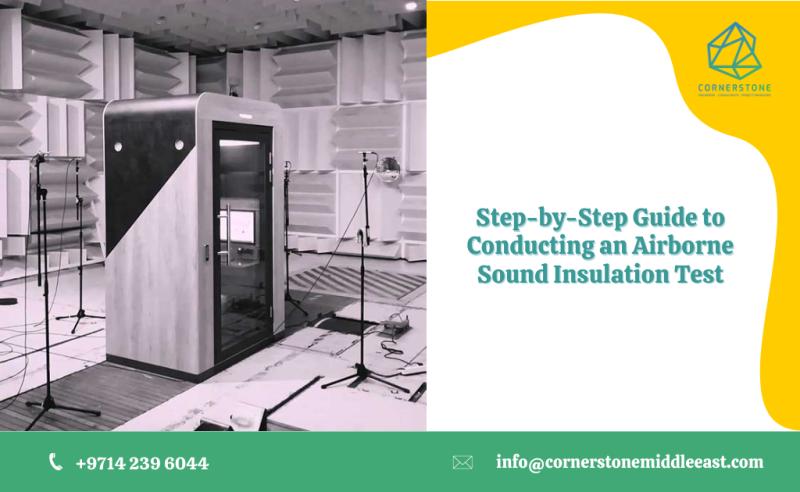
Sound control in buildings is becoming a crucial aspect of modern construction. Excessive noise can affect productivity, concentration, and comfort in residential, commercial, and office spaces. One of the most reliable ways to assess building soundproofing is through an Airborne Sound Insulation Test. This test evaluates how effectively walls, floors, ceilings, and partitions prevent airborne sound from transmitting between spaces. In this blog, we provide a detailed and practical step-by-step guide to conducting an Airborne Sound Insulation Test, referencing best practices from sources such as Cornerstone Middle East.
Understanding Airborne Sound Insulation
Airborne Sound Insulation refers to the ability of a building element to block sound traveling through the air, like human voices, music, or traffic noise. Unlike impact noise, which is caused by footsteps or machinery, airborne noise travels through the air and penetrates through walls, floors, or ceilings.
The Airborne Sound Insulation Test helps determine whether a building’s acoustic performance meets regulatory requirements. It also identifies weak points in construction where sound leakage occurs, allowing engineers to implement corrective measures. This test is critical for ensuring comfort, privacy, and regulatory compliance in residential and commercial projects.
Step 1: Preparing the Testing Environment
Proper preparation is vital for accurate Airborne Sound Insulation Test results. First, ensure both the source room (where sound is generated) and the receiving room (where sound is measured) are free from furniture, decorations, and obstructions. Doors, windows, and ventilation systems should be closed or turned off to minimize interference.
The rooms should be structurally stable and free from construction noise. Any external noise sources should be minimized during testing. Proper preparation ensures that the measurements reflect the actual acoustic properties of the building rather than environmental noise.
Step 2: Selecting the Right Equipment
Accurate testing requires high-quality, calibrated equipment. Essential tools for an Airborne Sound Insulation Test include:
Sound Source: Typically a loudspeaker producing pink noise or white noise for uniform frequency coverage.
Microphones: Precision microphones placed in the receiving room to measure transmitted sound levels.
Sound Level Meter and Data Acquisition System: To record, store, and analyze the measurements accurately.
All equipment must be calibrated according to industry standards. Using reliable instruments reduces errors and ensures that the test results are credible for regulatory and quality assurance purposes.
Step 3: Generating Test Signals
Once the equipment is ready, the next step is to generate test signals in the source room. Pink noise is commonly used as it evenly distributes energy across the audible frequency spectrum, simulating real-world airborne noise conditions.
The sound source should be positioned to distribute sound evenly in the source room, avoiding corners and reflective surfaces that can distort results. The sound level should be maintained consistently throughout the test to ensure accurate measurements in the receiving room.
Step 4: Measuring Sound Levels
Microphones are placed strategically in the receiving room to capture the transmitted sound. Multiple measurement points are necessary to obtain an average sound level that accounts for variations in room geometry, reflections, and absorption.
Measurements are taken across a wide frequency range, usually from 100 Hz to 5000 Hz. This provides a comprehensive understanding of the partition’s performance, as different materials and construction methods may perform differently at low versus high frequencies. Accurate measurement is key to obtaining a reliable assessment of sound insulation.
Step 5: Calculating Sound Insulation Values
After collecting the sound level data, the sound reduction index (Rw) is calculated. This index quantifies the effectiveness of the partition in reducing airborne noise. A higher Rw value indicates better sound insulation.
The calculation involves comparing sound levels in the source and receiving rooms and applying standard formulas as per international testing norms. Detailed frequency-specific analysis ensures a precise evaluation of the material or partition tested. This step is crucial for generating credible test reports used by engineers and architects.
Step 6: Preparing the Test Report
A detailed Airborne Sound Insulation Test report is an essential outcome of the process. The report typically includes:
Detailed description of the tested partitions (walls, floors, ceilings)
Placement of sound sources and microphones
Recorded sound levels in the source and receiving rooms
Calculated Rw values across frequencies
Observations regarding sound leakage areas and recommendations
Comprehensive reporting provides building owners, contractors, and regulatory authorities with accurate data to evaluate acoustic performance and plan improvements.
Step 7: Analyzing Results for Building Improvements
The final step involves analyzing the test results to identify weak points and improve soundproofing. Common corrective measures include:
Adding insulation material within walls, floors, or ceilings
Sealing gaps around doors, windows, and service penetrations
Installing acoustic panels or double-glazed windows
Reinforcing partitions with additional layers of sound-absorbing material
By addressing these areas, stakeholders can enhance acoustic comfort and reduce complaints regarding noise intrusion, ensuring compliance with local and international acoustic standards.
Why Airborne Sound Insulation Testing Is Important
Conducting an Airborne Sound Insulation Test offers multiple benefits:
Regulatory Compliance: Ensures the building meets local and international acoustic standards.
Occupant Comfort: Reduces unwanted noise, improving quality of life in residential or commercial buildings.
Design Verification: Confirms that the selected materials and construction methods achieve the intended sound insulation performance.
Quality Assurance: Provides objective data to verify the construction meets specifications, helping maintain high construction standards.
Effective testing allows architects, engineers, and building owners to take proactive steps in improving building acoustics, ensuring satisfaction for all occupants.
Conclusion
Conducting an Airborne Sound Insulation Test is a critical process in modern construction and building inspection. A systematic approach—from preparing the testing environment and selecting equipment to measuring sound levels, calculating Rw values, and analyzing results—ensures reliable and accurate results.
The insights gained from an Airborne Sound Insulation Test enable building professionals to enhance soundproofing, comply with regulations, and provide comfortable, quiet spaces for occupants. By following these steps, developers, architects, and inspectors can ensure buildings are acoustically efficient and meet the highest standards of quality and comfort.
Post Your Ad Here
Comments