Reduce Construction Risks and Rework Using Revit Clash Coordination
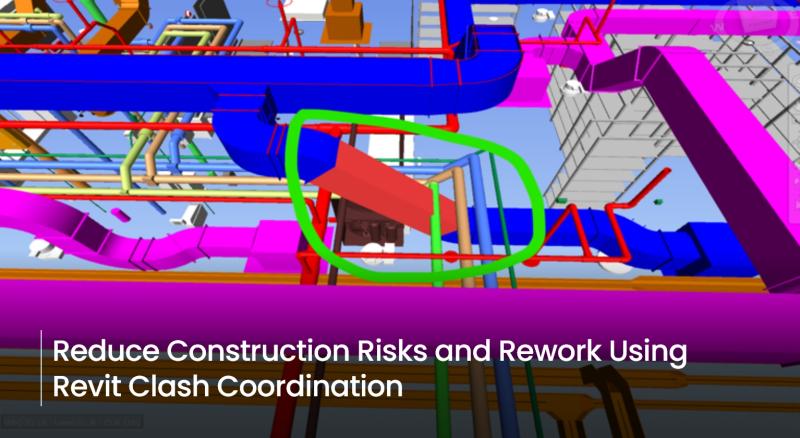
In the architecture and construction landscape, managing efficiency and accuracy is key to seamless project execution. In traditional times or the modern era, precision has always been paramount for successful project completion. Seamless integration of multiple elements, including architectural, structural, and MEP, measures the level of accuracy and efficiency. As a complex aspect of any project, it often leads to design conflicts, errors, and other factors that become an obstacle. Moreover, construction projects, regardless of their nature or size, may encounter unexpected clashes between various building systems. A minor clash can lead to significant loss and inefficiency in the building design. At the beginning of the construction process, project planners and professionals focus on accurately integrating all building components to avoid any clashes. This may demand for detailed and intricate workflow and seamless integration into the BIM model.
There is a long list of benefits to building information modeling; one of them is the ability to detect clashes quickly, enabling AEC professionals to identify errors and conflicts. Clashes are a common part of any construction project and usually occur due to slight design changes, miscommunication, or any other factors that lead to costly delays, rework, and potential safety hazards. Therefore, clash detection, along with revit clash coordination, highlights its importance as an indispensable tool. Clash coordination ensures preventive measures and strategies that enable the avoidance of errors, rework, and reduce construction risk.
Due to the complex nature of the construction process, clashes can often be missed for various components. Revit MEP modeling services or structural modeling ensures conflicts are resolved without significant rework in design or the investment of crucial time. A proactive approach with clash detection ensures building safety during the process and after while also maintaining design accuracy. A single clash or conflict in the building design can lead to various costly errors, such as;
Financial overruns
Legal disputes
Delay in project
Reduced quality
Safety hazards
Costly rework
These mentioned conflicts can impact the project's budget. Therefore, coordination in BIM allows AEC professionals to prevent clashes and errors while assuring precision in design. Explore further details about Revit clash coordination, as it helps minimize mistakes.
Understanding Revit Clash Coordination in Detail
In the AEC field, clashes are common, regardless of project size or nature. To ensure harmony, avoid significant errors, and maintain construction safety, BIM clash detection is a pivotal approach in construction projects. This is where Revit clash coordination comes into focus. It is defined as a process of identifying and resolving conflicts between different building elements and systems within a 3D BIM model created in Revit. Since the construction project entails various aspects and is tedious, there are various conflicts following:
Hard Clashes
Soft Clashes
Workflow Clashes
By integrating models from various disciplines, such as architectural, structural, MEP, and fire protection, into the model, software like Revit can automatically detect conflicts long before construction begins. This results in cost savings, time savings, reduced rework, and minimized construction risk on-site. Above all, implementing clash detection services offers a variety of benefits, such as;
Improved construction quality
Faster project completion
Cost saving
Minimize errors
Better space management
Enhanced safety on site
With a plethora of benefits, it offers enhanced construction outcomes and is considered key to the project's success. Let's focus on understanding how construction risk management is aligned with Revit coordination.
How Revit Clash Coordination Reduces Risks and Rework
As discussed, with the significant technology of clash detection services integrated into the BIM model, it is essential to understand that clash coordination reduces the scope of risk and errors. Leveraging the power of Revit coordination lies in its ability to shift clash detection from the chaotic construction site to the controlled digital environment. As a matter of fact, to mitigate costly conflicts, Revit for construction projects allows AEC professionals to detect clashes at an early stage and resolve them with a strategic approach that requires minimal changes in design.
The evolving technology in the field of architecture and construction has enabled experts to enhance quality and precision, ensuring the seamless integration of all building components with the help of Revit. Here's how it mitigates risks and rework:
Early detection of clashes and resolution: With the ability to solve problems proactively, clash detection in Revit enhances the outcome without compromising crucial time. Clashes or conflicts in design are identified during the designing phase and pre-construction phase. This enables AEC professionals to make informed design adjustments, thereby minimizing the need for costly field changes. Designers can iterate on their models to resolve conflicts, ensuring that the final construction documents are well-coordinated, accurate, efficient, and clash-free, resulting in reduced risk on construction sites.
Enhanced Communication and Collaboration: The BIM model serves as a centralized platform for architects, engineers, designers, and other professionals to collaborate. The BIM model provides enhanced visualization and quick access to project data, improving communication and coordination among different individuals. Coordination in BIM, clash reports, and resolution are often visualized in 3D, which fosters clear and concise communication between architects, engineers, and other professionals.
Cost and Time Savings: One of the most significant benefits is a reduction in rework, which enables the saving of time, resources, materials, and overall project cost. Early conflict detection and resolving clashes upfront prevent costly on-site delays, keeping projects on schedule and avoiding damages. Clash detection construction reduces risk and brings predictable project costs, leading to better financial forecasting and risk management.
Improved Quality and Performance: With clash-free 3D models, installations of elements such as MEP, structural, and architectural are more precise and adhere to design intent. This results in higher-quality, accurate, and efficient construction projects. Revit MEP modeling services and other Well-coordinated systems operate more efficiently, contributing to better energy performance, occupant comfort, and overall building functionality. Resolving potential conflicts and clashes during the design stage can prevent long-term operational issues and costly maintenance during the lifecycle management of buildings.
These are a few factors that help to ensure precision and efficiency in maintaining harmony between various components of infrastructure. Ensuring error-free design models brings seamless coordination in BIM while also enhancing communication and collaboration among AEC experts. Moreover, Revit and other technologies, with the help of expertise, can detect early clashes and resolve them before construction. However, here are some factors to keep in mind for optimal utilization of Revit clash coordination.
Define Clear BIM Execution Plans
Regular Clash Detection Meetings
Utilize Appropriate Software
Emphasize Model Quality
Assign Ownership and Track Progress
Involve All Stakeholders Early
Ending Note
Resolving conflicts and clashes is an evident part of any infrastructure project. To reduce construction risk, minimize project costs, avoid project delays, and more, clash detection services ensure seamless BIM coordination of different components, maximizing efficiency and project success.


Post Your Ad Here
Comments (1)
Freedom SEO1
Maximize Your Online Visibility
Informative, if you ever need help expanding your online presence, reach out to Freedom SEO