Unfolding the Truth Behind Getting Bulls to Buck
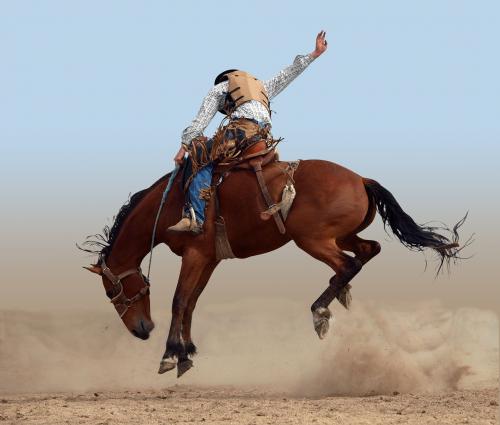
Bull riding has become an increasingly dangerous sport in both professional arenas as well as bull riding environments at boarding high schools and other competitions. The aggressive sport requires the human attempt of remaining mounted on a wildly bucking bull, but there are a lot of myths and conspiracies out there about how cowboys get the bulls to buck.
Let’s explore the different techniques used in bull riding to encourage the bucking action, as well as clear up any misconceptions.
Nature
First, it’s important to remember that bulls are basically wild animals; unlike horses that are trained for rodeo events, bulls are the result of selective breeding that produces massive and strong wild animals. Therefore, the acts of bucking, jumping and kicking are natural instincts for bulls.
In other words, all rodeo bulls — from professional arenas to the arenas of boarding high schools — naturally want to buck the body of a stranger off their backs, making the action instinctual and a natural response.
Flank Strap
The most controversial piece of equipment is the flank strap. The flank strap is a cotton belt that is lightly tightened around the bull’s flank, just in front of its hind legs. The biggest myth of the flank strap is that it is used as torture and wrapped around the bull’s testicles. This is a false. The strap — used professionally and at boarding high schools — does not harm the animal; however, it encourages hind-movement.
The process does not involve damaging the bull’s reproductive system or harming the bull in any way. In fact, if the strap is too tight, the bull won’t be able to buck at all.
Additional Assists
While both natural instincts and flank straps contribute to the bull’s bucking actions, there are other additional techniques used to encourage bucking actions. For example, bulls are often kept in a small, confined space before the gates open and the competition begins, during which a bull becomes anxious and eager to get moving.
Also, a brass bell that hangs from the bottom of the rope
makes a loud, clattering sound that encourages the animal to buck.
Alyssa Koenig is an academic writer for Fusion 360, an SEO and content marketing agency. Information provided by Wasatch Academy. Follow on Twitter.
Post Your Ad Here
Comments