Monovision IOLs Vs Multifocal IOLs

The first ever
intraocular lens (IOL) was successfully implanted in a patient at St Thomas’ Hospital
in London by Sir Harold Ridley on 29th November 1949 and ever since
surgeons have discussed and researched the best surgical lenses to use. A
staggering 67 years later, and with huge advances in the technique of
implanting an intraocular lens and the lenses themselves, the discussions
continue. Now we are debating monovision IOL implants versus multifocal IOL
implants for presbyopia.
An intraocular
lens implant is mostly used in older adult patients who have developed
cataracts or myopia. IOLs are implanted in the eyes and can be offered in a monovision
or multifocal variation. Each type of lens has its own assets and flaws. The
eye doctor/surgeon will always recommend what they think is the best and safest
lens for you, as what is good for you may not be for someone else. In this
article I will go through the differences between monovision and multifocal IOL
implants.
Monovision IOL Implants
Monovision is
one of the ways we can treat presbyopia, in which we implant a monofocal IOL in
both eyes but not the same way. An IOL can be implanted so to give near,
intermediate or distance vision. When we carry out a monovision implant
procedure one eye is corrected for distance vision and the other eye is
corrected for near or intermediate vision.
This might
appear to be problematic at first but your brain is able to do something
extraordinary when eyes are corrected with monovision implants. The eye that is
corrected to give distance vision will give the distance image to the brain,
while the other eye, which is corrected to give closer vision, will give that
image to the brain and the brain is able to merge the two together to make a
whole. This may take a little while to get used to and for the brain to adjust
to the new monovision at first. The eye clinic can normally demonstrate this to
you to see how you cope with this effect.
Due to the fact
that the monofocal monovision implants do not split light entering the eye they
are better for night driving as you do not get as much glare and halos from
light as patients with multifocal implants. Also as you have a fixed focal
point on each eye with monovision, they tend to perform better with
intermediate vision, such as using a computer. The downside to monovision is
that it is a compromise and some people will love the effect while others are
unable to get along with it.
Multifocal
IOL Implants
Unlike
monovision IOL implants where each eye has one focal point, multifocal implants
work like a progressive lens. On a multifocal implant the lens itself has many
circles around it at different points to give distance, intermediate and near
vision in both eyes the same. The circles on the multifocal implants splits
light entering the eyes so you can focus on whichever distance you are looking
at, whether that be close up or an object in the distance. The point of a
multifocal implant is so you will not require the use of glasses or visual aids
during your day-to-day activities. Just like the monovision implants,
multifocal implants take a little time to get used to. The brain will need to
relearn to find the correct point for near, middle and far distances.
What are the benefits?
Benefits of
multifocal IOLs is that both eyes are focusing on the same distance which many
patients prefer but due to the splitting of light you may suffer from glare and
halos around lights. Many people who have cataracts suffer very much with halos
and with multifocal implants the halos are often much less than this.
With both
monovision and multifocal implants there is no guarantee of complete freedom
from glasses, you may need them for reading very small print for example.
When having a
consultation with an eye doctor or optometrist for IOLs, it is very important
for you to consider what your expectations, goals and needs are. Your surgeon
will only recommend what they think it safest and best for your eyes, that
meets your requirements.
Author:
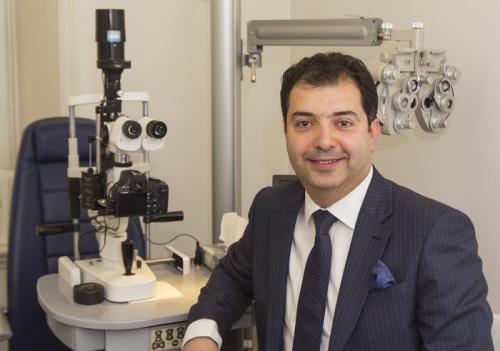
Samer Hamada is a distinguished
consultant ophthalmologist and cornea surgeon performing eye surgeries at his
practice, the Eye Clinic London. With nearly two decades' experience, Mr.
Hamada is recognised as a leading expert in the field of cataract, refractive
lens exchange (RLE) and corneal surgeries.
Please
visit http://eyecliniclondon.com/
Please
call 0800 197 8808 for friendly advice and information.
Post Your Ad Here
Comments