Grocery Delivery App Development Services: Technology Stack, Trends & ROI
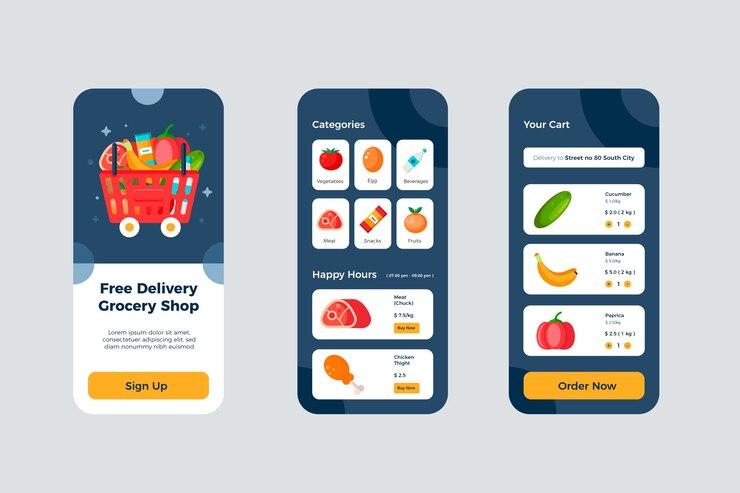
Grocery delivery is no longer a “pandemic-era convenience.” In 2026, it has become a core digital commerce category driven by changing customer expectations, faster logistics, and the growing preference for scheduled home delivery. Consumers now expect the same level of speed, transparency, and personalization from grocery delivery apps that they get from food delivery and ecommerce platforms. However, grocery delivery is more complex than many on-demand models. A grocery catalog is larger, inventory changes constantly, substitutions are common, and the operational workflow includes picking, packing, dispatching, and delivery. That means businesses must approach app development as a complete system build, not just a customer app with a cart.
This article explains grocery delivery app development services in a practical, business-focused way. You will learn the best technology stack options, key features, emerging trends, and how to calculate ROI realistically. Whether you are building from scratch or launching a white label grocery delivery app, this guide will help you make smarter decisions.
Why Grocery Delivery Apps Are a High-ROI Business Channel in 2026
Grocery delivery apps have one of the strongest ROI potentials among consumer apps because groceries are a repeat purchase category. Unlike travel, real estate, or luxury ecommerce, groceries are purchased weekly or multiple times per month. This high frequency creates a natural path to retention and recurring revenue.
Grocery is a repeat-buy category that increases lifetime value
The most important financial advantage of grocery delivery is that customers come back frequently. If your app provides accurate inventory, reliable delivery, and a smooth reordering experience, users develop a habit. Habit-driven apps typically have lower churn and higher customer lifetime value.
For businesses, this matters because customer acquisition costs are rising. When a customer stays active for months, your marketing spend becomes easier to recover and profitability improves.
Grocery apps support upselling and cross-selling better than most industries
Grocery apps can increase average order value through:
-
Frequently bought together suggestions
-
Smart “add-on” recommendations at checkout
-
Bundles (weekly essentials, breakfast packs, snack packs)
-
Personalized deals based on previous orders
-
Brand-sponsored product placements
These features do not just increase revenue. They also improve user experience by reducing the effort required to build a cart.
Digital ordering reduces operational costs over time
A well-designed grocery delivery platform reduces manual work. Instead of taking orders via phone calls or WhatsApp, businesses can automate:
-
Order confirmation
-
Picking lists for staff
-
Payment capture
-
Delivery assignment
-
Customer notifications
-
Refund workflows
When the system is stable, the business can scale without increasing staff at the same pace as order volume.
Grocery apps enable expansion into multiple business models
A grocery platform can start with a simple model and expand into:
-
Multi-store delivery
-
Hyperlocal marketplace
-
Dark store fulfillment
-
Subscription delivery
-
Specialty grocery categories (organic, vegan, imported items)
This flexibility is one reason many businesses choose to work with a grocery delivery app development company instead of relying only on third-party marketplaces.
What Grocery Delivery App Development Services Usually Include
Many business owners assume app development means building the customer-facing application. In reality, grocery delivery requires multiple connected modules. The customer app is only one part of the system.
A complete service typically includes strategy, design, development, integrations, testing, deployment, and post-launch support.
Product strategy and requirement planning
This stage defines how the business will operate digitally. A strong planning phase includes:
-
Target geography and delivery zones
-
Business model selection (single store, chain, marketplace)
-
Delivery workflow and time-slot rules
-
Refund, replacement, and cancellation policies
-
Payment and tax configuration
-
Admin roles and permissions
Skipping this step often leads to expensive changes during development or operational issues after launch.
UI/UX design built specifically for grocery ordering
Grocery ordering is different from food delivery. A observed behavior in grocery apps is that customers either browse categories slowly or search quickly for known items. Your design must support both.
UI/UX should include:
-
Simple category navigation
-
Fast product search
-
Clear product variants and pack sizes
-
Stock availability visibility
-
Easy cart editing
-
Smooth checkout with minimal friction
-
Repeat ordering flows
Full-stack development for all modules
A complete grocery platform includes:
-
Customer mobile app
-
Delivery agent mobile app
-
Store dashboard for order fulfillment
-
Admin panel for full business control
-
Backend APIs and database
-
CMS tools for banners, offers, and content
If you are investing in on demand grocery delivery app development, you should ensure the scope includes the full ecosystem rather than only one app.
Integrations and third-party services
Most grocery apps require integrations for:
-
Payment gateways
-
SMS and email notifications
-
Push notifications
-
Maps and navigation
-
Analytics tracking
-
Customer support tools
-
Inventory syncing (optional)
The quality of integrations affects reliability, especially during peak ordering hours.
Quality assurance, deployment, and ongoing maintenance
A grocery platform must be stable because order errors damage trust quickly. A good grocery delivery app development company should provide:
-
Functional testing for every workflow
-
Performance testing for large catalogs
-
Security testing for payments and user data
-
App Store and Play Store deployment support
-
Maintenance plans for updates and bug fixes
Core Modules Required for a Complete Grocery Delivery Ecosystem
Grocery delivery is an operational business. The app must support customers, delivery agents, store staff, and administrators. If one module is weak, the entire system suffers.
Customer app module (the conversion engine)
The customer app is where revenue begins. It should include:
-
Login and signup (OTP, email, social login)
-
Address management with map pin selection
-
Category browsing and product listing pages
-
Advanced search with suggestions
-
Product detail pages with variants and images
-
Cart and checkout with taxes and delivery fees
-
Delivery slot scheduling
-
Order tracking and notifications
-
Order history and re-order
-
Ratings and reviews
-
Refund, replacement, and cancellation requests
-
Customer support chat or ticket system
The goal is not only to make ordering possible but to make ordering effortless.
Delivery agent app module (logistics execution layer)
The delivery agent app should include:
-
Profile and verification details
-
Order assignment and acceptance
-
Route navigation integration
-
Delivery status updates
-
Proof of delivery (OTP, photo, signature)
-
Earnings dashboard
-
Delivery history
-
Batch delivery handling for multiple orders
Delivery is a major cost center. This module must be designed for speed and clarity.
Store dashboard module (picking and packing control)
The store dashboard is essential for accuracy. It should include:
-
Order acceptance and preparation status
-
Picking list generation
-
Out-of-stock management
-
Substitution suggestions
-
Packing confirmation
-
Invoice and receipt generation
-
Staff roles (picker, packer, manager)
-
Product catalog management
-
Stock and pricing updates
Without a strong store module, businesses face high refund rates and customer dissatisfaction.
Admin panel module (business operations control center)
The admin panel is where the platform becomes scalable. It should include:
-
Customer management
-
Store/vendor management
-
Delivery agent management
-
Zone-based pricing rules
-
Delivery fee and slot configuration
-
Commission and payout management (for marketplaces)
-
Promotions, coupons, and referral setup
-
Banner and CMS management
-
Refund and dispute management
-
Analytics dashboards and reporting
-
Support ticket monitoring
-
Security controls and access permissions
This module directly impacts operational efficiency and profitability.
Grocery Delivery Business Models You Can Build
Your business model affects everything: feature scope, tech architecture, admin logic, and revenue streams. The same app structure cannot fit every grocery business.
Single-store grocery delivery model
This model is best for:
-
Local grocery stores
-
Specialty grocery sellers
-
Independent supermarkets
Advantages:
-
Easier inventory control
-
Faster development and launch
-
Higher profit margins if products are owned
Challenges:
-
Limited product variety compared to marketplaces
-
Slower geographic scaling
Multi-store grocery chain model
This model is ideal for:
-
Grocery chains
-
Franchise-based supermarkets
-
Regional brands
Advantages:
-
Strong brand trust and repeat customers
-
Shared loyalty program across stores
-
Better negotiation power with suppliers
Challenges:
-
Requires inventory and pricing management per store
-
Needs zone-based delivery optimization
Multi-vendor grocery marketplace model
This model works for:
-
Hyperlocal startups
-
Aggregators
-
City-wide grocery marketplaces
Advantages:
-
More product variety
-
Faster expansion by onboarding vendors
-
Multiple revenue streams through commissions
Challenges:
-
Complex admin and vendor management
-
Requires strong dispute and refund workflows
Dark store or warehouse fulfillment model
This model is used by:
-
Quick commerce companies
-
Fast delivery brands
Advantages:
-
Faster delivery and predictable inventory
-
Better order batching and efficiency
Challenges:
-
Higher operational costs for warehousing
-
Requires strong demand forecasting and inventory planning
Subscription grocery delivery model
This model is suitable for:
-
Milk and dairy delivery
-
Weekly vegetable packs
-
Monthly pantry essentials
Advantages:
-
Predictable recurring revenue
-
Higher retention
-
Easier logistics planning
Challenges:
-
Requires flexible subscription management
-
Must handle pauses, skips, and custom delivery slots
A capable grocery delivery app development company will help you choose the model based on your operational strengths and market demand.
Technology Stack for Grocery Delivery App Development
The technology stack determines performance, scalability, security, and how expensive the platform will be to maintain over time. Grocery platforms deal with high product volumes, constant inventory changes, and heavy peak-time traffic, so the stack must be chosen carefully.
Mobile app technology options
There are two main approaches for building the customer app and delivery agent app.
Native development
-
iOS: Swift
-
Android: Kotlin
Native development offers:
-
Best performance for large catalogs
-
Smooth animations and fast scrolling
-
Strong device-level optimization
This is often preferred for large-scale grocery platforms.
Cross-platform development
-
Flutter
-
React Native
Cross-platform development offers:
-
Faster development time
-
Lower cost compared to building two separate apps
-
Easier updates across platforms
This approach is widely used for startups and for launching a white label grocery delivery app across multiple brands.
Backend development technology options
The backend is the most critical layer. It handles:
-
Order creation and processing
-
Payment verification
-
Inventory updates
-
Delivery assignment logic
-
Coupons and promotions
-
Notifications
-
Vendor commissions (if marketplace)
Popular backend stacks include:
-
Node.js (fast, scalable, great for real-time updates)
-
Python (Django/FastAPI for clean business logic)
-
Java (enterprise-grade, strong for large organizations)
-
PHP Laravel (good for rapid builds in some cases)
Database choices for grocery platforms
Grocery apps store large amounts of data including:
-
Product catalogs and variants
-
Pricing and discounts
-
Orders and transaction history
-
Customer addresses
-
Delivery agent activity logs
Common database options:
-
PostgreSQL (strong relational data, scalable)
-
MySQL (widely used, stable)
-
MongoDB (flexible for catalog data, fast iteration)
Many platforms use a hybrid approach, combining relational databases for transactions and NoSQL for catalog performance.
Cloud infrastructure and hosting
Cloud hosting ensures the platform remains stable during peak traffic. Common providers include:
-
AWS
-
Google Cloud Platform
-
Microsoft Azure
For modern DevOps workflows, businesses use:
-
Docker for containerization
-
Kubernetes for scaling
-
CI/CD pipelines for automated deployments
Real-time communication and caching
Grocery apps require real-time updates for:
-
Order status changes
-
Delivery tracking
-
Stock availability
-
Promotions
Common technologies include:
-
WebSockets for live updates
-
Redis for caching and faster performance
-
Firebase Cloud Messaging for push notifications
Maps, navigation, and delivery routing
Delivery tracking depends on reliable maps. Most apps integrate:
-
Google Maps API
-
Mapbox
-
HERE Maps
Routing optimization is crucial for reducing delivery time and cost, especially in cities with heavy traffic.
Payment gateway integrations
Payment flexibility increases conversion rates. Grocery apps commonly integrate:
-
Stripe
-
Razorpay
-
PayPal
-
Apple Pay and Google Pay
-
Local gateways depending on the region
The backend must also support refunds, partial refunds, and replacement charges.
Analytics and marketing tools
To improve ROI, you need strong analytics. Common tools include:
-
Google Analytics for Firebase
-
Mixpanel
-
AppsFlyer
-
CRM integrations for retention campaigns
A well-structured tech stack is the foundation of successful on demand grocery delivery app development, especially when scaling to multiple cities.
Must-Have Features That Drive Conversions and Retention
Many grocery apps fail not because the concept is weak, but because the user experience is slow or frustrating. Grocery customers want speed, clarity, and confidence that the order will be correct.
Smart product search and auto-suggestions
Search is one of the most used features in grocery apps. It should support:
-
Typo tolerance
-
Brand and category-based results
-
Auto-suggestions while typing
-
Recent searches
A weak search experience increases drop-offs significantly.
Advanced filters and sorting
Filters improve the browsing experience for large catalogs. Common filters include:
-
Price range
-
Brand
-
Discount percentage
-
Organic and dietary tags
-
Pack size and weight
-
Popularity and ratings
Sorting should support:
-
Price low to high
-
Price high to low
-
Most popular
-
Best rated
-
New arrivals
Product variants and pack-size clarity
Grocery customers often compare pack sizes and prices quickly. The app must show:
-
Weight/volume clearly
-
Unit pricing if possible
-
Variant selection without confusion
Substitution workflow and out-of-stock handling
Out-of-stock issues are common. Your app should support:
-
Substitute recommendations from the store
-
Customer approval before dispatch
-
Automatic refund if no substitute is accepted
-
Customer preferences like “do not substitute”
This feature alone can reduce refund disputes and improve satisfaction.
Delivery slot scheduling
Grocery delivery is often planned. Delivery slot selection supports:
-
Better customer convenience
-
More predictable logistics
-
Higher order completion rate
-
Lower delivery cost through batching
Re-order, favorites, and saved carts
Retention improves when users can:
-
Re-order previous carts
-
Save favorite items
-
Create shopping lists
This reduces friction and makes the app part of a weekly routine.
Loyalty points and referral programs
Loyalty and referrals reduce dependence on paid ads. A strong system includes:
-
Points earned per purchase
-
Tier-based rewards
-
Referral discounts for both users
-
Cashback offers
Real-time order tracking and notifications
Tracking builds trust. Customers want to see:
-
Order accepted
-
Order being packed
-
Order dispatched
-
Delivery agent location
-
Estimated arrival time
Store and Admin Features That Protect Profitability
Profitability is not only about revenue. Grocery delivery has operational costs, and the admin system must control them.
Inventory management and stock automation
Inventory errors are expensive because they cause:
-
Refunds
-
Replacements
-
Customer churn
-
Support workload
The platform should support:
-
Stock updates per store
-
Low-stock alerts
-
Auto-disable out-of-stock items
-
Bulk stock upload
-
POS integration for supermarkets
Pricing, promotions, and commission controls
A strong admin panel should manage:
-
Delivery charges by zone
-
Minimum order value
-
Surge pricing for peak hours (optional)
-
Coupon rules and restrictions
-
Vendor commissions (marketplace model)
-
Store-specific promotions
Delivery management and batching
Delivery cost is often the largest expense. The system should support:
-
Assigning deliveries by zone
-
Manual override controls
-
Batching multiple orders for one trip
-
Delivery agent availability tracking
Batching can significantly improve ROI by reducing cost per order.
Refund, replacement, and dispute management
Grocery apps must handle:
-
Partial refunds for missing items
-
Replacements for damaged goods
-
Substitution disputes
-
Payment reversals
A structured workflow reduces customer support time and prevents revenue leakage.
Analytics dashboards for decision-making
Admin analytics should show:
-
Revenue and profit reports
-
Most ordered items
-
Order frequency by customer segment
-
Peak ordering times
-
Delivery performance
-
Cart abandonment rates
-
Coupon performance
This data helps optimize operations and marketing.
Trends Shaping Grocery Delivery App Development in 2026
Customer expectations and operational strategies are evolving quickly. A modern grocery platform should align with trends that improve retention, speed, and efficiency.
Quick commerce and hyperlocal expansion
Fast delivery is becoming a competitive advantage. Many platforms are adopting:
-
Dark stores
-
Micro-fulfillment centers
-
Partnerships with local stores for faster dispatch
Even if you do not offer 10-minute delivery, improving delivery windows can boost customer loyalty.
AI-based personalization and recommendations
AI improves:
-
Product recommendations
-
Personalized discounts
-
Smart reorder suggestions
-
Churn prediction
This trend is important because it increases conversion and retention without heavy discounting.
Subscription-first grocery ordering
Subscriptions are growing for essentials like:
-
Milk
-
Bread
-
Eggs
-
Vegetables
-
Monthly pantry packs
Subscription models improve predictable revenue and reduce marketing spend.
Voice search and accessibility features
Voice search is growing because it makes ordering faster. It also improves accessibility for elderly users and customers with disabilities.
Sustainability features and eco-delivery options
Many customers now care about:
-
Minimal packaging
-
Reusable bag returns
-
Eco delivery slots
-
Reduced plastic options
Sustainability features also improve brand image and customer trust.
POS and inventory system integration
Larger grocery businesses require automation. POS integration helps:
-
Prevent out-of-stock ordering
-
Reduce manual updates
-
Improve order accuracy
-
Reduce refunds
These trends are often easier to implement when working with an experienced grocery delivery app development company.
White Label Grocery Delivery App: When It’s the Best Choice
A white label grocery delivery app is a ready-made solution that can be customized with your branding, business rules, and feature configuration. It is one of the fastest ways to launch a grocery delivery platform.
Benefits of launching with a white label solution
A white label approach offers:
-
Faster time-to-market
-
Lower development cost
-
Pre-built and tested modules
-
Easier expansion to multiple locations
-
Ability to upgrade features later
This approach is popular for businesses that want to launch quickly and start generating revenue.
Best business use cases for white label grocery apps
A white label grocery delivery app works well for:
-
Local grocery store chains
-
Entrepreneurs testing a market
-
Businesses expanding from offline to online
-
Brands launching in multiple cities
When custom development is a better option
Custom development is better if:
-
You need deep ERP or POS integration
-
You have a unique logistics model
-
You want a highly differentiated marketplace
-
You require advanced AI-based features from day one
The right approach depends on your growth goals, timeline, and budget.
ROI Explained: How Grocery Delivery Apps Make Money
ROI is one of the most misunderstood topics in app development. Grocery apps can generate strong revenue, but only when the business model and operations are designed for profitability.
Revenue streams for grocery delivery apps
A grocery platform can earn from multiple sources.
Product margin (single-store model)
If you own inventory, revenue comes from:
-
Product markup
-
Supplier discounts
-
Private label product sales
This model often delivers strong profit margins when operations are efficient.
Commission (marketplace model)
A marketplace earns through:
-
Commission per order
-
Vendor onboarding fees
-
Monthly subscription fees from vendors
This model scales well because product variety increases as more vendors join.
Delivery fees
Delivery fees can be structured as:
-
Flat fee per order
-
Zone-based pricing
-
Free delivery above minimum order value
-
Peak hour charges
Delivery fees help cover logistics costs and protect margins.
Advertising and sponsored placements
Brands can pay for:
-
Featured listings
-
Sponsored banners
-
Category-level promotions
This becomes a strong revenue stream once the app reaches high traffic.
Membership and subscription plans
Membership plans can include:
-
Free delivery
-
Priority delivery slots
-
Exclusive discounts
-
Cashback rewards
Memberships improve retention and predictable revenue.
Costs that affect grocery app ROI
To calculate ROI properly, you must include:
Development and maintenance costs
This includes:
-
Initial development
-
Hosting and cloud costs
-
Updates and bug fixes
-
Feature improvements over time
Delivery and logistics costs
Logistics includes:
-
Delivery agent payouts
-
Vehicle costs (if managed by the business)
-
Fuel and travel reimbursement
-
Failed deliveries and reattempt costs
Customer acquisition costs
Marketing costs may include:
-
Paid ads
-
Referral bonuses
-
Influencer campaigns
-
Offline promotions
Refund and customer support costs
Refunds and replacements are common in grocery delivery. Your platform should reduce these through:
-
Better inventory accuracy
-
Clear substitution workflows
-
Strong picking and packing processes
Metrics that define ROI success
To measure ROI, track:
-
Customer lifetime value (LTV)
-
Customer acquisition cost (CAC)
-
Average order value (AOV)
-
Retention rate
-
Orders per customer per month
-
Delivery cost per order
-
Refund rate
-
Cart abandonment rate

More Articles
View Image
APSense: the All-in-One Digital Marketing Hub
Join Our Business Network
Unlock access to powerful business tools and connect with professionals in your industry!
As a member of APSense.com, you'll gain:
- ✓ Optimized Digital Marketing Profile.
- ✓ Publish Articles & Network with Peers.
- ✓ Utilize Cutting-Edge AI and AR Marketing Tools.
- ✓ Participate in Challenges, Earn Rewards.
- ✓ Find or offer high-value "DigiServices" on our marketplace.
"APSense 2025 sounds like a game-changer for businesses, emphasizing innovation and growth."
— Satisfied APSense Member
Comments