How to Create a Wellness App Like Calm or Headspace?
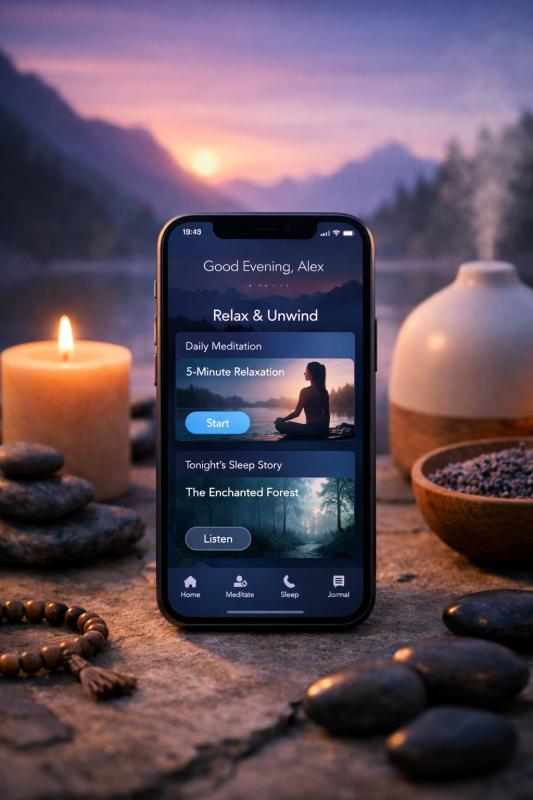
The wellness app market has grown rapidly because people now expect mental health and well-being support to be accessible anytime, anywhere. Apps like Calm and Headspace have proven that guided meditation, sleep support, breathing exercises, mindfulness training, and daily wellness coaching can become part of a user’s routine when the experience is simple, personalized, and engaging.
If you want to build a wellness app like Calm or Headspace, you must go beyond just “adding meditation audio.” Successful apps combine strong content strategy, behavioral psychology, user experience design, scalable cloud infrastructure, and long-term engagement features. Most importantly, the app must feel safe, calming, and trustworthy.
This guide explains how to plan, design, and launch a high-quality wellness app, including the must-have features, recommended tech stack, cost factors, monetization strategies, and development steps. It also explains how to work with a wellness app development company and what to expect from professional wellness app development services.
Understanding What Makes Calm and Headspace Successful
Calm and Headspace are not successful simply because they offer meditation. They succeed because they deliver a complete wellness experience that feels personal, consistent, and habit-forming. Before starting development, you should understand what makes these apps work at scale.
They solve multiple wellness problems in one place
Users come to these apps for stress relief, better sleep, improved focus, anxiety management, and emotional regulation. A modern wellness app is not limited to meditation. It becomes a toolkit for daily mental clarity.
They focus on habit-building and retention
These apps are designed for daily use. They rely heavily on streaks, reminders, short sessions, and personalization so the user keeps returning without feeling pressured.
They prioritize content quality
The audio, voice quality, pacing, and content structure matter more than many founders expect. Content is the product in wellness apps, and the app is the delivery system.
They build trust through calm design and safety
Minimal UI, soothing colors, predictable navigation, and clear privacy messaging help users feel safe. Trust is a core part of the user experience in mental wellness.
Defining Your Wellness App Vision and Niche Before Development
A common mistake in wellness app development is trying to build a “Calm + Headspace + Fitbit + Therapy app” all at once. That approach increases cost, delays launch, and weakens the product’s identity.
Choose a primary wellness goal
You should define one primary category for your first version, such as:
-
Sleep improvement
-
Stress relief
-
Anxiety support
-
Focus and productivity
-
Meditation and mindfulness training
-
Breathwork and emotional regulation
-
Self-care routines for burnout recovery
Once you win one category, you can expand.
Identify your target audience precisely
Your app experience will change based on who you build for:
-
Busy professionals
-
Students and exam preparation
-
Parents and caregivers
-
Corporate wellness programs
-
Women’s wellness
-
Teen mental wellness
-
Senior mindfulness and sleep
-
People with insomnia
Each segment expects different session length, tone, content style, and onboarding.
Decide what will make your app unique
Your USP can come from:
-
A specialized niche (sleep for ADHD, meditation for athletes, stress for corporate workers)
-
AI-driven personalization
-
Multi-language content
-
Cultural alignment (region-specific wellness approaches)
-
A new format (interactive stories, journaling + audio, gamified mindfulness)
Must-Have Features to Build a Wellness App Like Calm or Headspace
A successful wellness app is a mix of content, habit formation, personalization, and tracking. Below are the core features you should plan for.
User onboarding and goal selection
Your onboarding must feel fast and calming, not like filling out a form. It should capture:
-
Primary goal (sleep, anxiety, focus, mindfulness)
-
Experience level (beginner, intermediate, advanced)
-
Preferred session length
-
Reminder preferences
-
Optional wellness baseline (stress level, sleep quality)
Guided meditation library
This is the heart of the app. It must support:
-
Categories and subcategories
-
Beginner-friendly series
-
Single sessions (5, 10, 15 minutes)
-
Favorites and downloads
-
Audio quality optimization
-
Search and filters
Sleep content (sleep stories, soundscapes, music)
Sleep is one of the biggest drivers of subscription retention. You should include:
-
Sleep stories with calming narration
-
Ambient soundscapes (rain, ocean, forest, fan noise)
-
Sleep music playlists
-
Timer-based audio
-
Offline downloads for bedtime use
Breathing and relaxation exercises
These sessions work best when they are interactive. Features include:
-
Visual breathing guides
-
Timed inhale/exhale cycles
-
Multiple breathing patterns (box breathing, 4-7-8, paced breathing)
-
Short “panic relief” sessions
Daily wellness sessions and personalized recommendations
To compete with top apps, you need a personalized “Today” experience:
-
Daily meditation suggestion
-
Recommended sleep story at night
-
Mood-based recommendations
-
“Continue where you left off” flow
Streaks, reminders, and habit tracking
Retention is everything in wellness apps. You should include:
-
Daily streaks
-
Gentle reminders (not aggressive)
-
Weekly progress summary
-
Time spent meditating
-
Total sessions completed
Mood tracking and journaling (optional but powerful)
Mood tracking increases user engagement and helps personalization:
-
Mood check-ins (morning and night)
-
Notes or journaling prompts
-
Mood trends over time
-
Correlation with session usage
Subscription and premium content access
Most wellness apps use freemium:
-
Free beginner pack
-
Premium subscription unlocks full library
-
Tiered pricing (monthly, yearly, family plan)
Offline access
Offline downloads are critical because many users use wellness apps before sleep, while traveling, or in low-connectivity areas.
Multi-language support
If you target global markets, plan localization early. Adding languages later can become expensive if your architecture is not ready.
Advanced Features That Make a Wellness App Competitive in 2026
Once your core MVP is validated, advanced features can differentiate your app.
AI-powered personalization
AI can help by:
-
Recommending sessions based on mood and history
-
Creating dynamic wellness plans
-
Suggesting micro-sessions during stress spikes
-
Improving onboarding personalization
However, you must be careful with mental wellness claims. AI should guide content discovery, not diagnose.
Wearable integration (Apple Health, Google Fit, Fitbit)
Wearable integration can enhance user trust and retention:
-
Sleep tracking integration
-
Heart rate and HRV insights
-
Meditation impact visualization
-
Daily activity correlation
Corporate wellness dashboards
If you want B2B revenue:
-
Company-level admin panel
-
Anonymous aggregated wellness trends
-
Team wellness challenges
-
Bulk subscription management
Community features (with strict safety)
Community can increase retention but requires moderation:
-
Guided group sessions
-
Safe discussion spaces
-
Topic-based groups
-
Moderation tools and reporting
Live sessions and events
Live content can increase perceived value:
-
Live meditation
-
Breathwork workshops
-
Weekly challenges
-
Guest wellness coaches
Step-by-Step Wellness App Development Process (From Idea to Launch)
Building a wellness app requires structured execution. Below is a proven roadmap used by most high-quality wellness app development services.
Step 1: Market research and feature validation
Before building, you should validate:
-
What your target users are currently missing
-
Which features they actually use daily
-
Pricing sensitivity and willingness to subscribe
-
Content preferences (short sessions vs long sessions)
This phase often includes competitor research, surveys, and clickable prototypes.
Step 2: Define the MVP scope
Your MVP should focus on:
-
A small but high-quality content library
-
Clean onboarding
-
Personalized recommendations
-
Subscription payments
-
Basic tracking
Avoid trying to build every feature at once. Calm and Headspace were not built overnight.
Step 3: UX/UI design with calming principles
Wellness app UI is not like a social app. The design must:
-
Reduce cognitive load
-
Avoid clutter
-
Use consistent patterns
-
Provide predictable navigation
-
Feel soothing without being boring
Step 4: Content strategy and production pipeline
This is where many wellness startups fail. You must plan:
-
Content categories and series structure
-
Scriptwriting workflow
-
Voice talent selection
-
Audio production and editing
-
Content upload and CMS management
A scalable wellness app needs a content pipeline, not just a few MP3 files.
Step 5: App development and backend architecture
The development phase typically includes:
-
Frontend mobile app development
-
Backend APIs and user management
-
Subscription handling
-
Content delivery optimization
-
Analytics integration
-
Admin dashboard development
Step 6: Testing, security, and compliance readiness
Wellness apps must be stable and secure:
-
Load testing for content streaming
-
Payment testing
-
Offline mode testing
-
Crash monitoring
-
Privacy compliance checks
Step 7: Launch, analytics, and iteration
Your launch should include:
-
App Store Optimization (ASO)
-
Subscription pricing strategy
-
Onboarding A/B testing
-
Retention analysis
-
Feature iteration based on real usage
Best Tech Stack for Wellness App Development
The right tech stack depends on your budget, scale, and launch timeline. Below is a reliable stack used by many wellness app development company teams.
Frontend (Mobile App)
You can build using:
-
Flutter (fast development, cross-platform)
-
React Native (strong ecosystem, cross-platform)
-
Swift (iOS native)
-
Kotlin (Android native)
For most startups, Flutter or React Native is a cost-effective choice.
Backend
A scalable backend typically uses:
-
Node.js (fast development, scalable)
-
Python (Django/FastAPI for strong development speed)
-
Java (Spring Boot for enterprise-grade performance)
Database
Common database choices:
-
PostgreSQL (structured data, scalable, reliable)
-
MongoDB (flexible schema for content metadata)
-
Redis (caching and session management)
Cloud and Infrastructure
Recommended options:
-
AWS (high scalability, global CDN options)
-
Google Cloud (strong data services)
-
Microsoft Azure (enterprise-friendly)
Audio and Video Content Delivery
To stream audio smoothly, you need:
-
CDN (Content Delivery Network)
-
Secure file storage (S3, GCS, Azure Blob)
-
Adaptive streaming support for larger content libraries
Payments and Subscriptions
Most apps use:
-
Apple In-App Purchases
-
Google Play Billing
-
Stripe (for web subscriptions)
Analytics and Monitoring
To track retention and performance:
-
Firebase Analytics
-
Mixpanel or Amplitude
-
Crashlytics or Sentry
Designing a Content System That Scales Like Calm or Headspace
A wellness app is only as good as its content system. You must treat content as a living product that expands weekly.
Create structured content categories
Your content should be organized into:
-
Sleep
-
Meditation
-
Stress relief
-
Focus
-
Anxiety support
-
Short emergency sessions
-
Kids or family sessions (optional)
Use series-based learning paths
Series increase retention because users feel progress:
-
Beginner meditation series (7 days)
-
Sleep reset program (14 days)
-
Anxiety relief program (10 days)
Build a CMS and admin panel
A scalable wellness app needs a content management system so your team can:
-
Upload audio files
-
Add metadata (category, duration, level)
-
Publish/unpublish content
-
Track content performance
-
Schedule releases
This is a critical part of wellness app development services and should not be skipped.
Monetization Models for a Wellness App Like Calm or Headspace
Most wellness apps monetize through subscriptions, but there are multiple models.
Freemium + subscription (most effective)
Users get:
-
Limited free content
-
Premium unlocks full library
-
Subscription tiers (monthly, yearly)
Family subscription plans
Family plans increase conversion because:
-
Users can share value
-
Retention is higher
-
Pricing feels more justified
Corporate wellness licensing
B2B licensing can become your strongest revenue stream:
-
Per employee pricing
-
Company dashboards
-
Bulk onboarding support
In-app purchases for premium packs
Instead of subscription, users can buy:
-
Sleep pack
-
Anxiety pack
-
Focus pack
This works well in markets where subscriptions are less popular.
How Much Does It Cost to Create a Wellness App Like Calm or Headspace?
The cost depends on scope, platform, and content complexity. A wellness app is not only development cost, but also content production cost.
Cost drivers in wellness app development
Major factors include:
-
Number of platforms (iOS only vs iOS + Android)
-
Content library size at launch
-
Audio streaming and offline downloads
-
AI personalization features
-
Wearable integration
-
Admin panel and CMS complexity
-
Subscription system and analytics
Typical cost ranges (high-level)
A realistic range:
-
MVP wellness app: $5,000 to $10,000
-
Mid-level app with CMS + subscription: $10,000 to $20,000
-
Advanced Calm-like product: $20,000 to $25,000+
These numbers vary widely by region, team experience, and whether you hire freelancers or a wellness app development services provider.
Common Mistakes to Avoid When Building a Wellness App
Many wellness apps fail not because the idea is bad, but because execution misses key product fundamentals.
Launching with too little content
If users finish everything in 3 days, they will cancel. Even an MVP should have enough content to last at least 2–4 weeks of daily usage.
Poor audio quality
Users will instantly lose trust if audio feels low quality. Invest in professional voice and editing.
Overcomplicated onboarding
Long onboarding creates friction. Keep it short and calming.
Weak retention mechanics
If the app does not guide the user daily, it becomes a one-time download.
Ignoring privacy and trust messaging
Wellness apps deal with personal habits and emotions. You must communicate privacy clearly and store user data securely.
How to Choose the Right Wellness App Development Company
Choosing the right partner matters because wellness apps require both technical skill and product sensitivity. A general mobile app team may not understand content-first products and subscription retention.
What to look for in a development partner
A strong wellness app development company should offer:
-
Proven experience with subscription-based apps
-
Strong UX/UI design team
-
Backend scalability knowledge
-
Content streaming optimization
-
Admin panel and CMS development
-
Security and privacy best practices
Questions to ask before hiring
Ask:
-
Have you built audio streaming apps before?
-
Can you create a scalable content management system?
-
How do you handle subscription billing edge cases?
-
What is your testing process for offline mode?
-
Do you support post-launch updates?
Why specialized wellness app development services matter
Wellness apps have unique needs:
-
Calm UI design principles
-
Habit formation mechanics
-
Content-first architecture
-
Subscription retention strategy
A team that understands these will save you months of trial and error.
Launch Strategy: How to Grow Your Wellness App After Development
A great product still needs a growth plan. Calm and Headspace scaled through strong branding and consistent user acquisition.
App Store Optimization (ASO)
Focus on:
-
Keyword-rich title and description
-
High-quality screenshots
-
Clear feature benefits
-
Reviews and ratings strategy
Influencer and creator partnerships
Wellness creators can drive:
-
Trust-based downloads
-
Higher retention users
-
Long-term brand credibility
Content marketing and SEO
Blog content like:
-
“How to reduce stress naturally”
-
“Best meditation for beginners”
-
“How to sleep faster”
can generate organic installs.
Retention-focused product updates
You should release:
-
Weekly new content
-
Seasonal programs
-
New challenges and series
Future Trends in Wellness App Development for 2026 and Beyond
The wellness industry continues to evolve, and users expect more personalization and smarter experiences.
AI-driven adaptive wellness plans
Apps will increasingly create:
-
Personalized daily routines
-
Adaptive meditation programs
-
Mood-based content discovery
More integration with wearables and biometrics
Users want proof of improvement through:
-
Sleep improvements
-
Heart rate stability
-
Stress reduction metrics
Growth of niche wellness apps
Instead of one mega wellness app, the market is expanding into specialized categories such as:
-
Meditation for neurodivergent users
-
Sleep therapy-style content
-
Workplace burnout recovery
-
Women’s cycle-based wellness
Stronger focus on privacy and transparency
Users are more aware of data privacy now. Apps that communicate clearly will win trust.
Conclusion
Creating a wellness app like Calm or Headspace is a powerful opportunity, but it requires more than basic meditation audio. To build a successful product, you need a clear niche, a scalable content system, calming UX design, strong retention mechanics, and a reliable subscription model.
The best approach is to launch with a focused MVP, validate user engagement, and then expand features like AI personalization, wearable integration, and corporate wellness licensing. Working with an experienced wellness app development company can also accelerate your timeline and ensure your platform is built with the right architecture from day one.
If you invest in quality content, thoughtful design, and long-term user trust, your wellness app can become a daily habit for thousands of users and a scalable business for years to come.
FAQs
How long does it take to build a wellness app like Calm or Headspace?
A basic MVP can take 8 to 10 weeks depending on scope. A full-featured platform with CMS, subscriptions, offline downloads, and advanced personalization typically takes 4 to 8 months.
What is the most important feature in wellness app development?
The most important feature is a scalable content experience, including categories, recommendations, offline access, and a CMS that allows your team to publish new content regularly.
Do I need a CMS for wellness app development services?
Yes. A CMS is essential because wellness apps rely on continuous content updates. Without a CMS, every content change requires developer involvement, which slows growth and increases costs.
How do Calm-like apps make money?
Most use freemium + subscription monetization. Users get limited free content, while premium subscriptions unlock the full library, exclusive programs, offline downloads, and personalized plans.
Can a wellness app development company build both the app and the admin panel?
Yes. A professional wellness app development company typically builds the mobile app, backend, content management system, admin panel, and subscription setup as a complete solution.
What tech stack is best for building a wellness app?
Flutter or React Native works well for cross-platform apps. A scalable backend can be built with Node.js, Python, or Java, using PostgreSQL and cloud hosting like AWS or Google Cloud.
How much content should I launch with?
You should launch with enough content to last at least 2 to 4 weeks of daily usage. This usually means 50 to 150 sessions depending on average session length and category variety.
Is AI required to build a successful wellness app in 2026?
AI is not required for launch, but it can significantly improve personalization and retention later. Many successful wellness apps start with curated recommendations and add AI after validating product-market fit.

Comments