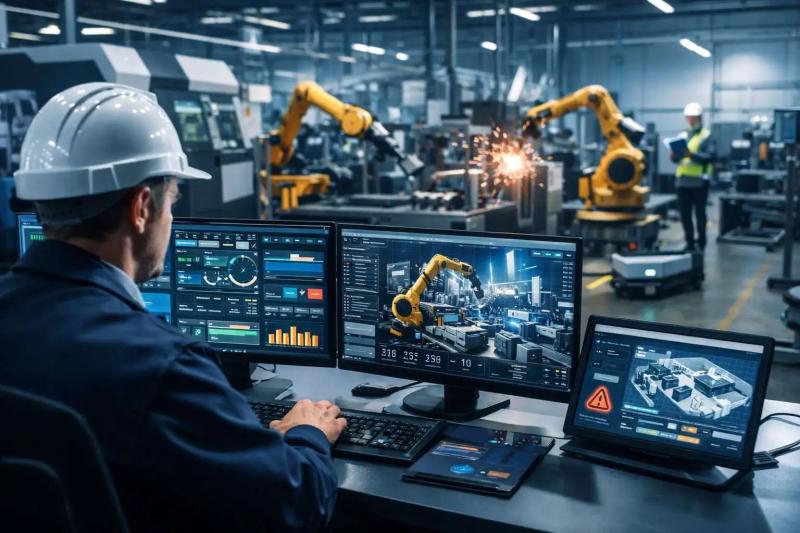
Manufacturing organizations are undergoing a fundamental transformation in 2026. Rising operational complexity, global supply chain volatility, stricter compliance requirements, and the demand for real-time production intelligence are pushing manufacturers to rethink how they manage shop-floor operations. Standardized manufacturing systems are no longer sufficient to meet these evolving demands. As a result, manufacturing leaders are increasingly investing in custom Manufacturing Execution System (MES) solutions tailored to their specific operational models.
This shift is not driven by technology trends alone. It reflects a strategic need for agility, precision, and scalability in manufacturing operations. Custom MES platforms provide manufacturers with greater visibility, control, and adaptability compared to off-the-shelf alternatives, making them a critical component of digital transformation strategies.
The Evolving Role of MES in Modern Manufacturing Environments
Manufacturing Execution Systems have evolved far beyond basic production tracking. In 2026, MES platforms act as the operational backbone that connects enterprise-level planning systems with real-time shop-floor execution.
From Production Monitoring to Intelligent Decision Support
Modern MES solutions collect and analyze data from machines, operators, quality systems, and supply chains in real time. This data is transformed into actionable insights that support decision-making at every level, from supervisors to plant managers and executives.
Integration with Industry 4.0 Technologies
Today’s MES platforms are tightly integrated with IoT sensors, AI-driven analytics, digital twins, and advanced robotics. These integrations allow manufacturers to predict failures, optimize production schedules, and continuously improve operational efficiency.
Limitations of Off-the-Shelf MES Platforms in 2026
While pre-built MES platforms offer quick deployment, they often fail to meet the unique needs of modern manufacturing enterprises.
Rigid Workflows and Limited Customization
Standard MES solutions are designed for broad applicability, which makes them inflexible for manufacturers with specialized processes, equipment, or compliance requirements. Custom workflows, machine logic, or reporting structures are often difficult or costly to implement.
Inability to Scale with Business Growth
As manufacturers expand into new markets, introduce new product lines, or adopt new production methods, off-the-shelf MES platforms struggle to scale without extensive reconfiguration or system replacements.
Integration Challenges with Legacy Systems
Many manufacturers rely on legacy ERP, SCADA, and PLM systems. Generic MES platforms often require complex middleware or manual workarounds to integrate with these environments, leading to data silos and operational inefficiencies.
Why Custom MES Solutions Are Gaining Momentum in 2026
Custom manufacturing execution software development enables manufacturers to design systems that align precisely with their operational goals, regulatory requirements, and technological ecosystems.
Tailored Process Control and Workflow Design
Custom MES solutions are built around the manufacturer’s actual production workflows rather than forcing operations to adapt to predefined system logic. This ensures higher adoption rates, reduced training time, and fewer operational disruptions.
Real-Time, Role-Based Production Intelligence
Custom platforms allow manufacturers to define dashboards, alerts, and reports based on user roles. Operators receive actionable task-level guidance, supervisors gain live performance metrics, and executives access high-level KPIs aligned with business objectives.
Seamless Integration Across the Manufacturing Stack
Custom MES solutions are designed to integrate seamlessly with ERP, SCM, QMS, and maintenance systems. This creates a unified digital thread across planning, execution, quality, and logistics functions.
Manufacturing Execution Software Development as a Strategic Investment
In 2026, manufacturing execution software development is no longer viewed as a technical project but as a long-term strategic investment.
Aligning MES with Business Objectives
Custom MES platforms are developed with clear alignment to production efficiency goals, cost reduction targets, sustainability initiatives, and compliance requirements. This ensures measurable ROI and long-term operational value.
Enabling Data-Driven Continuous Improvement
By capturing granular production data and applying advanced analytics, custom MES solutions help manufacturers identify inefficiencies, reduce waste, and continuously optimize processes.
Supporting Regulatory Compliance and Traceability
Industries such as pharmaceuticals, automotive, aerospace, and food manufacturing face stringent regulatory requirements. Custom MES solutions can be designed to ensure end-to-end traceability, audit readiness, and compliance reporting without manual intervention.
How Custom MES Supports Advanced Manufacturing Use Cases
Custom MES platforms enable manufacturers to adopt advanced production strategies that are difficult to support with generic systems.
Smart Factory and Lights-Out Manufacturing
Custom MES solutions coordinate automated equipment, robotics, and AI systems to enable highly autonomous production environments with minimal human intervention.
Mass Customization and Flexible Manufacturing
Manufacturers offering personalized or configurable products rely on MES platforms that can dynamically adapt production schedules, BOMs, and routing logic in real time.
Predictive Maintenance and Asset Optimization
By integrating machine data and predictive analytics, custom MES platforms help manufacturers reduce downtime, extend equipment life, and optimize maintenance schedules.
Security, Data Ownership, and Long-Term Control
Data security and ownership are major concerns for manufacturers in 2026, particularly as cyber threats increase and regulatory scrutiny intensifies.
Full Control Over Manufacturing Data
Custom MES solutions ensure that sensitive production data remains under the manufacturer’s control, reducing reliance on third-party vendors and proprietary platforms.
Enhanced Cybersecurity Architecture
Custom-built systems allow manufacturers to implement security protocols tailored to their risk profile, including role-based access control, encryption, and secure data exchange.
Future-Proof System Architecture
Custom MES platforms are designed with modular architectures that allow manufacturers to adopt new technologies, integrate emerging standards, and scale operations without system overhauls.
The Business Impact of Custom MES Adoption
Manufacturers adopting custom MES solutions in 2026 are experiencing tangible business benefits across operations.
Improved Operational Efficiency
Real-time visibility and automated process control reduce delays, errors, and rework, leading to higher throughput and lower operational costs.
Faster Time-to-Market
Custom MES solutions streamline production planning and execution, enabling manufacturers to respond quickly to market demands and product changes.
Enhanced Workforce Productivity
Clear task guidance, automated data capture, and intuitive interfaces reduce operator workload and improve overall workforce efficiency.
Conclusion
In 2026, manufacturing leaders are adopting custom MES solutions because standardized systems can no longer keep pace with the complexity, scale, and intelligence required in modern manufacturing. Custom Manufacturing Execution Systems provide the flexibility, integration capability, and data-driven insights needed to optimize operations, ensure compliance, and support long-term growth. As manufacturing execution software development becomes a strategic priority, organizations that invest in tailored MES platforms are better positioned to remain competitive, resilient, and innovative in an increasingly digital industrial landscape.
Frequently Asked Questions
What is a custom MES solution?
A custom MES solution is a Manufacturing Execution System designed and developed specifically for a manufacturer’s unique production processes, equipment, and business requirements, rather than using a generic, off-the-shelf platform.
How does custom MES differ from standard MES software?
Standard MES software offers predefined workflows and limited customization, while custom MES solutions are built to match specific operational needs, integrate seamlessly with existing systems, and scale with business growth.
Is manufacturing execution software development suitable for small and mid-sized manufacturers?
Yes, custom MES development can be tailored to the size and complexity of the operation. Scalable architectures allow small and mid-sized manufacturers to start with core functionalities and expand over time.
What industries benefit most from custom MES solutions?
Industries with complex processes, strict compliance requirements, or high automation needs, such as automotive, pharmaceuticals, aerospace, electronics, and food manufacturing, benefit significantly from custom MES platforms.
How long does it take to develop a custom MES solution?
The development timeline depends on system complexity, integration requirements, and feature scope. Typically, custom MES development can range from several months to over a year for large-scale enterprise implementations.
Comments