SEO vs GEO - Search Visibility Strategy for 2026
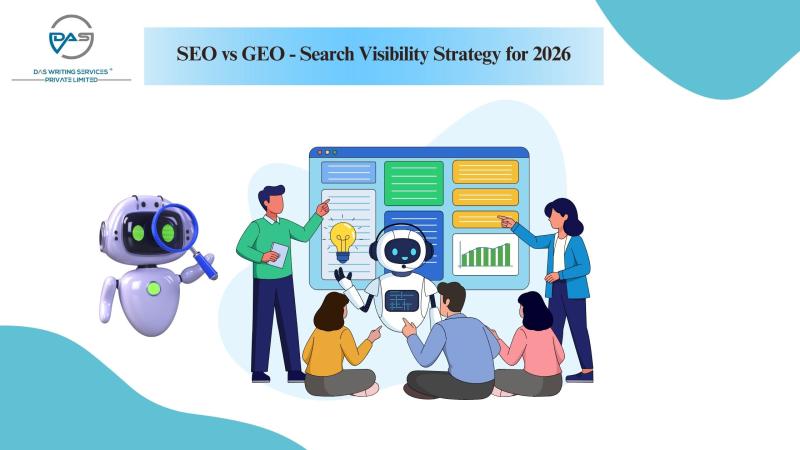
Search visibility is no longer just about ranking on page one; it is about being selected, summarised, and trusted by AI tools. Now, over 60% of search interactions end without a traditional click. It is driven by AI-generated responses and zero-click results. This shift has compelled brands to rethink how discoverability works.
SEO still matters, but it no longer works alone. GEO, or Generative Engine Optimisation, has emerged as the next layer of visibility. In 2026, businesses that understand the relationship between SEO and GEO, along with strategic blog writing services, will control attention.
What are the Key Differences Between SEO and GEO?
Although SEO and GEO both aim to improve search visibility, they function in very different environments. Breaking these differences down into clear areas makes it easier to understand how each approach works in practice.
Target Platforms
The first difference comes down to focus. SEO targets traditional search engines by improving a website’s relevance and usefulness so it ranks higher on standard results pages.
In contrast, GEO targets generative AI platforms such as ChatGPT, Gemini, Perplexity, and AI-led features such as Google AI Overviews, where content needs to be easy for AI systems to interpret and summarise.
Context and Intent Focus
SEO places strong emphasis on keyword targeting and relevance, with content optimised around specific phrases to match search queries.
On the other hand, GEO prioritises intent and context instead. Content needs to reflect natural, conversational questions and clearly communicate meaning so AI tools can understand what the user is actually trying to achieve.
Indexing and Ranking Factors
SEO relies on well-documented factors such as keyword research, backlinks, metadata, site performance, and mobile friendliness.
GEO builds on these fundamentals but adds new requirements. AI engines favour high-quality structure, direct answers, schema markup, and claims supported by credible external sources. All of these factors improve trust and relevance.
Content marketing agencies like Das Writing Services Pvt. Ltd. emphasise that for GEO to build technical accuracy to ensure AI models cite your brand as a primary source.
Content Formats and Presentation
SEO has historically focused on text-based content, although modern results now include videos, product listings, and AI summaries.
GEO, in contrast, adapts output based on the user’s prompt. Depending on the query, AI platforms may provide step-by-step explanations, tables, code snippets, or structured insights rather than long-form pages.
Type of Results Shown to the Audience
Another major distinction is how results are presented. Traditional search engines display multiple links and allow users to choose which result best answers their query.
AI-powered search engines remove this choice by analysing information from various sources and delivering a single, consolidated response that summarises everything the user needs.
Traffic Impact and Performance Metrics
The final difference lies in how we measure success. SEO rewards well-optimised pages with increased traffic, clicks, and conversions that are easy to track. GEO often results in fewer direct visits, as users receive answers instantly.
Instead, we measure performance using visibility indicators such as citations, accuracy, and relevance within AI-generated responses.
These distinctions highlight why SEO and GEO serve different but complementary roles in modern search strategies, and why many brands now rely on a content writing agency in India that understands both traffic-driven SEO outcomes and visibility-led GEO performance.
How To Make SEO and GEO Work Together?
Rather than treating SEO and GEO as competing strategies, high-performing brands treat them as complementary systems.
First, SEO continues to act as the structural backbone. Pages still need to be crawlable, fast, and technically sound to be trusted by search engines. However, we now structure content in a way that machines can interpret, summarise, and reference with confidence.
To achieve this balance, businesses should focus on these factors:
Write content that answers complete questions, not just keywords.
Use structured headings and concise sections so both search engines and AI models can extract meaning easily.
Build topical authority as AI tools prioritise sources that demonstrate depth.
Include brand name mentions and expert citations, which influence both SEO rankings and AI trust.
This combined approach is where experienced partners add value. Content marketing agencies such as Das Writing Services increasingly design content that performs well across both traditional search and AI-driven discovery.
What are the SEO and GEO trends in 2026?
One major shift is the rise of AI-first search interfaces. Google’s AI Overviews influence approximately 74% of question-based search queries, which reduces reliance on classic blue links.
To break this down further, the most impactful trends include:
Zero-click dominance, where visibility matters more than traffic volume.
Entity-based optimisation, which focuses on brand identity rather than individual keywords.
Content partnerships and citations improve both GEO credibility and SEO backlinks.
As a result, brands invest in fewer, higher-quality pieces developed with strategic intent. This is why many companies now work with a specialised article writing service provider that understands how authority is built across both human and machine audiences.
At the same time, brands seeking long-term visibility are choosing a blog writing agency that aligns content creation with evolving search behaviour rather than outdated ranking tactics.

Comments