Top 7 Advantages of Using a Programmable DC Power Supply in Modern Electronics Labs
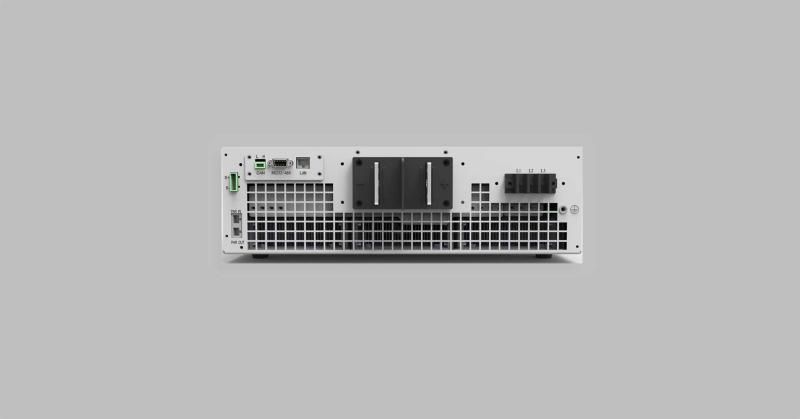
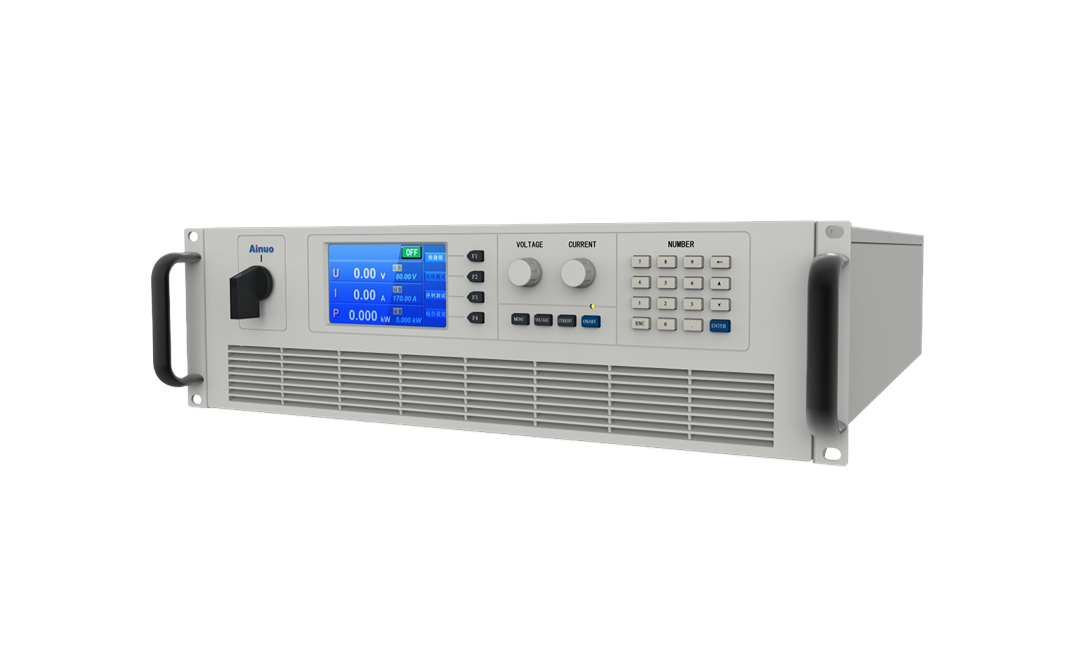
As modern electronics become more complex, the demand for precise, stable, and automated power sources continues to grow. Whether you're working in product development, research, manufacturing, or education, a programmable DC power supply offers far more flexibility and control than conventional fixed voltage units. Here are the top seven advantages that make programmable power supplies essential in today’s electronics labs.
1. Exceptional Precision and Stability
Programmable DC power supplies deliver
highly accurate voltage and current levels with minimal ripple and noise. This
stability is crucial for sensitive circuits such as RF modules,
microcontrollers, sensors, and analog stages. Engineers can dial in exact
parameters and ensure that all tests are performed under consistent conditions.
2. Automated Test Sequences
One of the biggest benefits is the ability
to automate power delivery. Engineers can create test scripts, multi-step
sequences, or dynamic voltage profiles without manual adjustments. This
minimizes human error and speeds up repetitive testing tasks such as burn-in,
cycling, and stress testing.
3. Remote Control and Integration
Modern units support communication
protocols like USB, LAN, GPIB, RS-232, or SCPI commands, enabling
seamless integration with automated test equipment (ATE). Remote control frees
engineers from being physically present and allows centralized monitoring—ideal
for large labs or continuous testing environments.
4. Enhanced Safety Features
Safety is essential in any development lab,
and programmable DC power supplies are built with multiple layers of
protection. Common features include:
- Over-voltage protection (OVP)
- Over-current protection (OCP)
- Over-temperature protection (OTP)
- Short-circuit protection
- Output enable/disable functions
These safeguards help prevent component
damage, reduce downtime, and protect both engineers and equipment.
5. Flexible Output Modes
Unlike standard power supplies that offer
only basic voltage output, programmable units typically support:
- Constant Voltage (CV) mode
- Constant Current (CC) mode
- Constant Power (CP) mode
- Dynamic or arbitrary waveform output
This flexibility makes them suitable for a
wide range of applications, from powering prototypes to simulating battery
discharge curves.
6. Greater Efficiency for R&D and
Production
Programmable power supplies reduce the time
spent adjusting knobs and monitoring output values. Engineers can quickly
switch between test conditions, log data automatically, and validate designs
more effectively. In production environments, these units speed up quality
control processes by providing repeatable power profiles for every product
tested.
7. Data Logging and Real-Time Monitoring
Many programmable DC power supplies include
built-in measurement capabilities and data logging functions. Real-time output
graphs, stored measurements, and communication with PC software allow labs to
track power consumption, detect anomalies, and generate useful documentation
for reports or certification processes.
Conclusion
A programmable DC power supply is more than a simple energy source—it’s an advanced tool that enhances testing accuracy, speeds up development, and improves overall lab productivity. For any modern electronics lab aiming for higher precision, automation, and reliability, upgrading to a programmable solution is a smart investment.
Post Your Ad Here
Comments