5 Surprising Applications of Bidirectional Power Supplies
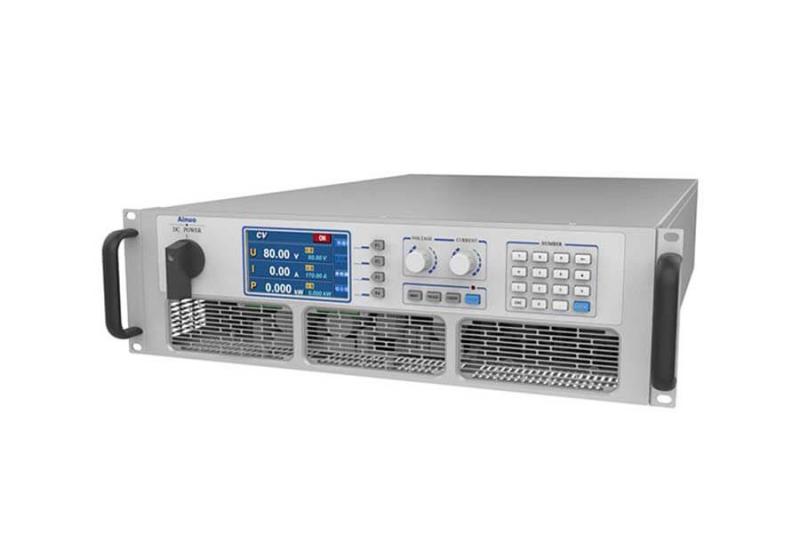
When you think of a lab
power supply, you probably picture a box that provides a steady stream of DC
power to a device under test. It's a one-way street: power flows out, and your
circuit consumes it.
But what if that power
could flow both ways? Enter the bidirectional DC power supply. This
advanced instrument isn't just a source; it's also a sophisticated electronic
load. It can seamlessly transition from pushing power out (sourcing) to drawing
power in (sinking), all while precisely controlling and measuring voltage and
current.
While they're essential for
testing batteries and inverters, their unique capabilities unlock some
surprisingly innovative applications. Let's dive into five that might change
how you see this powerful piece of equipment.
1.
Simulating a "Real-World" Electric Vehicle Regenerative Braking
System
The Surprise: You can test an EV's
motor controller without ever turning a wheel.
How it Works: In an electric
vehicle, regenerative braking converts kinetic energy back into electrical
energy, charging the battery. To test the motor controller that manages this, a
bidirectional power supply is perfect. It acts as the main battery pack, providing
power for acceleration (sourcing). Then, when the test calls for braking, the
controller sends energy back, and the power supply seamlessly switches to
absorb this energy (sinking), accurately simulating the battery being
recharged. This allows for rapid, repeatable, and safe testing of a critical EV
safety and performance feature right on the lab bench.
2.
Accelerating Battery Cycle Life Testing
The Surprise: It dramatically
speeds up the painstakingly slow process of battery degradation testing.
How it Works: To determine how many
charge/discharge cycles a battery can handle, you need to, well, charge and
discharge it thousands of times. A traditional setup might use a power supply
to charge and a separate electronic load to discharge, which is inefficient and
slow. A bidirectional supply does both in one instrument. More importantly, it
can be programmed for highly dynamic profiles—simulating a rapid charge from a
fast charger, followed by a high-current discharge from peak power demand, and
then a trickle charge. This ability to mimic real-world, stressful conditions
provides a much more accurate and faster assessment of battery lifespan than
simple, slow cycles.
3.
Probing the Limits of Solar Microinverters
The Surprise: You can test a solar
inverter's response to grid anomalies without needing the sun or the grid.
How it Works: Solar microinverters
convert DC from solar panels into AC for your home and the grid. They must
safely shut down if the grid fails (anti-islanding protection). A bidirectional
DC power supply can act as the solar panel array, providing DC power to the
inverter. Meanwhile, an AC electronic load or a grid simulator can simulate
grid failures. The bidirectional supply's key role is to observe how the
inverter reacts. When the grid goes down, does the inverter stop drawing power
instantly? The supply can measure the precise moment current stops flowing,
validating the inverter's safety response with pinpoint accuracy, all in a
controlled lab environment.
4.
Testing and "Burning-In" Satellite Power Systems
The Surprise: It's used to validate
the power systems of spacecraft before they launch.
How it Works: Satellites use solar
panels for power and batteries to store it for when they're in the Earth's
shadow. A bidirectional power supply is the ideal tool to simulate this entire
orbital energy cycle. It can mimic the solar panels by sourcing power as the
satellite enters sunlight. Then, it can switch to sinking mode to act as the
satellite's electrical systems, draining the battery. Finally, it can simulate
the eclipse period by shutting off, forcing the satellite to run on its real
battery. This continuous, automated cycling tests the reliability and
resilience of the satellite's power management unit under conditions that
closely mirror its 15-year mission.
5.
Characterizing and Stressing Advanced Capacitors
The Surprise: It's crucial for
testing the supercapacitors powering the next generation of electronics.
How it Works: Supercapacitors and
ultracapacitors bridge the gap between batteries and traditional capacitors,
offering massive bursts of power. Understanding their charge/discharge
efficiency and lifetime is critical for applications like peak shaving in data
centers or recovering braking energy in trains. A bidirectional power supply
can charge a supercapacitor with a precise current profile and then instantly
reverse to capture the energy as it discharges. This allows engineers to
measure round-trip efficiency, internal resistance, and performance degradation
under high-stress, high-current pulses that would be difficult or unsafe to
achieve with separate source and load equipment.
The
Bottom Line
The bidirectional DC power
supply is far more than a simple power source. Its ability to act as both a
source and a sink with high precision and seamless transition makes it a
cornerstone for innovation in renewable energy, automotive, aerospace, and consumer
electronics. It’s the ultimate tool for testing any system where energy needs
to flow in two directions—bringing the most demanding real-world challenges
right onto the engineer's bench.
Post Your Ad Here
Comments (1)
Marketing Consultant...15
Business Growth Consultant
In an electric vehicle, regenerative braking converts kinetic energy back into electrical energy, charging the battery. To test the motor controller that manages this, a bidirectional power supply is perfect.