What Emotional Trauma Really Means
You've been to the doctors, tried the treatments, and still,
those persistent headaches, chronic fatigue, digestive issues, or unexplained
body aches refuse to budge. Maybe sleep feels impossible or you tense up when
someone touches you, even from loved ones - without actually knowing why.
If you’ve ever shared these worries and heard, “It’s
all in your head,” you are not imagining things. Your body may be
carrying unhealed stress or past hurt. This is in fact your body asking for
help, a quiet signal that something inside needs care.
As a therapist, I often see how the body keeps stories we
have not been able to tell. Sometimes a persistent symptom is your system’s way
of asking for a different kind of attention. When you pause and notice
sensations, for example tight shoulders, a fluttering stomach, a heaviness in
your chest, you may discover emotions you never had words for.
This article is an invitation to listen with curiosity
rather than fear. It explores how emotional trauma and chronic stress can leave
physical fingerprints and why noticing your body’s cues can be a first step
toward relief. We will also cover some simple, grounding practices you can
start today. And of course, how therapy can help you release what you’ve been
carrying. Healing often means working gently with both mind and body. At Coach
for Mind, therapists use approaches like somatic therapy or trauma-focused CBT,
guiding you to track sensations, build safety, and gradually loosen the hold of
old stress.
What Emotional Trauma Really Means
Emotional trauma is not about a single, catastrophic event.
It is the lasting emotional and physical response to any
distressing experience that overwhelms your ability to cope. Trauma can stem from single
incidents like accidents or assaults, or from years of quieter strain such as
childhood neglect, abuse, or chronic, unrelenting stress.
What matters most is the impact on
your system, not just the event. Trauma disrupts the nervous system and
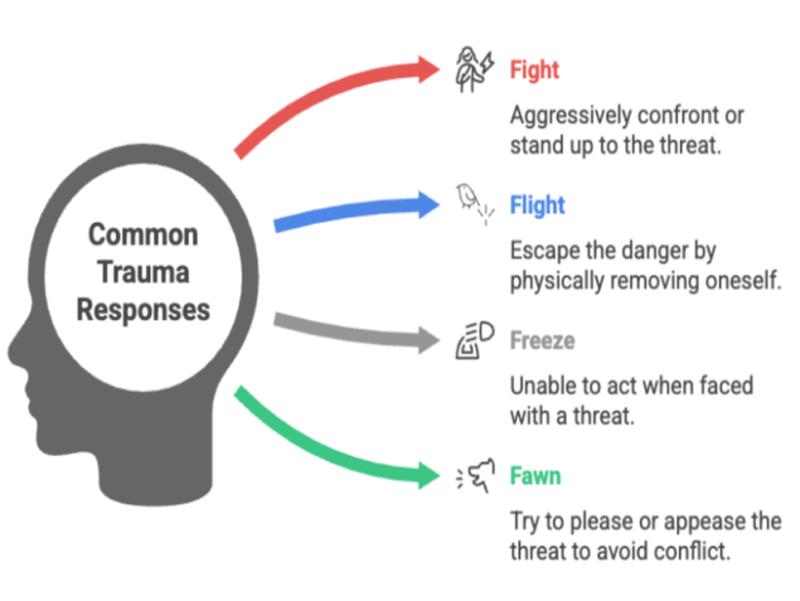
leaves it dysregulated. When you sense danger, your body’s fight-or-flight
alarm takes over. If escape or defense isn’t possible, a “freeze” response can
set in, leaving you numb or disconnected (what therapists call dissociation).
There’s also a lesser-known fawn response, a reflex to appease the source of
threat to stay safe. While these survival mechanisms are vital in the moment,
they can become unhelpful when they persist long after the actual threat has
passed. Your body might remain stuck in a state of alert, impacting every
single system within you.

Trauma lives not only in memory but also in sensations,
posture, and breath. And therapeutic approaches that include the body, known as
somatic work can help you notice and gently release stored tension. Coach For
Mind therapists guide you to track physical sensations and allow the
nervous system to complete the “fight, flight, freeze, or fawn” cycle safely.
Trauma-focused therapy works alongside somatic work to reprocess painful
memories so the body no longer reacts as if the threat is still present.
Many clients describe a subtle but powerful shift: shoulders that drop for the
first time in years, deeper breaths, fewer unexplained aches. Healing emotional
trauma is rarely quick, but with a therapist trained in both mind and body
approaches, your system can learn slowly and compassionately that it’s safe to
stand down.
How Trauma Manifests as Physical Symptoms
Sometimes the body remembers what your mind might try to
forget or suppress. As a therapist, I often meet people who have “moved on”
mentally from a painful event but still wake with headaches, tense shoulders,
or a heart that races without warning. These physical reactions aren’t
“just in your head.” They are real signals from a nervous system still
protecting you.
Physical manifestations of trauma can vary person to person.
Sometimes they are described as “my muscles are always tense.” or “Trying to
fall asleep feels unsafe.” Here are some of the most common physical symptoms
of emotional trauma that might be silently impacting your life:
- Chronic Pain
& Tension: Ongoing headaches, migraines, muscle aches
(especially in the neck, shoulders, and back) are frequently reported by
trauma survivors . This tension is often a physical manifestation of
constant vigilance or a 'bracing' against perceived threats. Pain can
sometimes be more than just “physical.” The body may hold on to unspoken
hurts or conflicts, carrying them in tight muscles or constant aches. For
some people, back or shoulder pain feels like carrying a weight they never
asked for. The body becomes a way of “speaking” when words were never
allowed.
- Fatigue
& Sleep Disturbances: Persistent exhaustion, insomnia,
difficulty falling or staying asleep, vivid nightmares, night terrors, or
conversely, sleeping excessively, are signs of a dysregulated nervous
system struggling to find rest.
- Digestive
Issues: Through the gut–brain connection, trauma can
trigger IBS,
nausea, or alternating constipation and diarrhea. Stomach pain,
nausea, or bowel problems can carry emotional meaning. The gut is closely
tied to feelings, that’s why we talk about having “a gut feeling.”
Sometimes, the body struggles to “digest” life experiences that felt too
unfair, overwhelming, or confusing. What cannot be processed emotionally
may show up in the belly.
- Heart
and breathing changes: Racing heart, shallow breathing, or sudden
palpitations can mimic anxiety attacks. A racing heart or shortness of
breath can reflect more than anxiety. For many, it is the body remembering
moments of fear, when survival meant being hyper-alert. Even if the mind
has “moved on,” the body may still react as if the threat is happening
now.
- Skin
Conditions: Stress hormones can significantly impact skin health,
leading to flare-ups of acne, eczema, psoriasis, or other dermatological
issues.
- Physical
Reactions to Touch & Proximity: Flinching, tightening with
discomfort, and defensive
responses even when a trusted partner initiates touch, can be a
powerful physical symptom, particularly in survivors of physical or sexual
abuse.
- Sensory
Sensitivities: Lights, sounds, or smells (or lack of) can feel
overwhelming when the nervous system is hyper-alert.
- Unusual
Physical Manifestations: In some cases, emotional distress can
manifest as neurological symptoms without a clear medical cause, such as
temporary paralysis, blindness, or speech difficulties.
These symptoms often linger even after standard medical
care, leaving many people feeling frustrated, isolated, and unseen. That’s
where therapy can help. Trauma can keep the nervous system on constant alert,
flooding it with stress hormones long after the danger has passed. Psychiatrist
Bessel van der Kolk calls this “the body keeping the score,” where memories
live not only in the mind but in muscles and even cells
When seen this way, symptoms are not just problems to get
rid of they are signals, carrying clues about what your inner world has been
through. Your body may be speaking for you, holding stories or emotions that
were never given a voice.
Client’s lived example: I started working with
Maya (name changed) a year ago. She came in with complaints of waking up with a
heaviness in her chest. She said “I feel like I can’t breathe. I’ve
gone to doctors, done scans, and blood tests. They keep telling me nothing is
wrong. But somehow this tightness in my chest doesn’t end.” WAs she
spoke, I noticed how her body tensed in sessions whenever we approached this
topic. One day, I invited her to pause and stay with the heaviness for a
moment, simply noticing it. Almost instantly, her eyes filled with tears and
she whispered, “It feels like I’m being told to shut up again.”
Over the weeks that followed, pieces of her story came out.
Maya had grown up in a home where emotions were accepted conditionally. A lot
of times negative emotions were silenced with phrases like, “Stop
overreacting,” or, “Don’t make a scene.” Whenever she
had tried to cry or speak up, she was told to hold it in.
We worked slowly, with both words and body-based grounding
to build insight into how the heaviness might be related to her voice being
pushed down. I encouraged her to place her hand on her chest and gently soothe
the heaviness. I encouraged her to place her hand on her chest, to soothe
the heaviness with a gesture of care, and to notice the imagery, memories, or
automatic thoughts that surfaced alongside it. With soothing behaviours like
rocking herself, she started to connect the sensation of weight with the story
of her silenced voice.
As she experimented with small acts of self-soothing like
rocking herself, Maya began to explore the weight of her silenced
emotions that she was carrying. Slowly, the heaviness transformed into feeling
lighter. By approaching it with curiosity and care, Maya reclaimed her voice,
giving shape to emotions that had previously been shut down.
Therapy offers a safe space to listen to these signals
gently, without judgment. Together with a therapist, you can explore what your
body might be carrying, slowly put words to it, and find new ways to release
the tension. This process helps both mind and body learn that it is safe to
rest, safe to breathe, and safe to live in the present.
Trauma is stored in the body, effective treatment blends talk therapy with
body-based work. Somatic approaches help you slow down and notice sensations or
tremors that signal release. EMDR and
trauma-focused CBT reprocess painful memories so the body no longer reacts as
if threat is present. Mindfulness practices such as breathwork, gentle yoga,
meditation offer the nervous system a felt sense of safety and bring you back
to the present.
The Science Behind the Symptoms
Trauma's impact goes far beyond the mind, deeply affecting
your physical body. It’s not just an emotional state; it’s a biological
response that can persist long after the event is over.
- Your
Body's "Alarm System" Gets Stuck: Your body has an
automatic system called the autonomic
nervous system (ANS) that controls involuntary functions like
your breathing and heart rate. When you face danger, this system helps you
react by going into "fight, flight, or freeze" mode. But for
people who’ve experienced trauma, this system can get stuck. It either
stays on high alert all the time, making you feel anxious and tense, or
stays in "freeze" mode, making you feel numb and exhausted.
- Overproduction
of Stress Hormones: Your body’s central stress response system is
called the HPA axis or the Hypothalamic-Pituitary-Adrenal axis. Normally,
this system helps you respond to stress and then calms down by producing
hormones like cortisol. The HPA axis can overproduce cortisol with
experiences of long-standing trauma, which has damaging effects. It can
lead to fatigue, widespread inflammation, a weakened immune system, and
can be a significant factor in chronic pain.

Post Your Ad Here
Comments