Trauma Isn't Present Just in Your Head, It Resides In Your Body
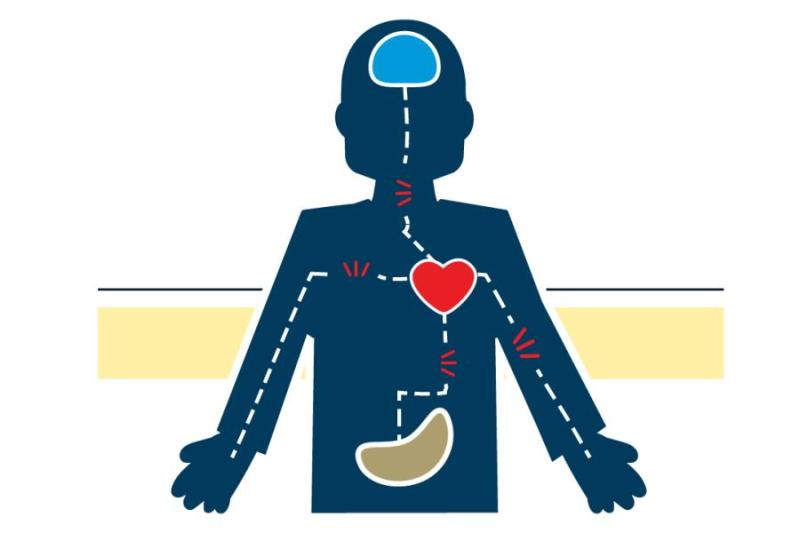
The word "trauma," makes us all instantly think about our
painful memories, but trauma actually emerges from the most unexpected regions,
deeply ingrained in our bodies.
Perhaps it is the way your heart pounds
when someone yells at you or the rigidity you sense in your chest before
attempting to have a difficult discussion or the unending fatigue you feel are
all physiological signs of your body gradually giving up on you as the mental
imageries are manifesting as bodily sensations. Your body remembers what your
brain does not consciously recall. This evident gap leads to your body
mimicking your mind’s symbolic messages.
Somatic Experiencing (SE) is a technique that works differently as it implies a therapeutic framework that allows for your body to recapture the trauma but redefine it now with a lot of patience. This is where trauma therapists come in very handy. Trauma informed therapists in India are available to provide help for a diverse set of mental disorders and therapy for complex trauma too.
What is Somatic Experiencing?
Somatic experiencing has been curated
on the ideology of simply your body taking over your mind even when your mind
does not consciously recall any past tragedy.
Animals with five senses deal with life
threatening situations all the time all their life. They are known to evolve
naturally as their survival instincts kick in. However, human beings operate
differently than animals in this context. The responses to threats are diverse
and not just fighting back.
They can also flee away from danger
altogether, portrayed through avoidance of the situation, or withdrawing.
Lastly, they may also freeze in the situations of threat as they are walking
into an uncertainty and they are left blank with no response in return.
SE doesn’t ask you to relive your worst moments. Instead, it helps you tune into the small sensations like the clenching jaw, the trembling hands, the urge to move and supports your body to finish what it couldn’t finish back then. Healing starts not with force, but with gentle attention. In addition, it is very interesting to notice that Femaletrauma therapists in India are on the rise to deal with feminine sensitive cases more delicately as female clients may have a preference of a therapist of the same gender to discuss sexual trauma for instance.
How Does Somatic Experiencing Pave a Path for Healing To Occur in Trauma Cases?
The true healing process starts off in
very small bits and silent moments when you shift the focus from your mind to
body in totality. Hence, there are three ways through which you can restore
your self by not forgetting what happened to you, but by recalling and
acknowledging it healthily.
1. Pay Attention To Your
Body
You are not required to reignite all
that happened to you out of the blue. This is a gradual process wherein you
will be instructed to just slowly and steadily listen to your body. This can
come in different ways to different people like recognizing flutters in your
abdomen or feeling heavy in your throat. These are the vital signs that will
show you a way out which needs personal attention.
2.
Keeping it steady and focussed is all the more
necessary
Trauma is overwhelming by nature. That's why SE moves slowly, what is labelled as "titration." You stay within a range that feels manageable, moving between moments of tension and moments of calm (Pendulation). Over time, your nervous system becomes more flexible, more resilient.
3.
Drawing a Healthy Closure
Maybe you needed to fight back, to scream, to run but you couldn't. SE gives your body a chance to finish these protective responses now, safely and with support. It's not about reenacting trauma. It's about completing what was once left hanging, so your body can finally rest.
A Real Life Therapy Overview
Sometimes, the most powerful healing
doesn’t come from talking—it comes from what the body finally gets to do.
A Female client named ATC came to
therapy carrying anxiety that had followed her for years. She’d tried
everything, but nothing had touched the deep, buzzing unease inside her. During
one SE session, she noticed a tingling in her arms. As she stayed with it, she
realized she wanted and perhaps needed to push forward, something she hadn't
been allowed to do growing up. Supported by her therapist, she gently extended
her arms, pushing into the air. Tears came but they were not from sadness, but
from a deep well of relief.
Her body had finished a story it had been holding onto for decades. And when she left the room, she stood just a little taller, breathing a little easier. Trauma therapists help in a way that is not compelling and organic to keep these exercises effective.
Somatic Experiencing
Matters for the following reasons:
It can be truly detrimental when you’re constantly told to just
disengage from what is troubling you. It is always easier said than done.
Somatic Experiencing offers a different message: you're not broken. Your body is wise. Your
reactions, the freeze, the startle, the numbness, are not signs of weakness.
They're signs of how hard your body has been trying to protect you.
Healing with SE isn't something you push through. It's something that happens to you on your own terms and you must be gentle all the way through.
Somatic Experiencing
and Trauma Healing In a Nutshell
What kinds of trauma does Somatic Experiencing deal with?
Somatic Experiencing can come handy for a diverse set of
trauma cases. This can range from physical or domestic abuse, sexual assault,
eary childhood neglect, accidents or even persistent stress that couldn’t be
surpassed. It’s especially helpful wherein you struggle to identify the root
causes for why you feel and react the way you do under certain circumstances.
Differences between
Somatic Experiencing and traditional talk therapy
Talk therapy helps you get to know
yourself a bit better. In Somatic Experiencing, the focus is for your
body to do the talking for you so you can resolve the unresolved by making your
body feel safer moving forward.
Is Somatic Experiencing Safe for Severe Cases of Trauma?
Yes, it very much is. A trained SE practitioner will move at your pace, and they are with your on this journey. Safety is given the utmost priority where you are not going to feel overwhelmed but just heal the way your body wishes to.
What is the expected time frame for SE
to end with a successful outcome?
Healing is a very subjective resort and doesn’t have a set deadline.
Some may begin to feel better in a couple sessions while others with much
deeply ingrained wounds may take longer to eradicate their fears and
anxieties.
Is It Possible to Culminate Somatic
Experiencing with Other therapies?
Absolutely. Somatic Experiencing is often paired with conventional talk formats of therapy like Humanistic Existential therapy, EMDR, various formats of Mindfulness or Expressive arts therapy which brings in the creative element inside individuals to travel through this journey of unravelling their unforeseen circumstances. In fact, this makes the healing journey more efficient and effective as there are many mediums involved.
To sum up, Trauma recovery therapy in India is an upcoming area with a lot of therapists actively getting trained to become trauma informed and there is a positive escalation taking place here for all of us. If you're carrying pain that words alone can't reach, know this: your body already holds the wisdom to heal. Sometimes, it just needs a little help finding the way.
Why Coach For Mind?
- We are an organization focused on therapy that is informed by
trauma and rooted in compassion. Our psychologists, who are licensed and
RCI-registered, excel in approaches like EMDR, IFS, CBT, DBT,
Psychodynamics, and others. However, techniques are never the final goal.
- We emphasize on creating a safe, judgment-free space where you can
heal on your own terms.
- We recognize that every journey is individual. This is why we avoid
one-size-fits-all solutions. We listen, we tailor our approach, and we
accompany you, regardless of your challenge, whether it's anxiety, past
traumas, or feelings of being stuck.
- Quality Service is the first and foremost priority at Coach For
Mind.
- Coach For Mind places your emotional safety at the forefront. Our
kind, structured, and professional trauma-informed approach guarantees that
you will consistently feel supported but never pressured. You don’t need
to get everything right. You don’t need to be okay. Just be yourself and
we will collectively figure a way out.
Post Your Ad Here
Comments