How to Break Free from Intergenerational Trauma?
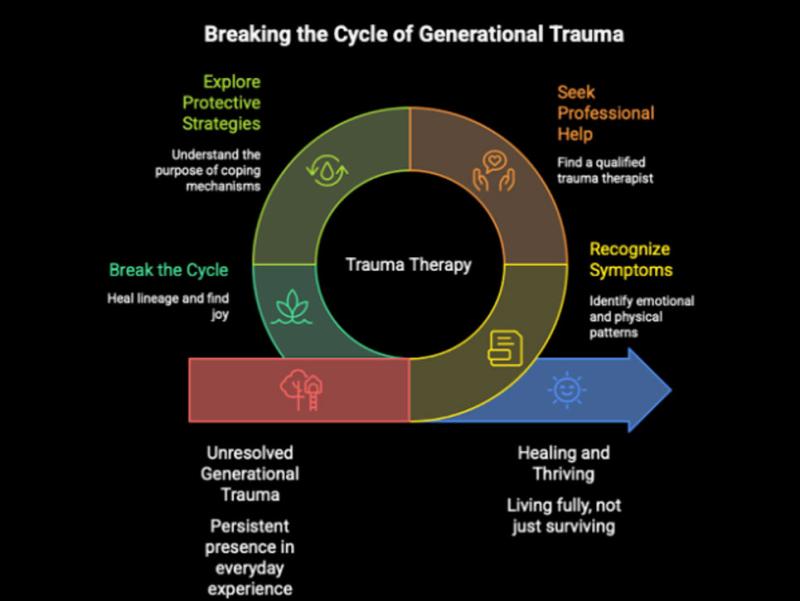
Do you ever feel like you're carrying a burden
that isn't entirely yours? A persistent anxiety, a pattern of relationships, or
a coping mechanism that seems to have been "handed down" through your
family? You're not alone.
Many of us carry an unspoken weight, a sense
of inherited struggle that feels deeply personal yet eerily familiar to the
stories of our ancestors. As one individual bravely shared, "nearly all
the stories I have had handed down to me, on both sides of my family, involve
PTSD, poverty, violence, addiction or abuse."
This profound, often invisible, inheritance is
the essence of Intergenerational Trauma. As more people seek out
trauma therapy in India, it's becoming clear that healing from these inherited
wounds is not only possible, but deeply necessary.
It's a phenomenon that can leave us feeling
stuck, wondering how to protect our children from repeating harmful patterns,
or how to prevent our own past from inadvertently shaping their future.
You might even find yourself diminishing your
own pain, thinking, "My own childhood left me with trauma, but as
an adult I now realise it's nothing compared to what my parents went
through." This isn't about assigning blame; it's about
understanding "what happened to this person" rather than "what
is wrong with this person."
This guide is your roadmap. We'll move beyond
common misconceptions, exploring the complex interplay of biological,
psychological, and social factors that transmit trauma. Our goal is to empower
you with the knowledge and actionable strategies to transform inherited wounds
into sources of strength, fostering resilience for yourself and for generations
to come.
At Coach for Mind, we support individuals on
this path with compassionate, trauma-informed care rooted in both science and
cultural sensitivity.
What is Intergenerational Trauma?
Intergenerational
trauma refers to the psychological and
physiological effects of trauma that are transmitted from one generation to the
next, even in the absence of direct personal exposure to the original traumatic
event. It's an invisible inheritance, a blueprint etched into family systems
and individual psyches, influencing everything from our emotional regulation to
our genetic expression.
The Biological Blueprint
One of the most groundbreaking discoveries in
recent decades is the concept of epigenetic inheritance. This isn't
about changing the DNA sequence itself, but rather altering how genes are
expressed – essentially, turning certain genes "on" or
"off." Research has shown that severe trauma can lead to these
epigenetic modifications, which can then be passed down.
For instance, a study on offspring
of Holocaust survivors found " differentially expressed genes (DEGs)"
related to "glucocorticoid-regulated genes and immune pathways.".
These genetic alterations, associated with parental Holocaust exposure, suggest
a physiological pathway for intergenerational trauma beyond purely
psychological or behavioral transmission.
This means that the stress and trauma
experienced by our ancestors might literally change how our genes work,
affecting our stress response and immune system. While the field of epigenetics
is still young and complex, it offers compelling evidence that trauma can be
biologically embedded, challenging the misconception that intergenerational
trauma is purely spiritual or impossible to inherit.
The Behavioral & Environmental Legacy:
Learned Patterns
Beyond biology, trauma is profoundly
transmitted through learned behaviors, coping mechanisms, and dysfunctional
family dynamics. Children learn how to navigate the world by observing their
primary caregivers. If parents or grandparents experienced significant trauma,
they might unconsciously pass down
Post Your Ad Here
Comments