Marketing Your Ecommerce Store: Tools to Look for on an Ecommerce Platform
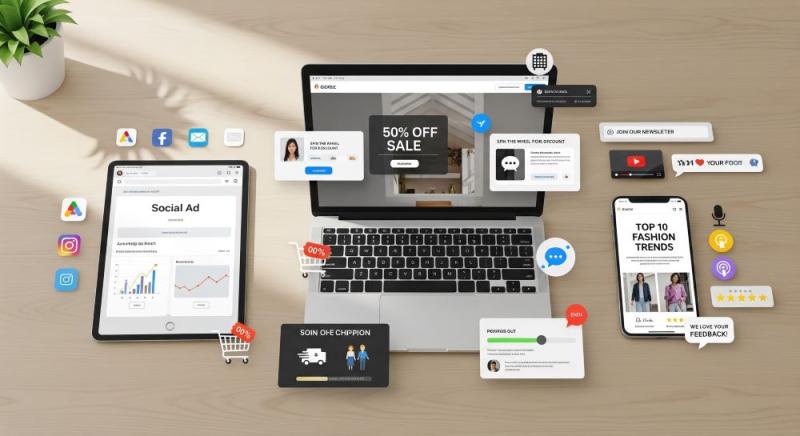
A store, an online store to be precise, is the core and primary requirement to start selling anything on the internet. It's easy enough to do, since you can set one up on an ecommerce platform instead of building your own website.
You must also market your products. This is why you should be on an ecommerce platform with built-in or ready-to-use digital marketing tools.
Marketing tools are vital to online selling success. It doesn't matter how beautiful your storefront is, how high-quality your products are, or how evocative your branding is. If nobody knows your store exists or can find you, you will have no sales.
What tools do you need exactly? Here are some of them.
Advertising and Reach
You need the following to advertise your products and reach your existing, target, and potential customers.
● Social media integration: You want a tool to connect your store to sell and advertise directly on Instagram, Google, Snapchat, and Pinterest (e.g., turns your products into Pins on Pinterest). This way, you can "push" items in front of thousands of potential customers on these channels.
● Built-in search engine optimization (SEO) tools: Once your store has been set up, optimize it with the right keywords by including these keywords in your product titles, categories, descriptions, and image alt texts. Your ecommerce platform should provide an interface where you can seamlessly incorporate keywords into key SEO elements.
● Affiliate marketing: It would be great to have a dashboard or a single place where you can create and manage partnerships with influencers. This includes providing them with personalized links or coupon codes and tracking their sales performance in real-time.
● Exclusive discounts: You also want an app or functionality that will enable you to offer special discounts to specific groups, such as employees or members of partner organizations, verified by their email addresses.
Sales Promotions and Conversion Tools
What do you do to convert store visitors into buying customers? Use these tools to lead potential customers through to checkout.
● Flexible offers: Everyone loves a good deal; even those who aren't budget-conscious may appreciate value. You want a platform that lets you easily create different kinds of promotions. Examples include buy-one-get-one (BOGO) offers, simple percentage discounts, or fixed-amount coupons that people can use at checkout. This may just be the inducement someone needs to proceed with payment.
● Tiered discounts: Here's a smart way to get people to buy more. A tiered discount system automatically gives customers a better deal the more they add to their cart. It's a simple trick that can boost your average cart value.
● Abandoned cart recovery: People can get distracted and leave items in their shopping carts. The good news is that some leavers do resume shopping. The bad news is that only around three to five percent, on average, recover abandoned carts. To raise your recovery rates, you need an automated tool that sends a friendly reminder to shoppers who left items in their carts. It may even throw in a little something extra, like free shipping, to convince abandoners to come back and complete their order.
● Gift cards: You should definitely have the option to sell digital gift cards. A gift card bought is a gift card sold; it's revenue. Although it has yet to be exchanged for a product, it's a guaranteed sale for a specific amount. It's not just a sale but a powerfully effective way to get new people (i.e., gift card recipients) to visit your store.
● Landing pages: For a new product or a big sale, you'll need dedicated landing pages. The key is to have a tool you can use to build attractive, effective, and fast-loading landing pages when you need them.
● Popups: It’s good to have a tool for creating popups, just in case you want to use them to grab attention, to promote a flash sale, or to get people to sign up for your email list before they leave. Just remember not to abuse this functionality; too many or frequent popups can be unpleasant.
Content and Customer Engagement
Selling is one thing, but building a brand that people actually care about is another. To do that, you have to engage with your audience and tell your story.
● Blog: Does your platform have a built-in blog? It’s the perfect place to share updates, tell your brand-origin story, and craft narratives around your products. Plus, it’s great for SEO.
● 3D product showcase: You can give your products that “wow” factor if you have a 3D product showcase tool.
● Customer loyalty program: You want to give your repeat customers a reason to return. A simple loyalty program that lets customers earn points with every purchase (points they can redeem as cash discounts later) is a tried and tested method.
● Customer segmentation: It’s a massive advantage if you can automatically group your customers according to their demographic characteristics (age, location) and what they buy. This will let you differentiate promotions, so you can send them only to the segments you know will actually be interested.
Ecommerce Platforms: They’re Not Equal
Not all ecommerce platforms are built the same.
Some simply provide you with a space to launch an online store, while others (like a well-known ecommerce platform in Saudi Arabia) equip you with powerful tools to promote, engage, and sell.
Post Your Ad Here