What to Look For in Advanced Hardness Testers
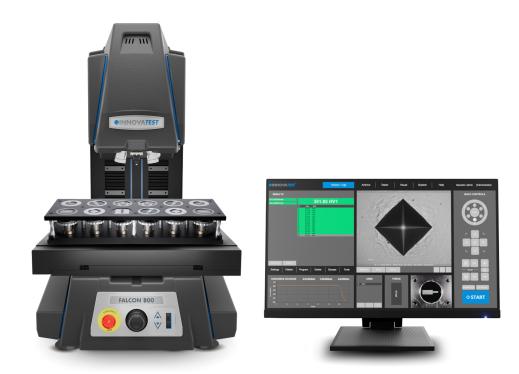
Hardness testing has transformed into a critical checkpoint that can directly influence performance, safety, and compliance. As such, today’s next-generation hardness testers go far beyond basic functionality. They offer advanced features, digital integration, and unparalleled accuracy tailored to the demands of modern production environments.
Understanding what to look for in next-generation hardness testing equipment can ensure the integrity of materials and products with efficiency and precision.
Here’s what should be on your radar.
Versatility in a Single Unit
Some digital devices, like a Vickers hardness tester, can test several materials, including soft and thin ones. But advanced systems are now designed to support different testing methods, offering multi-scale testing capabilities in a single platform. These testers allow operators to switch among Rockwell, Vickers, Brinell, and Knoop without the need for separate equipment.
This all-in-one versatility reduces floor space requirements, cuts down on training time, and increases throughput, making it ideal for facilities that test a wide variety of materials.
Whether you’re looking to scale down your facility or improve flexibility within your operations, multi-scale testing capabilities in a single unit can be a valuable investment.
Portability and Compact Design
Mobility has become a big asset for businesses in a fast-paced production environment.
You not only need to conduct testing quickly and efficiently, but facilitate it on the field as well.
Portability has been on the rise in the market, reportedly equalling that of bench hardness testers.
With a portable and compact hardness tester, you can perform reliable tests directly on the production floor, in the field, or across different workstations. Even in small confined spaces, you can run a test, as is the case with a Leeb Rebound portable hardness tester. The TIME 5104 enables testing in hard to reach places.
When bringing samples to the lab is impractical because of large or immobile components (i.e., installed machinery prevents disassembly of components), you’ll need portability and compact design for your hardness testers.
Other applications where portability is necessary include:
● Mass-produced metal components. Quality control is integrated in production lines to examine batch consistency.
● Material classification and verification. If you run a metalwork facility or manufacturing plant, you’ll likely need to evaluate the material before processing it.
High-Resolution Optic System
The introduction of high-resolution optical cameras have greatly improved indentation measurement. Precision, after all, begins with visibility. And today’s advanced hardness testers are equipped with optic systems that eliminate user influence on test results.
The Falcon 600G2, for example, features best-in-class optics, 18 Megapixels, 4K, full color image technology, and LED stage illumination, among others.
Digital cameras and advanced illumination ensure clear visualisation of indentations and microstructures, which are essential for microhardness testing; small variations can have significant implications on how the finished product performs.
Apart from these features, look for image archiving capabilities for enhanced accuracy and traceability.
AI Integration
Automation is one thing, but artificial intelligence in hardness testing is another innovative step toward precision manufacturing. Companies have invested in the technology several years back, determining the best use of this groundbreaking technology.
AI integration is now enabling systems to automatically identify indentations through AI-powered imaging, adjust test parameters according to material properties, and flag anomalies in real time, which is highly useful for batch testing and production monitoring. This reduces operator error, standardises results, and accelerates data analysis in industries where fast and consistent quality control is vital.
There is further potential for AI models to predict material performance based on accumulated hardness data. Predictive analytics allows manufacturers to pick the right materials and manage quality control.
Apart from improving quality control protocols, AI can also reduce operating costs as it optimises processes.
With further improvements to AI technology, component manufacturers across industries (e.g., automotive, aerospace, construction, medical, oil and gas, etc.,) can improve test accuracy and repeatability.
User-Friendly System
As enhanced automation, AI-enabled evaluation, and other advances in hardness testing continue to revolutionise manufacturing, one concern arises: the need for technical expertise. More sophisticated systems require extensive training for personnel who need to operate them.
Look for hardness testers with intuitive software and user-friendly interface to reduce the learning curve for people who’ll be using them. Guided workflows and touchscreen controls also simplify training and operation.
Greater Innovations in Hardness Testing Technology
Today’s advanced systems are not only faster and more accurate, but also come packed with features designed to streamline workflows and improve consistency. Manufacturers across industries have also started to apply other new tools, such as:
● Nanoindentation technology – which offers detailed materials insights and development at high precision, and
● Microhardness testing – which accurately tests thin materials and micro-scale components.
An investment in next-generation hardness testing equipment is crucial to maintain the integrity of materials and products. It is especially essential in industries where performance and reliability are non-negotiable.
Choose the right hardness testing equipment and be competitive in today’s precision-driven markets.

Post Your Ad Here