How to Approach Your AI Hardware Investments
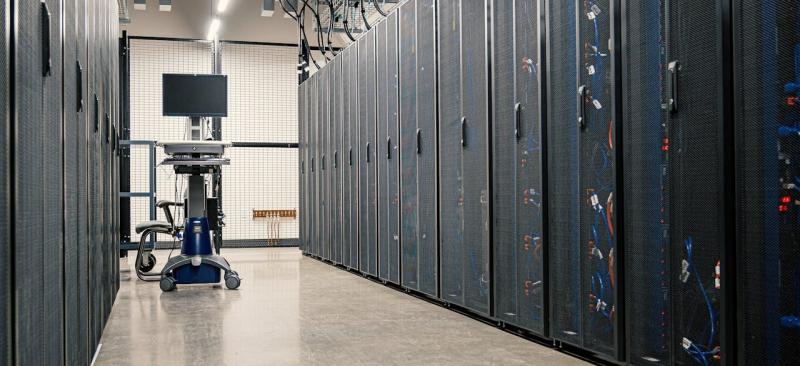
Big companies are building AI-first ecosystems in a move toward agility and innovation to scale further. What comes with this transition goes beyond software development and data center boom. It demands a rethinking of the hardware stack, specifically, the high-performance infrastructure that powers model training, inference, and data-intensive workloads.
What are the requirements for efficient AI data center hardware? What components are enterprises investing in to build a specialized facility?
The New Tech Stack
Requirements for computing power, bandwidth, memory, and efficient energy use are growing in complexity and scale. As a result, 63% of top-performing companies are raising their tech budgets. Businesses today are turning to a new class of accelerators (e.g., TPUs, NPUs, WSE-3, etc.), memory (e.g., VRAM, HBM, RAM, etc.), and other specialized components designed to process AI data sets.
Some bitcoin companies are even switching from their usual mining equipment, like an application-specific integrated circuit, or ASIC miner, to equipment that runs and trains AI systems. According to JP Morgan, 14 of those companies just appreciated by 22% or by $4 billion. Although ASICs are AI chips customized for any unique applications wherein an AI solution is necessary, they’re not as flexible as other processors.
AI hardware solutions include edge computing and data centers. Edge computing has grown over the years because it improves bandwidth speeds and offers stronger security. Businesses are moving to enterprise applications that “edge” closer to data sources, such as Internet of Things (IoT) devices. The integration of AI hardware in edge infrastructure can decrease latency and energy consumption, which is becoming a concern in AI computing.
AI systems demand intensive energy to run, so your business needs to plan and carefully weigh hardware options. Consider how a single ChatGPT query requires 10 times more energy to process than a typical Google search query. The implications for a country’s energy grid are staggering, with Goldman Sachs projecting an increase of 160% in data center power usage by 2030.
The buying cycles for traditional enterprises generally run from 3 to 5 years, when the hardware reaches the end of its lifecycle. The wrong device selection today can lead to higher long-term costs and leave your infrastructure trailing after industry peers for years.
How do you go about selecting your AI hardware? You must identify the roadblocks.
AI Adoption Challenges
Unlike software development, hardware development is time-intensive. One company might launch a groundbreaking application, but other companies are likely to forge ahead and develop a similar, if not better, application in weeks. Consider the case of DeepSeek, whose GPT-4 rivaling chatbot was replicated by UC Berkeley researchers in weeks. The same cannot be said for developing the fastest processors or the biggest memory.
Problems with hardware could take years to resolve, and minor improvements could take up as much time. Then there’s the issue of costs growing along with the complexity of production. In the long term, there’s also a risk of software development creating assets that are no longer compatible with current applications.
OpenAI is beginning to address the issue by developing its custom AI chips with Taiwan Semiconductor Manufacturing Company (TSMC), reducing its reliance on NVIDIA.
Another roadblock for enterprises is the high costs of AI adoption. Whether you intend to automate processes to bolster decision-making or combine data analytics with natural language processing to solve complex issues surrounding projects, demonstrating ROI from AI investments can be an uphill battle with stakeholders.
Although a number of major businesses are already increasing allocation for AI budgets, SMEs might still be crunching the numbers. One way to resolve the issue of large capital investments is to work with vendors that offer a pay-per-use pricing model. This may be offered by providers of integrated on-demand cloud platforms that allow organizations on a budget to access cutting-edge technologies to meet fluctuating needs for AI computing.
Data management is also a concern with AI adoption.
According to a Deloitte survey, companies that have adopted the technology have had to contend with these concerns:
● Integrating data from diverse sources
● Providing self-service access to data
● Preparing and cleaning data
● Shortage in talent and expertise in data management
Security and regulatory compliance are the logical challenges that follow. New technology naturally brings in new threats; organizations have access to innovative hardware and software to keep bad actors out, but the same bad actors can also have access to the same innovative technologies.
Modernize your data infrastructure. Establish a better process that enables your organization to spend less time prepping data.
Making the Right Investments
The right hardware is a long-term strategic investment for your business. It has to allow your organization operational flexibility and scalability. The upfront capital can be substantial, and you must also consider the cost of ongoing support.
NVIDIA H100 Tensor Core GPU offers unprecedented performance, security, and scalability. It may hit your budget ceiling, but its industry-leading AI performance could also outweigh the energy and integration costs.
You may also want to consider whether an off-the-shelf solution might be a good option. A custom hardware build can mean faster deployment and broad software support. This option further addresses the issue of longevity with some AI hardware, since most will have a lifecycle of 3 to 5 years. That lifespan may be shortened under high load conditions.
Ultimately, your hardware investments must align with your company’s broader lifecycle planning strategy. The decision must go beyond what accelerators, memory, and other specialized components work today.
Can your AI infrastructure evolve along with your business needs?
In choosing what will enable your business to grow in the next few years, consider how certain components can be easily upgraded and integrated into your current AI workloads. As you expand operations, demand for AI computing will most likely change and increase as well.
Looking Ahead
The future of AI hardware innovation is happening today.
Neuromorphic computing is already underway. Microsoft Azure’s OpenAI Service helps developers integrate large models into their workflow. AWS’s Sagemaker is advancing end-to-end machine learning workflows.
Custom silicon and domain-specific chips are also optimizing performance for cloud ecosystems.
Knowing what hardware will bring the next wave of intelligence to life is the key to keeping your business agile and scalable.

Post Your Ad Here