Lockout Safety Hasps: A Must-Have for Compliance and Workplace Safety
Ensuring the well-being of employees
and compliance with regulatory standards is not just a legal obligation but
also a moral responsibility. One critical tool in achieving this is the lockout
safety hasp, a simple yet essential device for implementing effective lockout
tagout procedures. This article explores the importance of lockout safety
hasps, their role in workplace safety, and how they ensure compliance with
industry regulations.
What are
Lockout Safety Hasps?
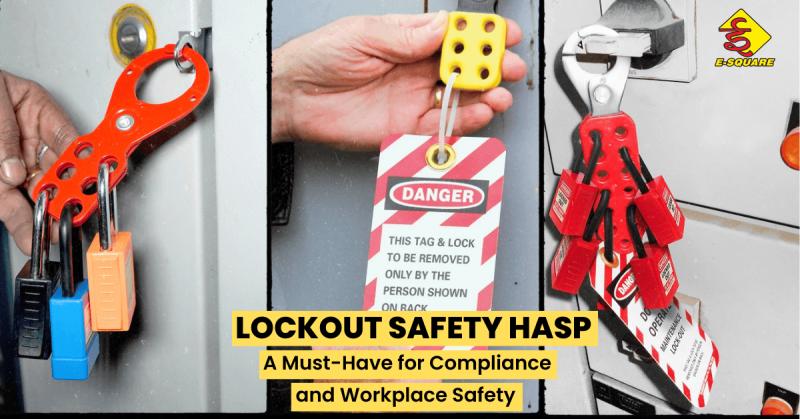
Lockout safety hasps are robust, multi-lock
devices designed to secure energy sources during maintenance or repair work.
They are typically made of durable materials like steel or aluminum, capable of
withstanding harsh industrial conditions. A lockout safety hasp allows
multiple workers to attach their individual padlocks to a single energy
isolation point, ensuring that machinery or equipment remains de-energized
until all workers have completed their tasks and removed their locks.
The hasp’s design is straightforward:
a metal strip or loop with multiple holes to accommodate several padlocks. When
closed, the hasp prevents the energy source - whether electrical, hydraulic,
pneumatic, or mechanical - from being reactivated. This ensures that no single
worker can inadvertently restore power while others are still performing
maintenance, reducing the risk of accidents.
The
Importance of LOTO Systems:
Lockout tagout procedures are
critical for controlling hazardous energy in the workplace. According to the
Occupational Safety and Health Administration (OSHA), failure to properly
control energy sources is one of the leading causes of workplace injuries and
fatalities. Unexpected equipment startups or the release of stored energy can
result in severe injuries, including burns, amputations, or even death.
LOTO systems are designed to prevent
such incidents by isolating energy sources and ensuring that equipment remains
in a safe state during maintenance. Lockout safety hasps are a cornerstone of
these systems, enabling multiple workers to secure equipment collectively.
Without hasps, coordinating lockout procedures among several workers would be
nearly impossible, increasing the risk of errors and accidents.
Ensuring
Regulatory Compliance:
Compliance with safety regulations is
a legal requirement for businesses in most industries. In the United States,
OSHA’s standard 29 CFR 1910.147 outlines the requirements for controlling
hazardous energy through lockout tagout procedures. Similar regulations exist
globally, such as the European Union’s Machinery Directive and Canada’s CSA
Z460 standard. Non-compliance can result in hefty fines, legal liabilities,
and, more importantly, compromised worker safety.
Lockout safety hasps are essential
for meeting these regulatory standards. They ensure that energy isolation
points are secured in a way that complies with requirements for multiple-worker
lockout scenarios. By using hasps, employers demonstrate a commitment to
adhering to safety protocols, reducing the likelihood of OSHA violations or
workplace incidents.
Enhancing
Workplace Safety:
Beyond compliance, lockout safety
hasps play a vital role in fostering a culture of safety. When workers use
hasps as part of a comprehensive LOTO program, they gain
confidence that their safety is prioritized. This can lead to improved morale,
reduced downtime due to accidents, and increased productivity.
Hasp designs have evolved to enhance
usability and safety. For example, many modern hasps feature tamper-proof
mechanisms, bright colors for high visibility, and labels for identifying
lockout points. Some are even equipped with non-conductive materials to prevent
electrical hazards. These innovations make it easier for workers to follow LOTO
procedures correctly, further reducing the risk of errors.
Key Benefits of Lockout Safety Hasps:
Multi-Worker
Coordination: Hasps allow multiple workers to
secure a single energy source, ensuring that no one can reactivate equipment
prematurely.
Durability: Made from high-quality materials, hasps withstand
harsh conditions, ensuring long-term reliability.
Versatility: Hasps can be used in various industries,
including manufacturing, construction, oil and gas, and utilities.
Cost-Effective
Safety: Hasps are an affordable investment
that significantly reduces the risk of costly accidents and fines.
Ease of
Use: Their simple design makes them easy
to integrate into existing LOTO programs, requiring minimal training.
Best
Practices for Using Lockout Safety Hasps:
To maximize the effectiveness of
lockout safety hasps, organizations should follow these best practices:
Develop
a Comprehensive LOTO Program: Ensure
all employees are trained on LOTO procedures and the proper use of hasps.
Select
the Right Hasp: Choose hasps that suit the specific
needs of your workplace, considering factors like material, size, and lock
capacity.
Regular
Inspections: Periodically inspect hasps for wear
and tear to ensure they remain functional.
Clear
Labeling: Use lockout tags
and labels alongside hasps to identify lockout points and the
responsible workers.
Employee
Training: Regularly train workers on the
importance of LOTO and the correct application of hasps to prevent shortcuts or
errors.
Conclusion
Lockout safety hasps are more than
just a tool - they are a critical component of a safe and compliant workplace.
By enabling multiple workers to secure energy sources effectively, hasps
prevent hazardous equipment startups and protect employees from
life-threatening injuries. Their role in ensuring compliance with OSHA and
other global safety standards cannot be overstated.
For organizations committed to
prioritizing worker safety and avoiding costly penalties, investing in
high-quality lockout safety hasps is a must. By integrating hasps into a robust
LOTO program and fostering a culture of safety, businesses can create a secure,
productive, and compliant work environment.


Post Your Ad Here
Comments