Fighting OCD isn’t about willpower
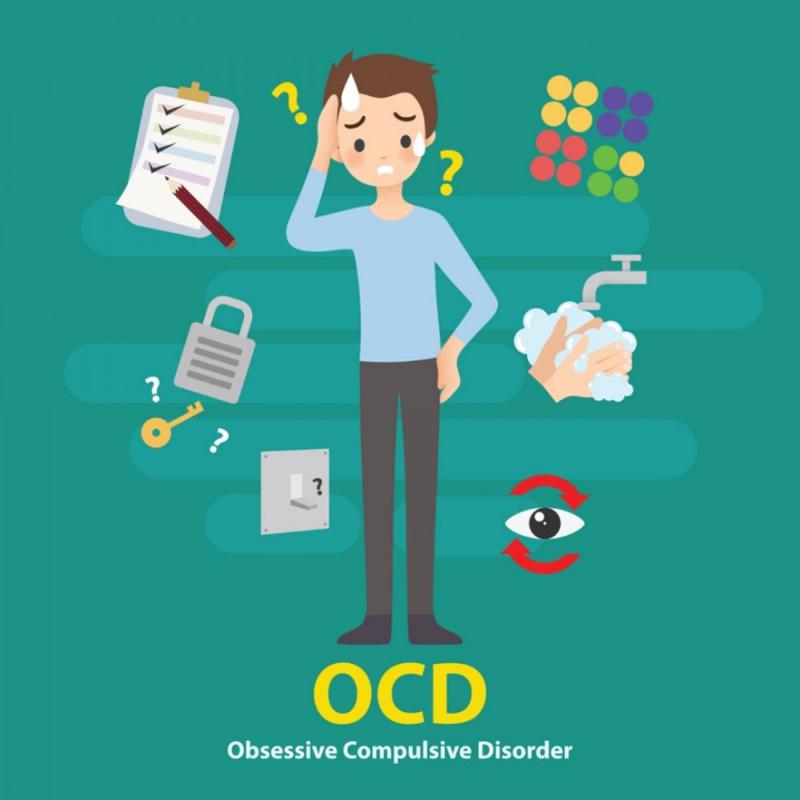
OCD stands for Obsessive Compulsive Disorder which deals
with intrusive thought patterns that lead you into performing compulsive
ritualistic behaviors in order to overcome them. This recurrent behavior leads
to the experience of severe distress. In order to comprehend this stance, it is
important to get acquainted with the causes of this disorder. This is serious
and you must pay attention to the symptoms. There is a very evident pattern.
You can keep the house clean, be very productive and always get work done on
time. Now, these behaviors also imply perfection.
Perfection when achieved as a consequence works fine, but
when there is an irresistible chase towards perfection, your sanity goes for a
toss. Take it slow and easy. Saying this sounds simple but for people with OCD,
this is a high target to work on toning down their intrusive thoughts followed
by compulsive acts. In some cases, only thoughts may linger around where you
cannot see what an individual is going through but they are performing mental
rituals like counting or reciting a mantra. Perfection is glorified especially
in India which leads to the rise in OCD cases according to a lot of
psychologists. There is a very fine line between being peacefully perfect and
impatiently perfect. The latter suggests a clinical spectrum which requires
medical attention.
Can you walk past OCD symptoms voluntarily with your mere will?
Well, the obvious response would be abrupt denial for this
from any certified mental health professional across the world. This is because
OCD is a mental disorder that demands expertise to overcome the detrimental
mental and physical symptoms generated due to different pathological factors
beginning from one was born and raised to the kind of regulatory systems they
were exposed to and so on.
The psychogenesis of this condition must be taken into
account. According to the Freudians, childhood experiences in the Anal Sadistic
phase is an important determinant of this condition as this theory states that
while growing up, we tend to experience love and hate towards the same object.
This is called Ambivalence since there are two opposing entities existing at
the same time.
This is also present in people with OCD which is reflected through their pattern of doing and undoing things often. Another determinant of OCD in terms of the repressed psychological factors include Magical thinking which is to do with the omnipotence of thought. Individuals here tend to work by believing that just their thoughts can lead to the occurrence of the unwanted event without actually physically causing it to occur. These are very delicate and technical mental typologies of OCD people and so, just the will to want to change will not do wonders in the real world without sensible medical intervention.
How do you sensibly overcome OCD?
There is sensible help available out there for OCD in the
form of various different formats of therapy offered by mental health
professionals all around the world. There is universal agreement amongst
psychologists in utilising Exposure and Response Prevention (ERP) therapy for
OCD as it has helped yield successful and effective results preventing relapses
or recurrences of these obsessions and compulsions taking over you in your
life. ERP
treatment for OCD is said to be an intensely effective tool. ERP
treatment for OCD comes with certain guidelines making it a structured
approach. Lastly, ERP treatment for OCD is offered all across our
country.
EXPOSURE AND RESPONSE PREVENTION THERAPY FOR OCD:
What is it?
ERP is known to work well with OCD people as it exposes them
to the feared stimuli or situation, face it upfront and consciously attempt to
not produce their usual response. This is done multiple times and post these
several trials across numerous sessions with your therapist, your anxiety
around this situation is seen to gradually decrease. However, it is also
important to take note of the fact that this is not an overnight process, it is
slow but steady. Hence, ERP for OCD is a very handy technique.
How does it work?
If you are someone who fears with the safety of your apartment and car that you constantly check on them being locked more than once. Now, this has hampered your personal work professional front. In ERP, your therapist will walk with you and guide you to not go and check on the locks like you usually would. This will create deep distress in the initial sessions however, over time, you will have learnt that this avoidance behavior helps you in preventing the reinforcement of your intrusive thoughts on the safety of your property. If you're searching for ERP therapy near me, this treatment can help you break free from these compulsive patterns. In ERP therapy near me, your therapist will walk with you and guide you to resist checking the locks as you usually would. Many individuals who seek ERP therapy near me find that they gain control over their fears and significantly improve their daily functioning.
Where is ERP most effective?
ERP is said to work tremendously well for people with a fear
of contamination, fear of losing control, excessive reliance on religious
ideologies, and for people with the fear of losing things they own and value.
Therefore, ERP for OCD individuals is a behavioral technique that can
lead to radical shifts. ERP for OCD is an inevitably crucial tool that
must be made use of appropriately. ERP therapy near me
Why CoachForMind?
- Experienced
Psychologists: We are a team of licensed RCI-registered clinical
psychologists. Our team is well-experienced in various forms of therapy
such as CBT, DBT, Narrative Therapy, and Exposure and Response prevention
therapy for OCD.
- Personalized
Approach: We are dedicated to treating our clients in the best-suited
way, carefully curated as per the client's needs, and adhering to
one-on-one, client-centered therapy.
- Scientific
Techniques: Our treatment plans and therapeutic methods are based on
highly researched scientific findings such as CBT, DBT, and Narrative
Therapy among many other therapeutic techniques used in art therapy
counselling.
- Quality
service: We at CoachForMind ensure quality services in our treatment
regime and therapeutic approaches. Our clients hold most value to us, so
we ground our techniques in empathy while maintaining professionalism.
For more information, please visit our website or contact us directly at coachformind@gmail.com
Post Your Ad Here
Comments