Pedal To The Metal
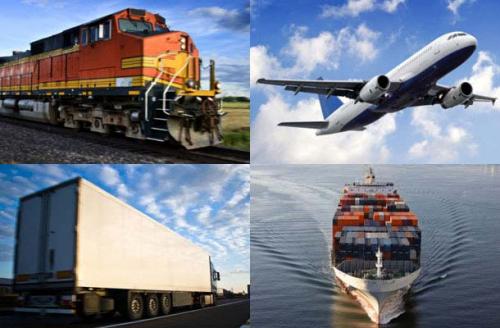
Transport is one of the important pillars
of sustainable development and fortune of any country. Well-organized transport
systems and modern networks are needed for economic development, social
welfare, the large-scale production, and environmental protection. In Algeria,
the transport sector is undergoing a real change. A large number of projects
were carried out, or are in course of realization, in order to make the sector
more effective and operative in its contribution to the economic development of
the country.
Transport in Algeria is a diverse sector
that has, however, a substantial ground to make up in terms of infrastructure
management and development. Completely cognizant of the significance of the
issue, the Algerian government has major programs in place to elevate this
sector, which is an indispensable requirement for Algeria to enter the era of
globalization.
The transport sector in Algeria has
experienced a premeditated restructuring in recent months, with the appointment
of a new head of the Ministry of Transport (MoT) and the imminent rollout of
the country’s latest five year development plan, to run through to 2019. While
lower oil revenues are likely to impact funding for less essential projects,
the government remains committed to maintaining capital investment in the
sector, with AD832.7bn (€7.7bn) to be reserved for the MoT under the new
five-year plan, according to the new Minister of Transport, BoudjemaTalai.
The upcoming 2015-19 development plan is
anticipated to assign a further $262bn worth of investments, with the goal of
increasing domestic production and developing the nonoil economy. Transport
infrastructure will also be prioritised, with sector projects to include
construction of new train stations, development of a commercial port in the
central region of the country and new metro lines. As the largest country in
Africa by land area, transport remains a perpetual priority for Algeria, with
state policies highlighting railway development in particular. Large-scale
investments are currently under way, with the National Company for Rail
Transport (SociéteeNationale des Transports Ferroviaires, SNTF) working to
expand and modernise its fleet of trains and extend the reach of its railways
from 4500 km to 12,500 km in the medium term.
ALWAYS ON TRACK
The railway network of Algeria has lately
experienced electrification at some sections, which should lead, soon, the
installation of high speed trains that would connect the major cities of the
country. The railway network is managed by the National Rail Transport (SNTF).
The network has more than 200 stations covering mainly the North of the
country, 299 km of electrified, 305 km of doubles ways and 1 085 km of narrow
gauge. Among railway projects that are underway, are included namely the
electrification of 1,000 km of railways and the construction of 3,000 km of
railways. The railway network will reach 12,000 kilometers by 2016 and 2017,
thanks to the projects for the sector.Relizane-Tiaret-Tissemsilt railway line:
This strategic project covers 185 kilometers and includes the construction of
4.5 km long tunnels and 11 km long bridges. Forty (40) kms have already been
built. Algeria plans to multiply its railway network threefold within the next
15 years, to reach 10,000 kms (from 3,200 kms currently) of railways. Most of
the 47 billion-dollar package set aside for transport will be allocated to
railway development.
TALKING TO THE SKY
Algeria has established its air transport
sector in order to make it a genuine vehicle for integration at regional and
international levels. A budget of 60 billion dinars (600 million) will be
devoted to renew the fleet of “Air Algerie” during the period 2013-2017. The
national airline will soon acquire three new aircraft with a capacity of 150
seats and renew its three Boeing 767 currently in service. It is also
anticipated the purchase of two cargo planes to transport goods. During the
summer season, “Air Algerie” has recorded a growth rate of its total traffic of
about 15%. In 2011, “Air Algerie” revenues were 56 billion dinars. Closer
cooperation will empower Arab airlines to face strong competition that marks
the global air transport.
Algeria has 35 airports, including 13
international ones. The most important is Algiers Airport with a capacity of
more than 6 million passengers per year. Air Algérie is the national airline;
it dominates the air transport market that counts, since its opening to
competition, eight other private companies. It serves several lines to the
Europe, Africa, Canada, China, and the Middle East. Several foreign airlines
have flights to Algeria namely: Tunis Air, Royal Air Morocco Air France, Air
Italy, AigleAzur, Lufthansa, Turkish Airlines, and British Airways. Algiers
will have a new international terminal in 2018 with a capacity of 10 million
passengers / year, the projected cost is 33 billion dinars (317 million euros)
alongwith realization of 07 terminals in Annaba, Tamanrasset, BB mokhtar,
Timimoune, Tindouf, AinGuezzam.
THE MARITIME
GATEWAYS
Maritime transport is projected to be
another pivotal point of public investment over the next five years, with 95%
of imported merchandise arriving by sea, according to MoT figures. In
late June the state-owned Algerian National Navigation Company
(CompagnieNationaleAlgérienne de Navigation, CNAN) acquired a AD2bn (€18.3m)
freighter. The ship has a 12,600tonne, 700-container capacity and is able to
transport bulk grains as well as carry multiple types of containerised cargo -
both of which are particularly important, as Algeria imports large quantities
of cereals and construction equipment.
Several ferry (ferry boat) liaise
passengers to European shores as well as the transport of goods around the
world. Almost all of international trade is carried by sea, through eleven commercial
ports as follows: Algiers, Oran, Annaba, Skikda, Arzew / Bethioua, Bejaia,
Mostaganem, Ghazni, Jijel, Ténès and Dellys. Algeria’s coastline has 51 marine
infrastructure: 11 commercial ports, 2 oil ports, 41 fishing ports and a
marina. 19 port infrastructures (commercial and fishing ports) and four hub
airports (airfields and airstrips) were built between 2000 and 2012, in
compliance with the five-year plans (2001-2005 and 2005-2009), in addition to
the current 2010-2014 plan. The government has unlocked a € 160 million package
to equip the various national ports with a new management system for maritime
and port security and exchange of information. Additionally one billion dinars
(9.6 million euros) have been assigned the port of Oran management company in
order to renovate this strategic infrastructure.
THE ROAD TO SUCCESS
Algeria has one of the densest road
network in the African continent, with a length of 112,039 km, including 29,573
km of national roads and more than 4,910 civil engineering structures. The
automobile fleet will upsurge from its current level of 8 million vehicles to
more than 20 million by 2025.The capital city hosts about 4 million cars daily.
97% of transport operations in Algeria are effected by road.The Algerian road
network is booming thanks to the modernization program of highways. It includes
the completion of the East-West Highway totalling 1216 km and the upcoming
launch of construction works of the highway in the highlands of 1020 km. There
is also the Trans-Saharan Highway (northsouth), which was endorsed by the
government in order to increase trade between the six countries along this road
(Algeria, Mali, Niger, Nigeria, Chad and Tunisia).
To Get More Latest News Of Algeria, Just VISIT HERE
Post Your Ad Here
Comments