Ghana: This Sector is Evidently Significant
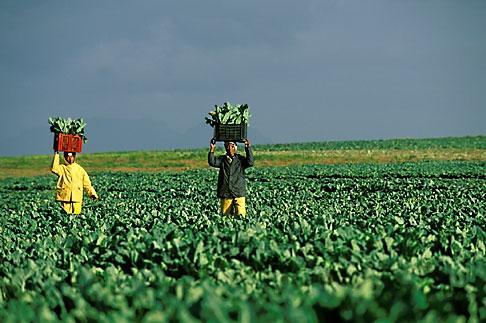
Why is agriculture so significant? Why
does it make sense for Ghana to concentrate on agriculture? What crucial
aspects will aid Ghana usher in an agricultural revolution? What are the
investment opportunities available in this sector? If you want to be acquainted
with the answers of these questions, do follow this article. Food security is
an extensive concept, stretching from the household to the national level. It
is not identical with food self-sufficiency.
It permits for production to be commenced
where the comparative advantage is utmost, and for trade to match domestic food
production. Agriculture’s vital role in Ghana’s economy proposes that growth in
the sector could stimulate both better general economic development and poverty
alleviation. All of the augmented development determinations and endeavours of
the government have been pitched towards giving special benefit to fast-track
agricultural and aquaculture development through renovation.
The government of Ghana is actually in
the process of modernization, including the use of better-quality seed
varieties, greater access to tractor services and training of peasant and small
holder farmers on productivity enrichments, which has resulted in dramatic
increases in maize, rice, and cassava production in the last four years. GCAP
is a US$ 145m Government of Ghana project, funded jointly by the World Bank and
the USAID with the main motive to enhance the commercial agriculture sector in
Ghana. GCAP strive for to increase access to land, private sector finance, and
inputoutput markets by smallholder farms, through private-public partnerships
in the Accra Plains and Savannah Accelerated Development (SADA) zones in Ghana.
Their foremost ambition is to redefine
commercial agriculture in Ghana, by its exclusive designation of the concept of
commercial agriculture, which they perceive in terms of economic activities
anywhere along the agricultural value chain that have a market orientation.
Among other things, GCAP would be undertaking a number of intermediations and
matching grants intended at endorsing Ghana’s commercial agriculture
revitalization.
The job is positioned to developing large-scale
irrigation canals; facilitating land acquisition; supporting and outspreading
nucleus investments for the benefit of small-holders and outgrowers, and
expanding infrastructure into out-grower lands. As a close friend of Ghana,
India has given this country a $150 million line of credit to upkeep the
country’s agriculture sector. The fund would go to support the execution of an
Agricultural Mechanisation Service Centre (AMSEC), and the projects are
envisioned to furnish farmers in the country with reasonable and timely access
to farm machinery. Numerous opportunities exist in the processing of
agricultural products such as cereals (maize, rice, millet) starchy crops (yam,
cassava. Sweet potato, plantain), legumes (carrots, cabbage, garden eggs,
tomato), fruits (pineapple, pawpaw, banana, mango), industrial crops (rubber,
sugarcane, cotton, oil palm, coconut, cocoa, coffee), livestock (cattle, pigs,
poultry, sheep) and fisheries (tuna, tilapia, catfish) and the rearing of silk
worm for the production of raw silk. Additionally there is a need for the
processing of dairy products as well as the supply of machinery to establish
hatcheries for day-old chicks.
Floriculture bids a lot of opportunities
as Ghana’s climate and topography make the country suitable for the cultivation
of a number of exotic flowers. Species such as heliconia, caribea, celosia,
curcuma, gladioli, hibiscus, roses, ornamental palms and ferns perform well
under natural conditions. There is potential in the national, regional and
European Union markets in the distribution field, companies are called to
provide post-production services in transport, packaging and cold vans. There
are additional opportunities in standards, training and certification; capacity
building for management and market-oriented enterprises; market intelligence
research and in the development of agricultural finance and insurance. Investment
opportunities exist in the construction of agricultural inputs such as
fertilizers, pesticides and fungicides. Technology and services in the
agricultural sector which embrace irrigation, heavy equipment hiring (i.e.
hiring of tractors, ploughs, harrows and combine harvesters etc) deliver
investment opportunities.
This sector is evidently significant, but
its precedence must be mediated by how much real variance it can make to the
lives of Ghanaians. The main point to note is that agriculture can be a central
sector for inclusive growth in the agriculture-based countries.
To get more latest news about the Ghana, just CLICK HERE
Post Your Ad Here
Comments