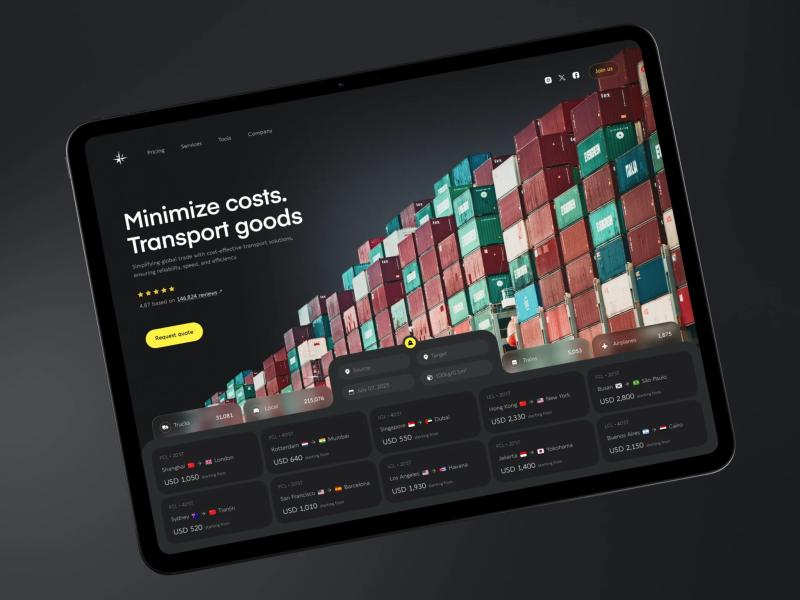
How many times have you stared at your analytics dashboard, wondering why your beautifully designed website isn’t actually selling anything? You poured effort into building a product people might need, but visitors just bounce. No sign-ups. No purchases. Just silent exits.
In most cases, the problem isn’t traffic. It’s that the site isn’t built to convert.
Conversion-focused web design is the difference between a website that exists and a website that quietly, consistently turns visitors into customers. Especially for early teams, this is often what separates growth from endless acquisition spending. That is why teams serious about traction usually start treating their site not as branding, but as web design for startups built around validation and traction rather than decoration.
This article breaks down what conversion-focused design actually means, why it directly affects revenue and retention, and how to tell whether your site is helping or quietly hurting your growth.
Why most websites underperform despite good traffic
Traffic doesn’t pay the bills. Decisions do.
Many products invest heavily in SEO and paid acquisition, then send visitors to pages that look fine but ask users to work too hard. The message is vague. The next step is unclear. The value is buried under internal language and generic claims.
Most underperforming websites are built around what the company wants to say, not what the user needs to understand in order to act. When 300 people land on a pricing page and three convert, it’s rarely because all 297 were “bad leads.” It’s usually because the site didn’t guide them to confidence.
That is the core function of conversion-focused design: reducing uncertainty at the exact moments where revenue is decided.
What conversion-focused web design actually means
Conversion-focused does not mean aggressive.
It does not mean pop-ups, fake urgency, or manipulative flows. Those may spike a metric temporarily, but they destroy trust, and trust is what drives both revenue and retention.
Real conversion-driven design is about clarity, intent, and decision architecture. A visitor should immediately understand what the product is, who it is for, and what the next logical step is. Layout controls attention. Hierarchy shapes perception. Micro-interactions reduce hesitation.
Your website is not a poster. It is an environment where people make choices. Every element either helps that process or quietly interferes with it.
This is why conversion-focused design is not a layer added at the end. It is the structure everything else sits on.
The direct link between web design and revenue
Revenue is created in narrow moments: when someone decides to start a trial, request a demo, or enter their card details.
Those moments are fragile.
Long forms, unclear labels, buried actions, vague plans, and inconsistent UI patterns introduce friction exactly where certainty should peak. Small changes here routinely outperform large marketing pushes.
A shorter signup flow. Clearer pricing logic. A demo page that explains what happens next. A CTA that matches intent. These are not visual tweaks. They are revenue mechanics.
This is why high-growth products invest early in SaaS web design built around conversion systems rather than treating CRO as something that happens later in analytics tools.
How web design impacts user retention
Retention is not a product-only metric. It is shaped before the first login.
The expectations you set on the website define how users interpret everything that follows. If the homepage is unclear, onboarding feels heavy, and flows feel inconsistent, people subconsciously prepare for friction. That mindset follows them into the product.
Strong retention starts with a first session that feels obvious, coherent, and respectful of time. Clear value. Fast progress. Immediate orientation.
Consistency across touchpoints matters just as much. When the marketing site promises simplicity but the product feels bureaucratic, trust erodes. When navigation, tone, and structure align, users relax. That relaxation is retention.
Why CRO starts with design, not testing
A/B testing does not fix a weak foundation.
If the underlying experience is confusing, slow, or misaligned with user intent, experiments mostly measure noise. When the structure makes sense, every test produces signal.
Conversion-focused web design defines hierarchy, flow, and purpose before optimization begins. It creates a baseline where behavior is understandable. Only then does testing compound results instead of chasing them.
Design sets the ceiling. CRO helps you reach it.
Conversion-focused design across growth stages
Early products fail conversions mostly because of ambiguity. Visitors don’t know what the product is or why it exists. At this stage, conversion-focused design prioritizes clarity over creativity. Fewer messages. Fewer paths. Obvious next steps.
As products scale, friction becomes more expensive. Different roles. Different use cases. Longer journeys. Here, conversion-focused design becomes more surgical. Segmented flows. Structured pricing logic. Clear proof placement. Systems instead of pages.
This is where teams usually move from “a website” to web design built as a growth infrastructure rather than a set of screens.
Common design mistakes that kill conversions
Overdesign without strategy. Visual complexity that adds no behavioral value.
Too many competing CTAs. When everything is important, nothing is.
Hidden performance debt. Slow pages silently drain both revenue and trust.
Conversion-focused design removes before it adds. It clarifies before it decorates.
How to evaluate if your web design is conversion-focused
Ask simple questions.
Can a stranger understand what you do in five seconds.
Is there one primary action per page.
Can someone start without committing to a long form.
Is proof placed where doubt appears.
Does the site feel fast and predictable.
Do flows match real user intent.
If not, the design may be attractive, but it is not working.
Final takeaway: revenue is a UX outcome
Revenue is not just a marketing result or a pricing decision. It is the outcome of thousands of micro-experiences.
Every moment of clarity compounds. Every hesitation leaks value.
Conversion-focused web design aligns message, structure, and behavior so that the right users can say yes without friction, doubt, or unnecessary effort. When that alignment exists, traffic turns into trials, trials turn into customers, and customers stay.
That is why high-performing products treat web design not as polish, but as their quietest and most reliable revenue engine.
Comments