Choosing a Web Design Agency for Sustainable Product Growth
Most teams don’t really choose a web design agency. They select the one whose work looks convincing enough to approve.
The portfolio is clean. The layouts feel modern. The case studies look familiar. It feels safe. And visual quality is easy to judge. Even without a design background, you can usually tell whether something looks polished.
The problem is that visual polish says very little about how a product will behave six months after launch.
Once real users arrive, design stops being about what a site looks like and becomes about what it allows the business to do. Can you change positioning without breaking structure. Can you add new features without redesigning half the interface. Can marketing, product, and engineering all move without tripping over each other.
That is where most agency choices start to matter. Quietly. And often too late.
A growth-oriented agency is not the one that delivers the nicest screens. It is the one that leaves behind a system that continues to work when the product changes.
That is the context in which the decision should be made.
The real job of a web design agency
When people say a website has “good design,” they usually mean it looks good. Clean type. Balanced spacing. Maybe a few tasteful interactions.
None of that is wrong. But it is a small part of the job.
The real job of a web design agency is to reduce future friction.
Design choices lock in how easily users understand the product, how fast teams can ship changes, how well pages perform, and how resilient the structure is when new requirements appear. Navigation models, component logic, content hierarchy, and layout systems quietly decide whether growth is smooth or painful.
A growth-oriented agency treats design less like a visual layer and more like product infrastructure.
That means thinking about UX, conversion paths, performance, accessibility, and scalability at the same time. Not as separate services, but as properties of the same system.
Agencies that focus mainly on visuals often do well at launch. The site looks modern. Stakeholders are happy. Then the product evolves. Pages multiply. Funnels change. New features arrive. And suddenly the design feels fragile.
That is usually not a design-quality problem. It is a systems problem.
What to look for if growth is the goal
The clearest signal of a strong agency is not style. It is how they talk about their work.
Growth-oriented teams explain decisions in terms of behavior and structure, not taste. They talk about what users need to understand first, what must stay flexible, and what was intentionally simplified to protect future change.
They connect design to outcomes. Conversions. Retention. Speed of iteration. Not as buzzwords, but as constraints that shape structure.
They also design with scale in mind. This is especially visible when agencies work on products where the website is part of the business engine itself. For example, teams building B2B web design for complex decision journeys don’t optimize for appearance. They optimize for clarity, trust, and the ability to support long, multi-step funnels without constant redesigns.
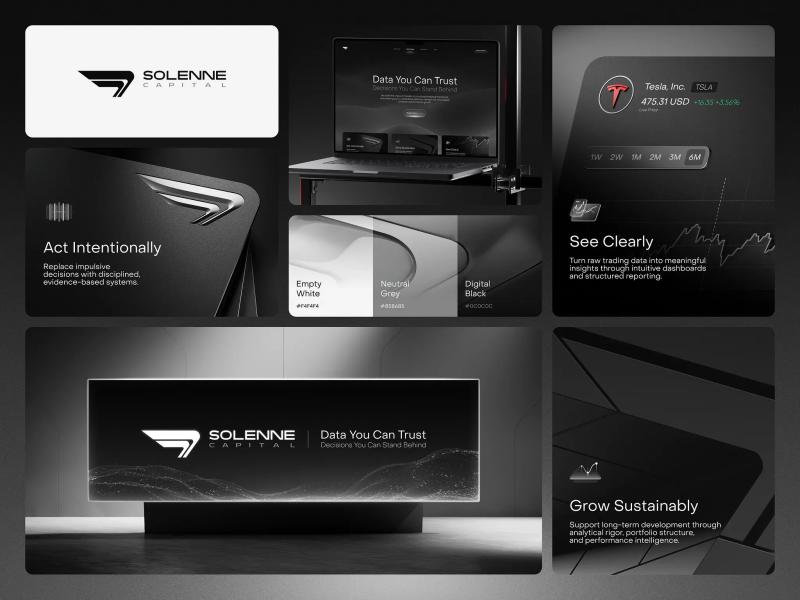
The same mindset shows up in data-heavy and fintech products. In environments like this, interfaces are used daily. Mistakes compound. Structure matters more than novelty. A clear illustration of this approach is how TraderTale’s social trading platform was built around performance data, long-term user behavior, and evolving analytical features rather than static pages. The design decisions there were made to survive growth, not to impress at launch.
Choosing based on product stage
The right agency profile changes as the product changes.
Early-stage teams need speed and clarity. At that phase, design exists to shape an MVP, test assumptions, and get something usable into the world without building a dead end. Agencies that work well here focus on essentials and avoid locking products into brittle structures.
As products move into active growth, structure becomes the main problem. Now design affects sales processes, onboarding, documentation, SEO, and development velocity. Small inconsistencies start costing real money. At this stage, agencies that think in systems consistently outperform teams that design screen by screen.
Industry context also starts to matter more. In SaaS, B2B, fintech, and analytics products, users don’t tolerate confusion. Interfaces must support frequent use, trust, and dense information without friction. Agencies without experience in these environments often underestimate how quickly design debt accumulates.
The question that cuts through most confusion
Before choosing an agency, ask one question.
“Will this team make future change easier or harder?”
Not faster this month. Easier over the next two years.
If the answer is unclear, the risk is usually high. Because most costs in product design are not paid at launch. They are paid later, in slow iterations, forced redesigns, and structural rewrites.
Final thought
Screens age quickly. Systems don’t.
A good agency helps you ship something. A growth-oriented agency helps you keep shipping without constantly undoing earlier work.
If what you need is not just a website, but a foundation that can support new features, new markets, and new positioning, then you are not really buying visuals. You are investing in how easily your product can evolve.
That is why web design built as a long-term product system is what actually supports sustained growth, long after the first version goes live.
Post Your Ad Here
Comments