Building a P2P Payment App in 2025: What Actually Matters
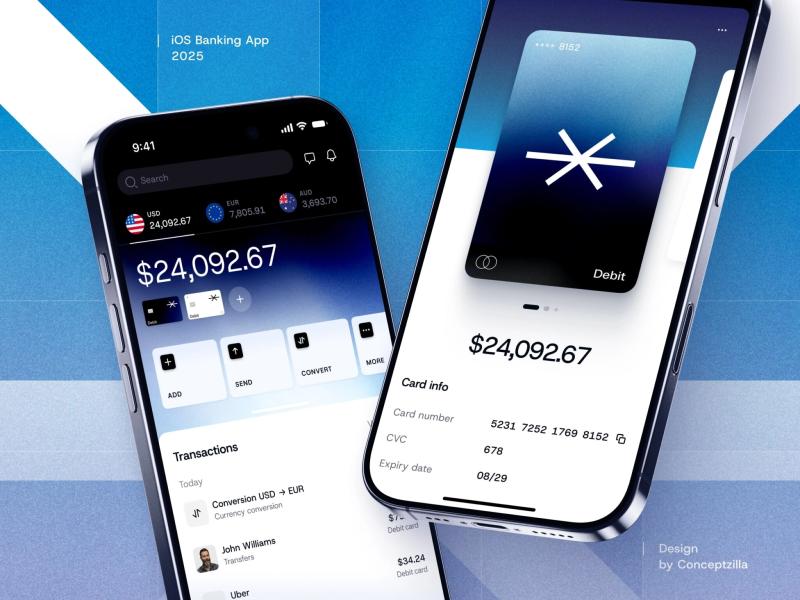
If you spend enough time around product teams, you’ll hear a familiar phrase: “Payments are just plumbing.” That statement is usually said right before the plumbing floods the house.
Modern payment systems look deceptively simple from the outside. Tap a button, money moves, everyone’s happy. Under the hood, however, you’re dealing with asynchronous systems, regulatory constraints, partial failures, and users who assume their balance is always correct. That combination deserves respect. If you are approaching this space seriously, it helps to look at how experienced fintech development teams structure payment systems in the real world — not just in slide decks — as described on fintech product development platforms that work with production-grade systems.
Payments Are Not a Feature, They’re a System
A peer-to-peer payment app is not defined by its UI. It is defined by its ledger. Everything else — notifications, charts, animations — is secondary to the question: Can this system always explain where the money went?
In 2025, expectations are higher than ever. Transfers should feel instant, but also be reversible when something goes wrong. Users want simplicity, regulators want auditability, and engineers want guarantees. You cannot satisfy all three with shortcuts.
This is why most successful payment products start small. They define a narrow use case — splitting expenses, paying freelancers, local transfers — and make that path reliable before expanding. Broad ambition too early usually leads to fragile systems that are expensive to fix later.
Choosing an App Model Is a Risk Decision
There are several ways to structure a payment product: standalone apps, bank-integrated solutions, wallets embedded in other platforms, or systems built on top of real-time payment rails. None of these are “better” by default.
A standalone app gives you control but forces you to earn trust from zero. Bank-centric solutions offer credibility but slow iteration. Embedded payments reduce friction but limit ownership of the user relationship. Each option shifts where your risk lives: technical, regulatory, or commercial.
The mistake teams often make is treating this as a branding choice. It’s not. It’s an architectural commitment that determines how fast you can ship, how much compliance you inherit, and how painful scaling will be later.
Core Features Should Be Boring — and Correct
The most important features in a P2P payment app are also the least exciting:
A transaction engine that is idempotent
A ledger that can be reconciled
Clear transaction states (pending, completed, failed, reversed)
Security controls that assume users will make mistakes
Everything else is optional in version one. Spending analytics, rewards, social feeds — these are enhancements. If your transfer flow fails under load or produces inconsistent balances, no amount of polish will save the product.
On the client side, many teams rely on React-based interfaces to manage asynchronous payment flows and state consistency, because UI predictability matters when money is involved. Using proven approaches to React application development for financial products reduces edge-case bugs that directly affect user trust.
Compliance Is a Product Constraint, Not a Checkbox
In fintech, compliance is not something you “add later.” KYC, AML, and regional payment regulations directly shape onboarding flows, data models, and even UX copy. Treating them as an afterthought leads to rewrites that are far more expensive than doing the work early.
The practical approach is to design compliance states into the system from day one: users who are partially verified, transactions that are delayed for review, limits that change dynamically. These are not edge cases — they are normal operating conditions.
Teams with deep exposure to regulated financial domains tend to model these constraints early, which dramatically lowers risk as the product scales.
Cost and Timeline Are Functions of Uncertainty
When founders ask, “How much does it cost to build a payment app?”, the honest answer is: How many unknowns are you willing to tolerate?
A narrowly scoped MVP in one region can be built in months. A multi-currency, multi-jurisdiction platform with fraud detection and reporting can take more than a year. The biggest drivers of cost are not screens or animations, but regulatory scope, integrations, and failure handling.
The teams that stay on schedule are not the fastest coders. They are the ones who reduce uncertainty early — through discovery, prototyping, and clear system boundaries.
Final Thought
Building a P2P payment app in 2025 is less about chasing trends and more about disciplined system design. If you treat money movement as a serious engineering problem — one with legal, technical, and human consequences — you can build something durable. Teams that understand fintech-specific product constraints and infrastructure realities tend to avoid the most expensive mistakes simply by planning for them early.

Comments