Toyota Wish: Big Space, Smooth Rides, and Toyota Reliability
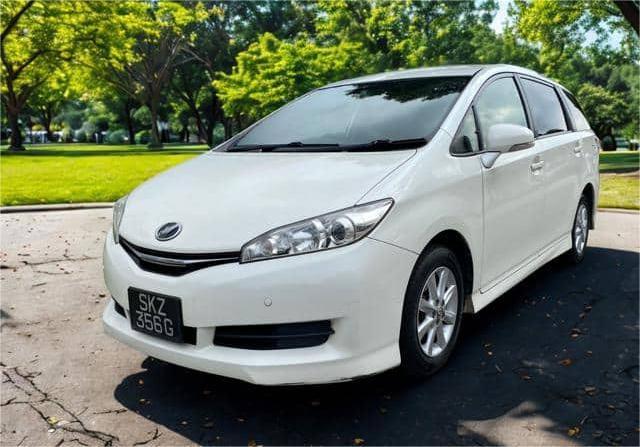
One effective solution for transporting a growing family or enhancing public transportation services is a compact multi-purpose vehicle (MPV). Among various options available worldwide, the Toyota Wish stands out as one of the top compact MPVs currently on the market. This summary delves into the two generations of the Toyota Wish, highlighting the reasons for its appeal as a versatile choice for diverse buyers.
First Generation
The Toyota Wish was first unveiled at the 2002 Tokyo Motor Show, marking its introduction during the 2003 model year. The first generation, known as AE10, was produced from 2003 to 2009 and maintained a largely consistent design established by Takeshi Yoshida and his team. The vehicle rapidly gained popularity as a compact MPV in the Japanese market, often appearing in the Top 5 of various best-seller lists each month.
Engine
The first generation of the Toyota Wish featured two engine options: a 1,794 cc 1ZZ-FE engine delivering 120 bhp at 5,600 rpm and peak torque of 165 N-m at 4,400 rpm, and a larger 1,998 cc 1AZ-FSE engine providing 148 bhp at 5,700 rpm with a maximum torque of 200 N-m at 4,000 rpm. Both engines were designed to effectively manage urban traffic and longer journeys. The smaller engine is combined exclusively with a four-speed automatic transmission, whereas the 1,998 cc engine pairs with a seven-speed Super CVTi transmission. The Toyota Wish AE10 is offered in five, six, and seven-seater variations, with the five-passenger model utilizing the 1,794 cc engine and four-speed gearbox, while the larger engine and CVTi are available in the six and seven-seater configurations.
Second Generation
The second generation AE20 Toyota Wish debuted in the 2009 model year and remains in production today. This generation features a mild exterior refresh that enhances its modern aesthetic. The interior has been upgraded significantly, providing advanced technology and comfort compared to the original Wish's more basic styling and features.
Engine
The AE20 generation offers two upgraded engine options: the 1,797 cc 2ZR-FAE generating 148 bhp and 175 N-m torque, and the 1,987 cc 3ZR-FAE producing 155 bhp at 6,200 rpm with a peak torque of 195 N-m at 4,400 rpm. Both engines feature Toyota’s Valvematic system, enhancing fuel efficiency. The engines utilize a Dual VVT-i intake system for optimal timing on both camshafts, increasing overall fuel efficiency by up to 10 percent. Typically, these engines are paired with a seven-speed Super CVT-i gearbox, although a four-speed automatic may be available in certain markets. The Continuously Variable Transmission aids in better fuel economy, establishing it as the more favorable gearbox choice. The 1.8S model comes with a seven-speed CVT featuring a CVT Sport mode, while the 2.0Z model has a dynamic sport mode. Both variants enhance the CVT's performance in challenging conditions, providing an engaging driving experience.
Features
The second generation of the Toyota Wish features enhanced safety features such as anti-lock brakes, electronic brakeforce distribution, emergency brake assist, traction control, and electronic stability control, contributing to its reputation as one of the safest multi-purpose vehicles (MPVs) in the Japanese market. Additionally, it offers powerful and fuel-efficient engine options, economical gearboxes, and upgraded interior appointments, making it a recommended choice for growing families and those looking to expand their transportation services.
Finally
The Toyota Wish isn’t flashy or high-tech, but it delivers practical space, excellent reliability, and good value, making it a very good choice, particularly where reliability and ownership cost matter most. You can now check the Toyota Wish stock list for available models and purchase parts here.
Post Your Ad Here