From classic roots to modern roads: The Toyota Corolla legacy continues
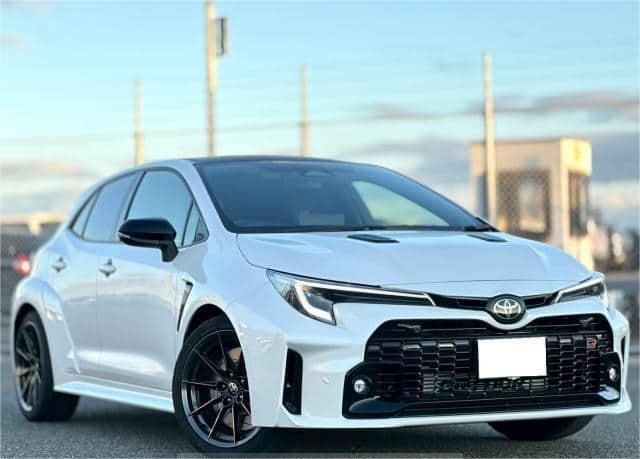
By the mid-1960s, global stability led to a surge in car ownership, prompting Eiji Toyoda to launch the Toyota Corolla in 1966. Its name reflects hope for success, and it quickly fulfilled the needs of Japanese families with fuel efficiency, spaciousness, compact design, and reliability, becoming Japan's best-selling car. By 1974, it achieved global best-seller status, maintaining its position among the top five vehicles. By July 2013, over 40 million units were sold, with continuous high demand. The summary examines the adaptations made by Toyota across eleven Corolla generations, ensuring enduring global interest despite the decline of other models.
First & Second Generation
The E 10 generation cars (1966-1970), including the Datsun 1000 and Subaru 1000, were equipped with sub-1,000 cc engines due to tax benefits. The Corolla, featuring a 1,077 cc petrol I4 engine producing 60 bhp, was promoted with a "100 cc Advantage" campaign. It offered standard four-speed manual and optional two-speed automatic transmissions, classified as a subcompact with a 2,286 mm wheelbase and 3,848 mm length. The second generation (E20, 1970-1974) added a twin carb version of the same engine with 73 bhp and increased the wheelbase to 2,334 mm. By 1971, the engine was upgraded to a 1,588 cc I4 generating 102 bhp, with five-speed manual and three-speed automatic gearbox options available across markets.
Third & Fourth Generation
The third generation Corolla (1974-1978), known as E 30, introduced several body styles, including a three-door hatchback called Liftback, while retaining the previous generation's engine and gearbox. In 1975, Toyota implemented the TTC system for emission reduction, featuring one of the first catalytic converters. Key updates included an increased wheelbase and standard retracting front seat belts.
By the fourth generation (1979-1983), the Corolla lineup diversified with models like the two-door sedan and five-door Corolla Fielder, achieving peak sales of 2,436 units daily in 1980 and exceeding one million units sold by February 1983. Enhancements during this period included a five-link rear suspension, a 2,400 mm wheelbase, fuel injection, an optional four-speed automatic transmission, and power steering for all models.
Fifth & Sixth Generation
In the fifth generation of the Corolla, it introduced fuel injection as an option and makes front-wheel drive standard. This generation E 80 (1983-1987) also marked the addition of the first diesel engine, a 1,583 cc I4 with 74 bhp and 124 N-m of torque. It became the most popular generation, selling 3.3 million units in four years.
The E 90 (1987-1991) generation of the Toyota Corolla maintained the same mechanical features as its predecessor, with the only enhancements found in the GT-I and MR-2 variants, which featured a supercharged 4A-GZE engine delivering 165 bhp and 210 N-m of torque. Additionally, the 4WD All-Trac system from the Tercel line was offered as an option.
Seventh & Eighth Generation
For the E 100 (1991-1995) model year, the Toyota Corolla increased its wheelbase to 2,645 mm, classifying it as a compact car. The width was expanded to 1,684 mm for improved stability, comfort, and safety. Additionally, Toyota adopted CFC-free refrigerant in its vehicles to address environmental concerns.
The eighth generation E 110 Toyota Corolla (1995-2000) introduced aluminum blocks and cylinder heads in its smaller engines, enhancing lightness and fuel efficiency. New features included laser etched valve guides, reducing oil burning and valve guide failure. Notably, during the 1997 model year, it became the best-selling car of all-time, surpassing the Volkswagen Beetle.
Ninth - Tenth Generation Generation
The ninth generation E 120 (2000-2007) of the Toyota Corolla introduced a six-speed manual and a five-speed MultiMode manual gearbox, as well as an aluminum block/cylinder head combination that became standard globally. The most prevalent engine was a 1,796 cc I4, delivering 130 bhp and notable fuel economy within the compact car segment.
For its tenth generation E 140 (2006-2013), the Toyota Corolla comes in two versions: the narrower Corolla Axio, sold only in Japan, and a wider international model. This design strategy ensures compliance with Japanese regulations while appealing to a global market.
2012-Present
The eleventh generation E 170 of the Toyota Corolla emphasizes aesthetic improvements and enhanced engine performance, achieving up to 146 bhp and 187 N-m of torque. It offers various gearbox options, including manual, automatic, and CVTs. Structural enhancements like underbody bracing and high-strength steel contribute to safety and rigidity. With a reduced drag coefficient of 0.28, it ranks among the most fuel-efficient compact sedans.
Finally
After eleven generations, the Toyota Corolla remains the best-selling car line globally, maintaining its status by being economic and accessible for over forty years. While many automakers seek to compete, the future of the Corolla's number one ranking remains uncertain. You can now check the Toyota Corolla stock list for available models and purchase parts here.
Post Your Ad Here