White Label Tax Preparation Software: Features, Benefits & Use Cases
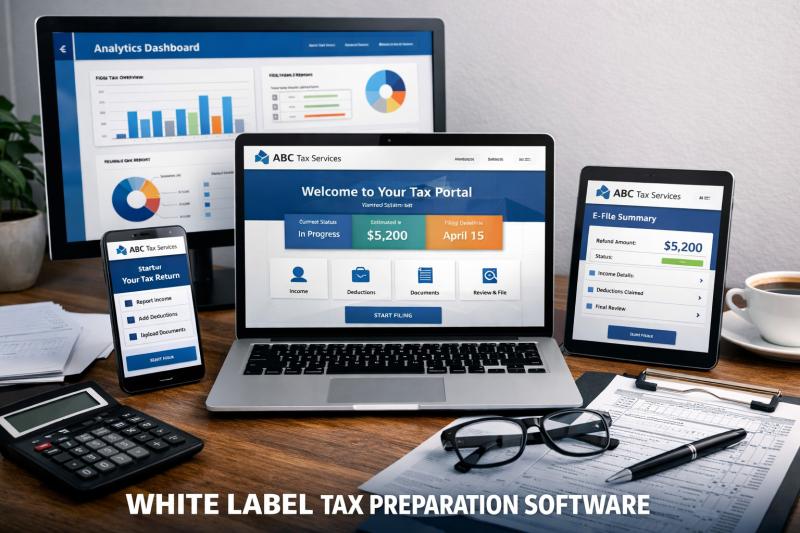
White label tax preparation software is a ready-built digital platform that enables accounting firms, tax consultants, fintech companies, and startups to offer tax filing services under their own brand. Instead of building a solution from scratch, businesses rebrand an existing system with their logo, domain, color scheme, and service structure.
This approach is increasingly popular as tax regulations grow more complex and digital filing becomes the norm. With a white label tax preparation app, service providers can deliver secure, compliant, and scalable tax services while focusing on client acquisition and advisory value rather than technical development.
Why Demand for White Label Tax Solutions Is Rapidly Increasing
The global shift toward digital tax filing, combined with stricter compliance requirements, has pushed professionals to adopt automation-driven platforms. Manual tax preparation is time-consuming, error-prone, and difficult to scale.
White label solutions address these challenges by offering:
-
Faster go-to-market for new tax services
-
Lower operational costs compared to custom development
-
Built-in compliance and automated calculations
-
Improved customer experience through digital workflows
For businesses targeting small enterprises, freelancers, or individual taxpayers, these platforms provide a competitive edge without heavy upfront investment.
Core Features of White Label Tax Preparation Software Explained in Detail
Secure User Onboarding and Identity Verification
A robust onboarding system allows taxpayers to register, verify identity, and securely access their tax dashboard. This often includes email or mobile verification, role-based access, and multi-factor authentication to ensure data protection and regulatory compliance.
End-to-End Tax Filing and Return Management
The software supports the complete tax lifecycle, from income reporting and deduction entries to final return submission. Users can upload documents, categorize income streams, and track filing progress in real time. Automation ensures calculations are accurate and aligned with current tax rules.
Multi-Tax Form and Jurisdiction Support
Modern platforms support various tax forms and regional regulations. This is essential for firms serving clients across different states or countries. Built-in updates ensure the system stays aligned with annual tax law changes.
Automated Calculations and Error Detection
Smart calculation engines reduce manual work by automatically computing liabilities, refunds, penalties, and credits. Error detection mechanisms flag inconsistencies before submission, minimizing rejection rates and compliance risks.
Custom Branding and White Label Control
A defining feature of white label tax preparation software is complete brand ownership. Businesses can customize the interface, domain, client communications, invoices, and reports to reflect their identity, creating a seamless brand experience for end users.
Client Document Management and Secure Storage
Tax preparation involves handling sensitive documents. These platforms provide encrypted storage, organized document folders, and controlled access permissions, ensuring confidentiality and easy retrieval during audits or future filings.
Payment Processing and Revenue Management
Integrated payment gateways allow businesses to collect service fees directly through the platform. Subscription models, per-return pricing, or bundled tax services can be configured based on business strategy.
Analytics, Reporting, and Performance Insights
Advanced dashboards provide insights into filings completed, revenue generated, client retention, and seasonal demand patterns. These analytics help firms optimize pricing, staffing, and marketing decisions.
Reduced Operational and Maintenance Costs
The core technology, compliance updates, and infrastructure are managed by the software provider. This reduces long-term maintenance costs and eliminates the need for in-house technical teams.
Scalable Operations During Peak Tax Seasons
Tax season demand can surge unpredictably. White label platforms are designed to scale automatically, ensuring consistent performance even during high-volume filing periods.
Enhanced Client Trust and Professional Credibility
Offering a branded, secure, and easy-to-use tax platform improves client confidence. Digital transparency, progress tracking, and accurate calculations strengthen long-term client relationships.
Focus on Advisory and Value-Added Services
With automation handling repetitive tasks, tax professionals can focus on strategic advisory services such as tax planning, compliance consulting, and financial optimization.
Key Use Cases Across Industries and Business Models
Accounting and Tax Advisory Firms
Traditional firms use white label tax preparation software to modernize operations, reduce manual workloads, and offer digital-first services to tech-savvy clients.
Fintech and Financial Service Providers
Fintech companies integrate tax filing into broader financial ecosystems, offering users a single platform for payments, investments, and tax compliance.
Payroll and HR Service Providers
Payroll companies extend their service portfolio by bundling tax filing and compliance services, creating additional revenue streams.
Startups Targeting Freelancers and SMEs
Startups serving gig workers, freelancers, and small businesses leverage white label tax preparation apps to address niche compliance needs without heavy development costs.
Enterprise and Multi-Brand Tax Platforms
Larger organizations deploy white label solutions to operate multiple tax brands or regional services from a single backend infrastructure.
Key Considerations Before Choosing a White Label Tax Platform
Selecting the right solution requires evaluating compliance coverage, data security standards, scalability, customization depth, and ongoing support. Businesses should ensure the platform supports future regulatory changes and integrates smoothly with existing accounting or financial systems.
Vendor reliability, update frequency, and customer support responsiveness are equally important to ensure uninterrupted service during critical filing periods.
Future Outlook for White Label Tax Preparation Solutions
As governments push for digital tax compliance and real-time reporting, white label platforms will continue to evolve. Artificial intelligence, predictive analytics, and deeper fintech integrations will further enhance automation, accuracy, and personalization.
For businesses aiming to stay competitive in the tax services market, adopting a flexible and scalable white label solution is becoming a strategic necessity rather than an optional upgrade.
Conclusion
White label tax preparation software provides a powerful foundation for delivering modern, secure, and scalable tax services under your own brand. By combining automation, compliance readiness, and customization, these platforms help businesses reduce costs, improve efficiency, and expand their service offerings. Whether you are an established tax firm or a fintech startup, a white label tax preparation app enables faster growth while maintaining professional credibility and client trust.
Frequently Asked Questions (FAQs)
What is white label tax preparation software?
It is a pre-built tax filing platform that businesses can rebrand and offer as their own solution without developing the technology from scratch.
Who should use a white label tax preparation app?
Accounting firms, tax consultants, fintech companies, payroll providers, and startups serving individuals or businesses with tax compliance needs can benefit from it.
Is white label tax software compliant with tax regulations?
Most solutions are designed to stay updated with changing tax laws and filing requirements, but businesses should verify regional compliance before deployment.
Can the software be customized to match my brand?
Yes, branding elements such as logos, colors, domain, and client communication can be fully customized to reflect your business identity.
How secure is client data in white label tax platforms?
Reputable platforms use encryption, access controls, and secure cloud infrastructure to protect sensitive financial and personal data.
Does a white label solution support scaling during tax season?
Yes, these platforms are built to handle high user volumes and increased filing activity during peak tax periods without performance issue


Comments